
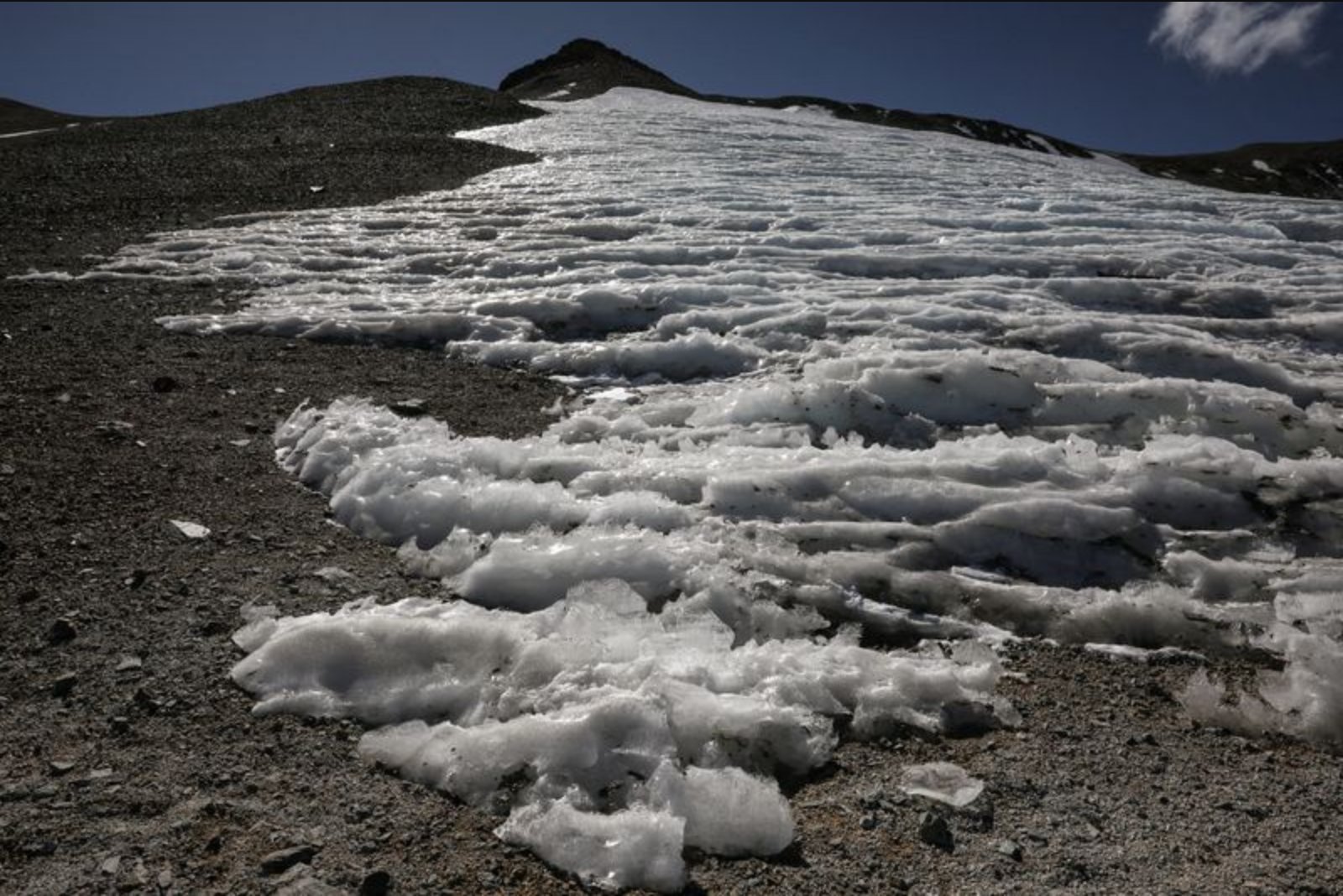
A new forecasting report issued jointly by the U.N. weather agency and the UK Met Office projects that mean global temperatures are set to reach near-record highs within the coming five years, and it highlights markedly faster warming in the Arctic compared with other regions.
The publication provides regional outlooks for temperature and precipitation and places the expected annual global mean near-surface temperature in a range between 1.3°C and 1.9°C above the 1850-1900 pre-industrial baseline. The forecast period covered by the report spans the next five years.
"There’s very clear evidence that the climate is warming and that the global average temperature is continuing to rise," Melissa Seabrook, a research scientist at the UK Met Office, told Reuters in comments included with the report.
The report recalls the 2015 Paris Agreement, under which governments pledged to aim to prevent the increase in average global temperature from exceeding 1.5C above pre-industrial levels - a threshold the report notes has been associated with intensifying severe climate events.
Temporary breaches of 1.5C and a new record year
Researchers conclude it is very likely that the global mean near-surface temperature will temporarily exceed 1.5C above the 1850-1900 average for at least one year between 2026 and 2030. The report further forecasts that during the same 2026-2030 window there will be at least one year in which the average global temperature surpasses the warmest year on record, 2024, when global temperatures exceeded 1.5C above the pre-industrial era for the first time.
Seabrook emphasized that a single-year exceedance does not equate to failure of the Paris Agreement, which measures compliance against long-term averages over 20 years rather than individual years. She also cautioned that as the world approaches the 1.5C threshold, the likelihood of crossing it in individual years increases. "The science is very clear that the window to keeping the global average temperature to 1.5 degrees is closing rapidly," she said.
Arctic amplification and regional impacts
The Arctic is projected to warm much faster than the global mean. Over the next five years, northern hemisphere Arctic winter temperatures are expected to rise at more than three-and-a-half times the global average, reaching roughly 2.8°C above the 1991–2020 baseline, according to the report.
The forecast anticipates March sea-ice loss in parts of the Arctic over the next half-decade, specifically in the Barents Sea, the Bering Sea and the Sea of Okhotsk. The report warns that Arctic warming could alter large-scale weather patterns and contribute to more severe weather events, particularly across northern regions.
Precipitation patterns are also expected to shift. Wetter conditions are predicted for the northern hemisphere over the next five winters, with wet periods during May-September in northern Europe, Alaska, Siberia and the Sahel. By contrast, the Amazon is forecast to experience drier-than-normal conditions this season.
Role of El Nino
The report highlights the likelihood of a strong El Nino developing in the coming winter, with the event potentially persisting into 2027. Such an El Nino would boost global temperatures because of warming in the Pacific Ocean, increasing the chance of record-breaking global temperature years.
The document reiterates a standard description of El Nino as a periodic warming of sea surface temperatures in the central and eastern Pacific Ocean, noting that it typically lasts between nine and 12 months.
Collectively, the report’s projections point to an increased frequency of temporary temperature exceedances, faster Arctic warming and changing patterns of precipitation and sea-ice loss over the next five years. These changes, the authors indicate, carry implications for regional weather extremes and associated impacts.