
World June 3, 2026 11:29 AM

Ukrainian Firm Tests Interceptor Variant in Bid to Build Air Defence System

Fire Point says controlled flight of FP-7.X will underpin a planned anti-ballistic interceptor amid shortages of Patriot interceptors

By Jordan Park

Fire Point, Ukraine’s largest missile and drone manufacturer, reported a fully controlled manoeuvring flight of the FP-7.X interceptor, a variant of its FP7 ballistic missile that the company says will form the basis of the Freyja anti-ballistic interceptor. The test comes as Ukraine presses partners for more counter-ballistic capability and faces a shortfall in Patriot interceptors.

Ukrainian Firm Tests Interceptor Variant in Bid to Build Air Defence System

Key Points

  • Fire Point conducted a fully controlled manoeuvring flight of the FP-7.X interceptor variant, which it says will underpin the Freyja anti-ballistic interceptor program - sectors impacted: defence, aerospace manufacturing.
  • The FP7 family remains under development and is intended to also possess ground-attack capability, highlighting dual-use implications for missile design - sectors impacted: military production, defence contractors.
  • Fire Point has discussed forming a new air defence system with unnamed European companies aiming for deployment by the end of next year, positioning the effort as a lower-cost alternative to the Patriot - sectors impacted: defence procurement, international defence partnerships.

KYIV, June 3 - Fire Point, which has emerged as Ukraine’s largest maker of missiles and drones since the start of the war, on Wednesday said it had conducted a flight test of the FP-7.X missile that the company intends to develop into an anti-ballistic interceptor.

Company CEO Iryna Terekh posted on X: "Recently, we conducted an extremely important test: a fully controlled manoeuvring flight of the FP-7.X missile, which will form the basis of the future Freyja anti-ballistic interceptor," confirming the trial and the missile’s intended role.

The FP-7.X is described by Fire Point as the interceptor variant of its FP7 ballistic missile, a platform still under development. The company says the FP7 family will also have the capability to strike ground targets.

Fire Point co-owner Denys Shtilierman told Reuters in April that the company was in discussions with unnamed European firms to create a new air defence system aimed at intercepting supersonic ballistic missiles, with an ambition to field a system by the end of next year. Shtilierman presented this as a lower-cost alternative to the U.S.-made Patriot.

Analysts note that a missile is only one element of an integrated air defence solution. The most technically demanding pieces, they say, are the ground radar network and the missile’s targeting systems, components that must work together for an effective counter-ballistic capability.

The test and related development plans arrive against a backdrop of frequent Russian ballistic missile attacks since Moscow’s 2022 invasion. On Wednesday, President Volodymyr Zelenskiy publicly called for Europe to accelerate its counter-ballistic missile efforts.

Kyiv has repeatedly voiced concerns about a critical shortfall of interceptor missiles for the Patriot system, which it views as the only consistently reliable defence against ballistic threats.

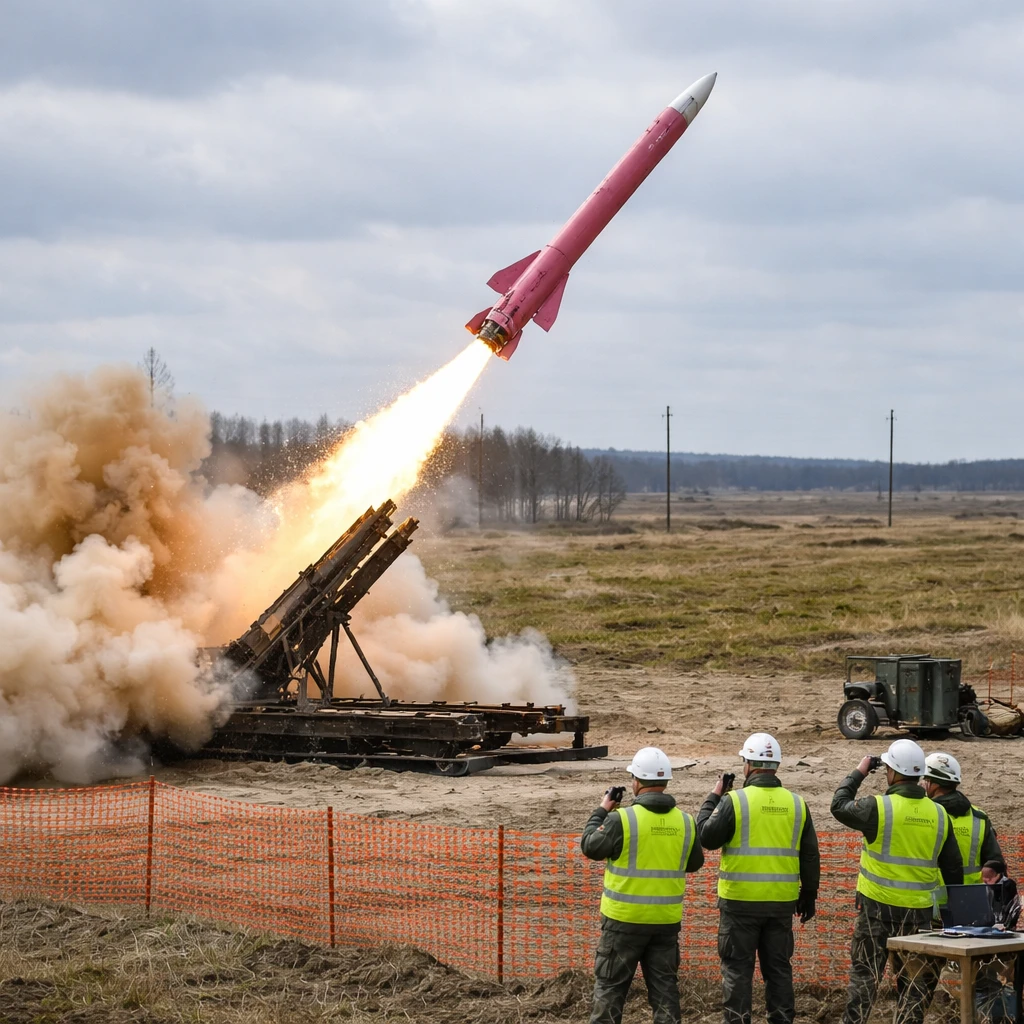
Terekh shared a video of the test showing a pink missile launching from a rail-style launcher in a field; the background of the clip was pixelated. Founded after the conflict began in 2022, Fire Point reports production of thousands of long-range drones each month and is also the manufacturer of the Flamingo cruise missile, which Ukraine has used against multiple Russian military-industrial targets.


Context and next steps

Fire Point’s announcement clarifies the company’s stated technical direction for the FP7 family and the FP-7.X interceptor specifically, but the path to an operational anti-ballistic system will require integration of radar and targeting networks and continued cooperation with external partners.

Risks

  • System integration risk: Analysts emphasize that the missile is only one component of an air defence system; the ground radar network and the missile’s targeting system are the most complex parts and will be essential to operational effectiveness - affects defence systems and aerospace electronics sectors.
  • Supply and capability risk: Kyiv reports a critical deficit of interceptor missiles for the Patriot system, underlining an immediate vulnerability in counter-ballistic defence that could persist during domestic development efforts - affects defence readiness and procurement markets.
  • Timeline and partnership uncertainty: Fire Point’s talks with unnamed European firms and the stated ambition to field a system by the end of next year represent targets rather than guarantees, leaving delivery schedules and capability outcomes uncertain - affects defence contracting and international collaboration.

More from World

Zelenskiy Invites Putin to Direct Talks in Open Letter, Proposes Ceasefire During Negotiations Jun 4, 2026 Zelenskyy Calls for Direct Talks With Putin, Offering Ceasefire During Negotiations Jun 4, 2026 Putin Says Russia Will Prevail if Needed, But Offers Diplomacy Backed by Unspecified Compromises Jun 4, 2026 Steering Board Fails to Name Successor to Bosnia’s High Representative Jun 4, 2026 Why U.S.-Brokered Truces Have Not Halted Fighting Across the Middle East Jun 4, 2026