
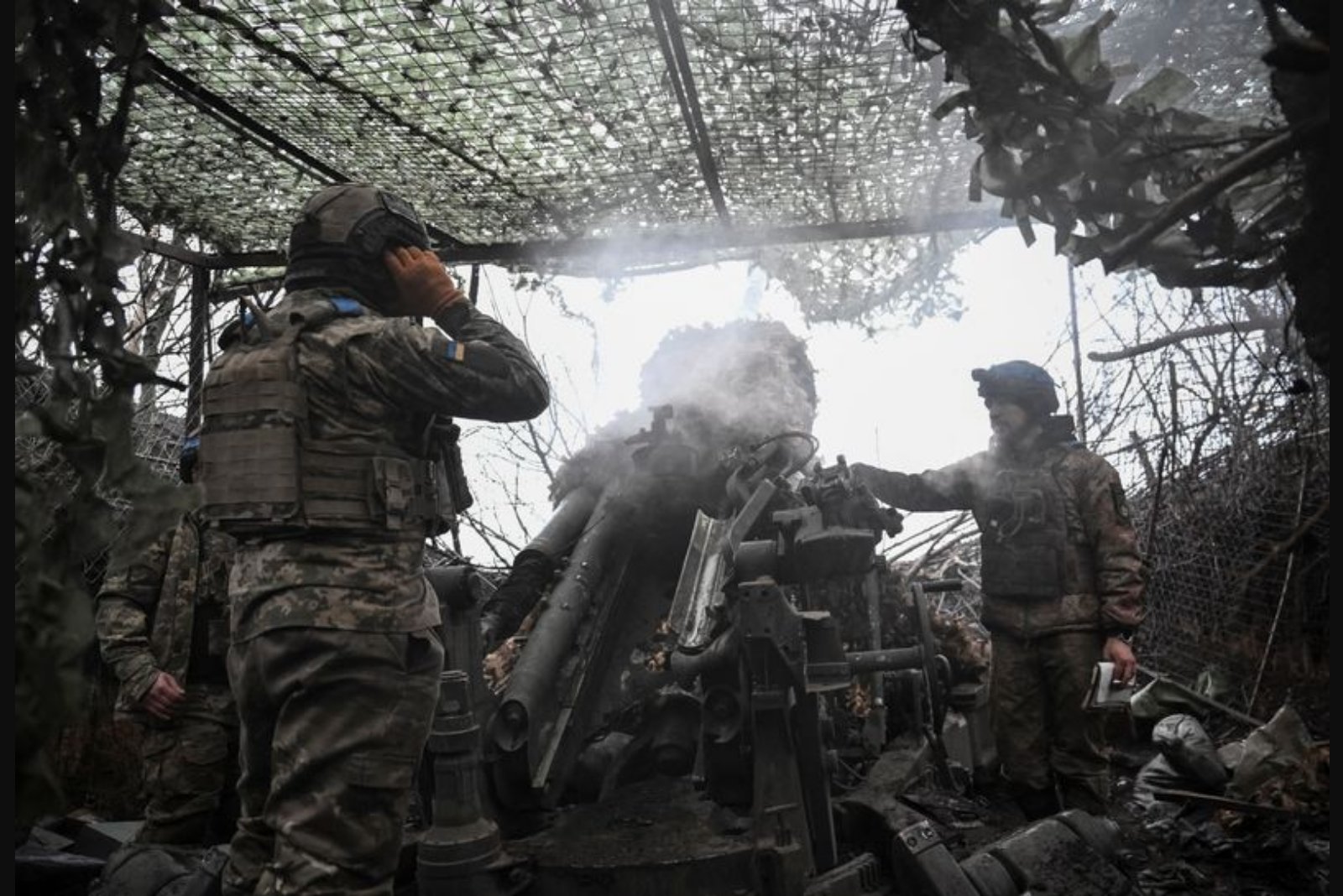
Ukraine's military leadership announced on Feb. 23 that government forces have secured 400 square kilometres of territory, including eight settlements, along a portion of the southern frontline since the end of January, Chief Commander Oleksandr Syrskyi said.
The reported gains are notable because they represent an uncommon forward movement in the southeastern Dnipropetrovsk region, contrasting with the wider pattern of gradual and costly Russian advances that have characterized fighting over the past two and a half years as the conflict approaches its fourth anniversary.
Syrskyi's statement did not specify how much of the newly held ground had been under direct Russian control prior to the operation and how much consisted of so-called "grey zone" territory where neither side had firm control. Ukraine's General Staff did not immediately respond to a request for clarification on those points.
Officials in Kyiv have signalled a desire to demonstrate to international audiences - and in particular to U.S. President Donald Trump - that Ukrainian forces are not consistently ceding ground, at a time when Washington is urging Kyiv to consider a negotiated settlement.
The front lines themselves have become less distinct in many areas, the military said, as what it describes as thousands of drones operating each day have pushed troops into underground positions or dense protective cover and created zones where neither army exerts reliable control.
President Trump has previously argued that Ukraine should be prepared to make concessions, saying Kyiv risks losing the war that began when Russia launched a full-scale invasion on Feb. 24, 2022. Kyiv and its European partners have rejected that characterization, noting that since 2023 Russia has only captured a small additional share of Ukrainian territory and that those advances have come at high cost.
Ukrainian strikes have also targeted Russian energy infrastructure, and Kyiv's partners say Moscow's oil facilities face rising threats from drone operations.
On the diplomatic front, German Chancellor Friedrich Merz praised Kyiv's February advances as "astonishing," saying they underlined that Ukrainian resistance may be more effective than often portrayed.
Contextual note for markets and sectors
- Defense sector: Military gains and continued drone usage may influence perceptions of operational momentum and procurement priorities.
- Energy sector: Escalating threats to oil infrastructure could sustain market attention on energy supply risks.
- Financial markets: Political pressure over negotiations and battlefield developments could affect investor sentiment toward regional risk assets.