
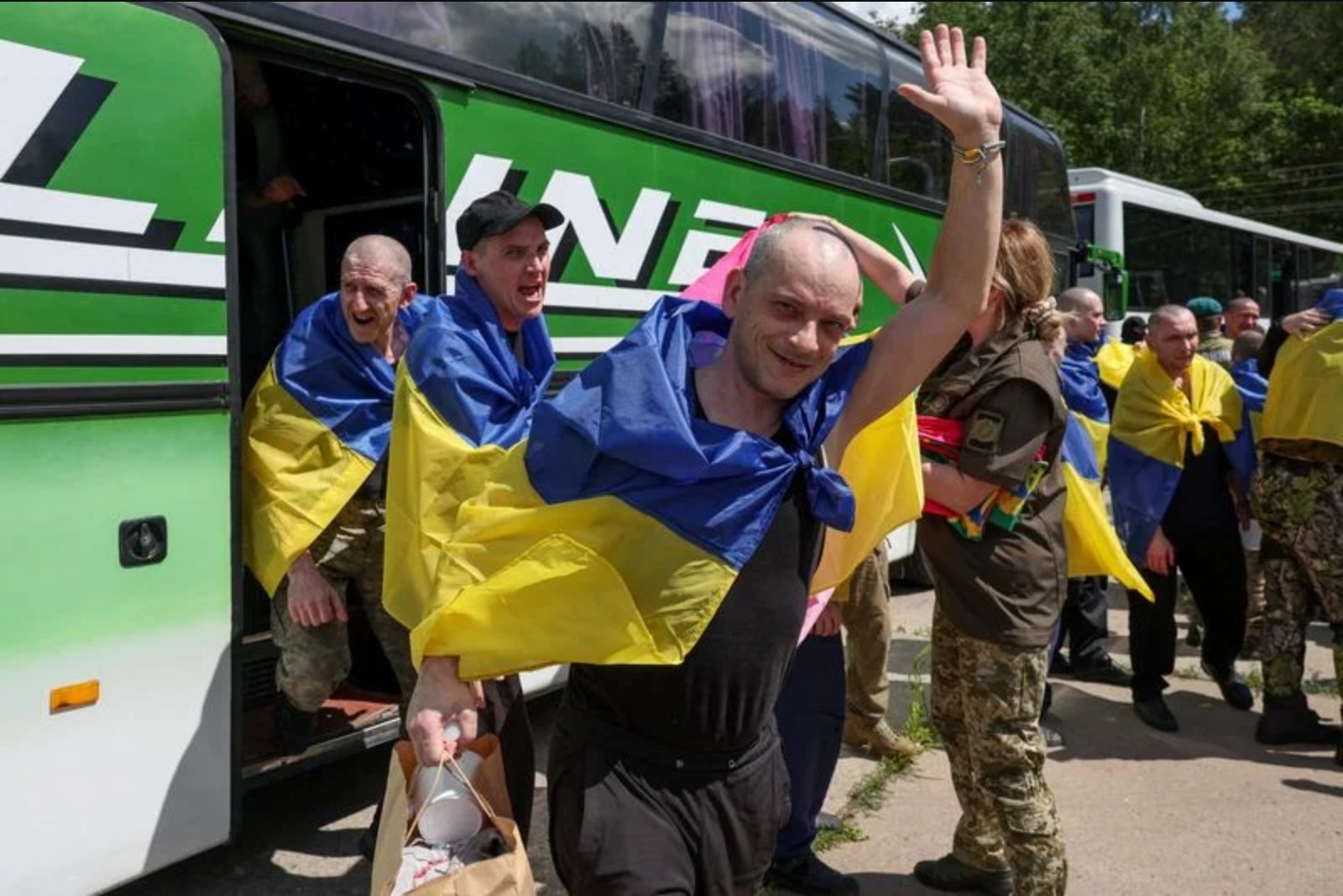
Summary: Ukraine and Russia conducted a reciprocal release of 185 service personnel each on Friday, officials in both countries reported. Kyiv noted that most of the Ukrainians freed had been held in Russia since 2022, and the general staff in Kyiv said the oldest returning Ukrainian was 62. Russia additionally released one civilian. The exchange was the second executed under a commitment to swap 1,000 prisoners on each side, linked to a three-day ceasefire agreement brokered by the United States in early May.
The latest swap was confirmed by officials in both capitals. President Volodymyr Zelenskiy said on X that most of the Ukrainians coming home had been in Russian custody since 2022, and he noted that Russia also handed back one civilian.
Kyiv’s general staff provided age information for the returning Ukrainians, stating that the oldest among them is 62 years old. Officials did not provide a breakdown of units, ranks, or specific dates of capture beyond the indication that the majority had been detained since 2022.
This exchange represents the second tranche under an agreement for mutual releases of 1,000 prisoners of war on each side. That framework is associated with a three-day ceasefire arrangement that was brokered by the United States in early May. The ceasefire arrangement and the broader prisoner exchange framework set numerical targets but the timing and sequencing of subsequent swaps were not detailed by the officials reporting Friday’s exchange.
According to the Russian defence ministry, the United Arab Emirates, which had mediated earlier swap rounds, also acted as a mediator for Friday’s exchange. The ministry posted its account of the mediation on the Telegram app. Ukrainian officials likewise reported the outcome but cited the duration of captivity for most returning service members rather than providing additional operational details.
Details released by both sides focused on the numbers exchanged and the role of mediators rather than on the specific mechanics or locations of the handover. The public statements left open questions about the schedule for remaining swaps needed to meet the 1,000-for-1,000 objective and about how the ceasefire framework will govern future exchanges.
Key details:
- Each side exchanged 185 service personnel in the latest swap.
- Most of the Ukrainians returned had been in Russian captivity since 2022; the oldest returning Ukrainian is 62.
- The swap is the second under a mutual agreement to exchange 1,000 prisoners on each side and is linked to a three-day ceasefire brokered by the United States in early May.
- The United Arab Emirates mediated the Friday exchange, according to the Russian defence ministry on Telegram; Russia also returned one civilian.
The public accounts provided by officials emphasized numbers and mediation but did not offer a full timetable for remaining exchanges or operational specifics.