
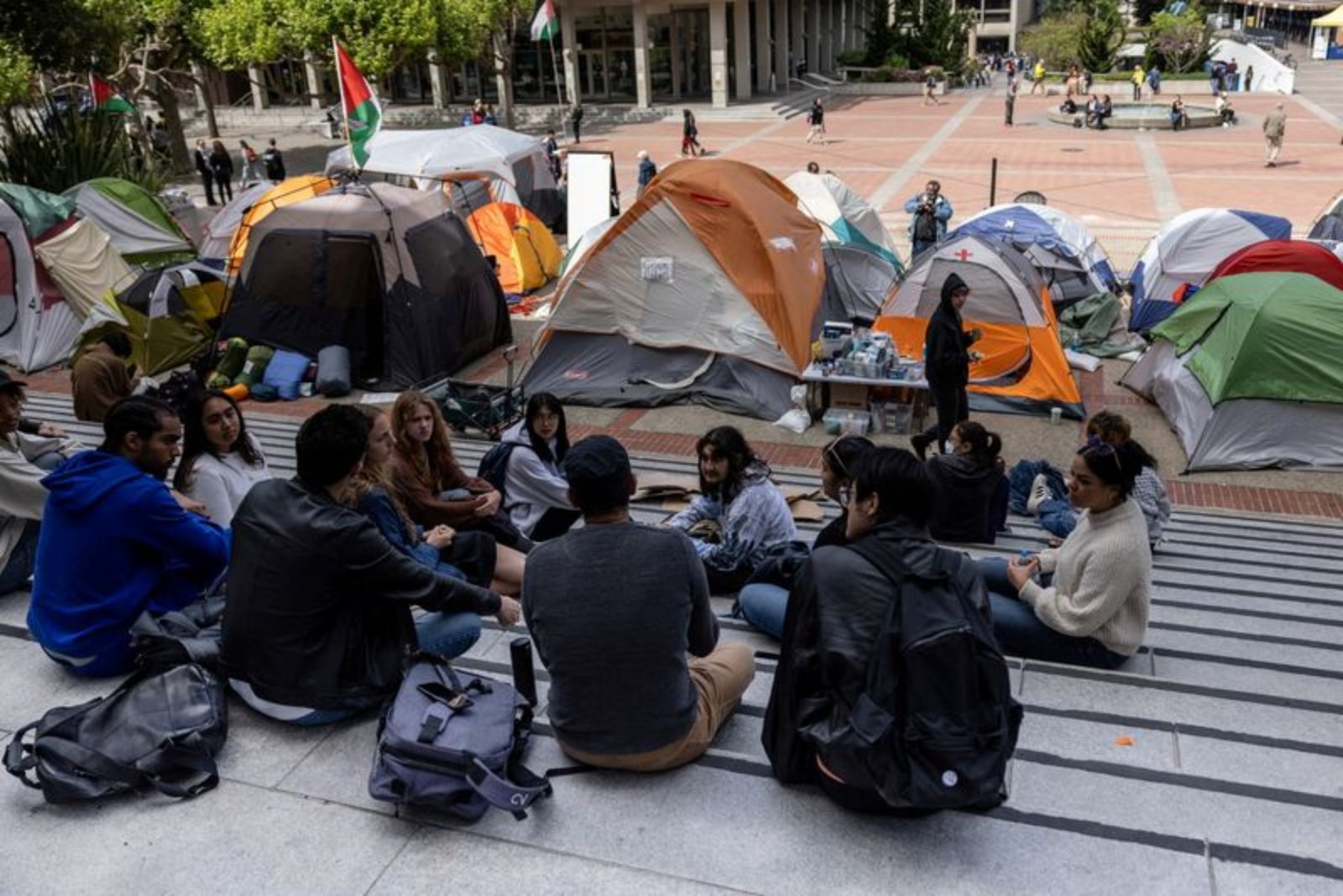
March 19 - The University of California, Berkeley has consented to a package of measures aimed at bolstering protections against antisemitism on campus, according to lawyers for the plaintiffs in a lawsuit accusing the university of tolerating a sustained pattern of harassment directed at Jewish students and faculty.
The suit was brought by the nonprofit Louis D. Brandeis Center and Jewish Americans for Fairness in Education. The plaintiffs alleged that UC Berkeley had failed to adequately address antisemitic conduct, citing in particular the university's response to anti-Israel demonstrations that followed Hamas' October 2023 attack on Israel and the tolerance of student organizations that excluded speakers who support Israel or Zionism.
According to the Brandeis Center, the settlement contains several concrete restrictions and procedural changes. Student groups, campus journals and clinics will be prohibited from blocking participation or barring speaking opportunities based on an individual's support for Israel or Zionism. The agreement also calls for mandatory antisemitism and anti-discrimination training for faculty and staff, the establishment of an improved process for handling complaints, and additional protections designed for Jewish and Israeli students.
The announcement of the settlement comes nearly a year after a federal judge allowed the plaintiffs to pursue claims against top UC Berkeley officials. At that time the judge found the plaintiffs had plausibly alleged that Jewish students and professors were treated differently because they were Jewish and that the university had been "deliberately indifferent" to harassment occurring on campus.
The terms outlined by the Brandeis Center focus on participation rights within student-run forums and on institutional changes for staff education and complaint adjudication. Beyond those elements, the statement from plaintiffs' counsel describes the settlement as a response to what they characterized as an "unrelenting" stream of harassment toward Jewish community members at the university.
Details released by the plaintiffs' lawyers emphasize the procedural and training components of the agreement but do not outline timelines or specific enforcement mechanisms in public statements. The settlement narrative references the earlier judicial finding as context for the negotiated terms.
Key points
- UC Berkeley agreed to prohibit student groups, journals and clinics from excluding individuals from participation or speaking based on support for Israel or Zionism.
- The settlement requires mandatory antisemitism and anti-discrimination training for faculty and staff and establishes an improved complaint handling process; higher education and legal sectors are directly affected.
- The agreement follows a federal judge's earlier decision that plaintiffs plausibly alleged differential treatment of Jewish students and faculty and that the university was "deliberately indifferent" to harassment.
Risks and uncertainties
- Implementation risk: Public statements do not specify enforcement timelines or mechanisms, leaving uncertainty about how quickly and effectively the new measures will be put into practice - this affects university administration and higher education governance.
- Legal uncertainty: Although a settlement was announced, the prior judicial finding that plaintiffs may sue top officials indicates ongoing legal sensitivities and potential for further proceedings if compliance is questioned - this pertains to the legal services sector.
- Unclear scope: The public description focuses on certain prohibitions and trainings but does not detail the full scope of "other protections" referenced for Jewish and Israeli students, creating ambiguity about the range of safeguards to be provided on campus.