
A Gaza construction firm has been identified by multiple sources as the contractor tapped to erect a large housing compound for tens of thousands of displaced Palestinians on territory now under Israeli military control near Rafah, sources familiar with the plan told Reuters.
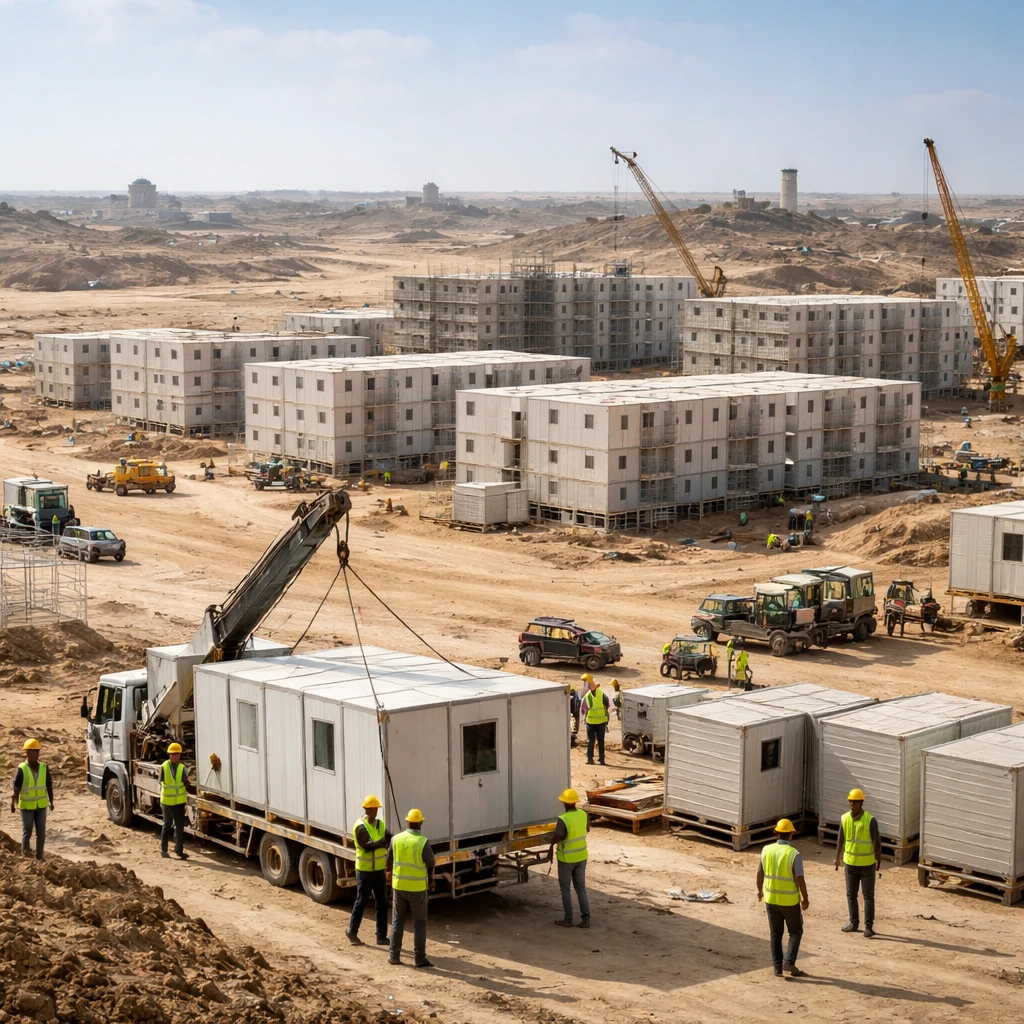
According to the planning map reviewed by those sources, the proposed development - which some diplomats refer to as "Emirates City" - would occupy land on Gaza's southern edge in an area that Israeli forces have largely depopulated and demolished during the conflict with Hamas. The plan calls for prefabricated, trailer-style housing units stacked across multiple stories on roughly 74 acres, and is described by one Palestinian businessman with direct knowledge of the arrangements as capable of accommodating tens of thousands of people.
Four individuals who spoke on condition of anonymity identified the contractor as the Gaza-based Masoud & Ali Contracting Co (MACC). The businessman described MACC partnering with two Egyptian firms on the construction, and said the three firms had been contracted by a large Egyptian company that would ultimately receive payment from the United Arab Emirates for the work.
MACC has a track record of leading substantial projects in Gaza and the West Bank, the businessman noted, and its website lists work including desalination plants, water-pumping stations, solar energy fields, bridges and buildings funded by international partners. MACC declined to comment when approached; Israeli military spokespeople and representatives of Hamas did not immediately respond to requests for comment.
The housing initiative is tied to wider reconstruction plans that form a central element of the ceasefire blueprint advanced by U.S. President Donald Trump and overseen by his Board of Peace. That plan envisages Gaza reconstruction beginning in Rafah, but other consequential steps - including the disarmament of Hamas and an Israeli military withdrawal from parts of the territory - have not been agreed and remain outstanding prerequisites in the broader peace framework.
A UAE official, while not confirming details of the compound, said the country was "firmly committed to supporting all international relief and recovery efforts in Gaza, in close collaboration with partners, to ensure that life-saving assistance reaches those in need swiftly and effectively." The UAE pledged $1.2 billion for Gaza at a recent Board of Peace conference; separate statements from UAE officials say the country has provided almost $3 billion in assistance to Gaza since the war began, according to the UAE foreign minister.
Those involved in the planning told Reuters that work on the ground has not started. One reason offered is that Israel has yet to approve the compound's plans. A Western diplomat briefed on the project said contractors had been scheduled to visit the site earlier this month, although it was not clear whether the visit took place.
The involvement of a Gaza-based contractor, the Palestinian businessman and other observers say, could be intended to reduce local hostility toward a project that would take place in an area under Israeli control. Employing Gazans on construction would create jobs and involve local cultural considerations in design and implementation, factors that a Palestinian political analyst said would make the project "more acceptable to Gazans." However, the businessman and other sources note there is uncertainty over whether large numbers of Palestinians would agree to live or work in an Israeli-held section of Gaza.
The proposed compound sits within a broader and contested environment. Since the October ceasefire between Israel and Hamas, Israel has retained control of roughly 53% of Gaza, according to the sources, where the security dynamics and recent demolitions have left many buildings destroyed and significant military fortifications in place. Gaza's more than 2 million residents are concentrated largely in a reduced coastal strip still under Hamas control, with many displaced people living in makeshift shelters and damaged structures.
Operationally, the businessman said the three contracted firms - MACC and the two Egyptian partners - were engaged through an arrangement with the large Egyptian company that would manage payments from the UAE. The businessman declined to identify that Egyptian company. The sources emphasized that announcements to date have not been made publicly by the UAE about the housing compound, and MACC's involvement had not previously been reported.
Within the framework of the Board of Peace, the UAE's housing project has been described in diplomatic discussions as coordinated with Washington and with the Palestinian technocratic committee established to take on governance responsibilities in Gaza under the ceasefire plan. The U.S. and other involved parties are said to be engaged in coordination, though public presentations at the Board of Peace conference did not include the compound as a disclosed line item.
At present, the initiative faces multiple procedural and political hurdles. Israel's approval process for construction in areas it controls has not completed, and key elements of the wider ceasefire plan - notably the disarmament of Hamas and an Israeli military withdrawal - remain unresolved. The willingness of displaced Gazans to relocate into housing within Israeli-held territory and the practicalities of employment and daily life under such arrangements will be critical determinants of whether the project can move forward and be accepted locally.
For now, the idea remains at the planning stage: an Emirati-funded, Gaza-built compound that would aim to provide large-scale housing in a heavily contested part of the coastal territory. The project highlights both the international appetite to support reconstruction and the complex political, security and humanitarian factors that must be addressed before rebuilding can begin in earnest.