
Overview
Two decades of deliberate state support have transformed Turkey from a country reliant on foreign arms suppliers into a significant exporter of unmanned aerial systems and other defence matériel. Turkish-built systems are now purchased by almost 40 countries across the Gulf, Africa, Asia and parts of Europe. Buyers frequently cite lower cost, speed of delivery and adaptability as advantages compared with alternatives.
Export growth and industrial maturation
Official trade data reviewed by Reuters show Turkish defence exports more than tripled since 2021, reaching $10 billion last year and representing roughly 3.7% of overall exports from the country. Exports to Europe and the United States nearly quadrupled over the same period to $5.6 billion. This expansion has coincided with the emergence of domestic firms such as Baykar, Turkish Aerospace Industries and smaller contractors including Arca Defense and Kale.
Analysts attribute the rise to a combination of sustained government backing, flexible supply chains and a readiness to tailor systems to specific customer needs. Those attributes have allowed Turkish firms to move quickly into markets where traditional Western suppliers face manufacturing capacity constraints or extended procurement timelines.
Strategic environment and market opportunity
Shifts in the global security environment have underpinned demand. European governments are reassessing defence supply dependencies in the wake of Russia's invasion of Ukraine and are questioning the durability of U.S. security guarantees. Many NATO members increasingly view Turkey as a military anchor on the alliance's southeastern flank and, potentially, as an industrial partner able to help fill capability and supply gaps.
Ankara is looking to leverage an upcoming NATO summit, which Turkey will host, as a commercial and industrial showcase. Turkish officials are hoping the gathering will create openings for expanded arms sales and joint production arrangements in Western markets, particularly within the European Union. The summit is due to include a defence industry forum described by alliance leadership as the most comprehensive of its kind, and Turkish officials say the defence sector will be a focal point at the meeting on July 7-8.
Products, pipeline and global footprint
Turkey is already a prominent supplier of armed drones, ammunition and other systems. The country supplies an estimated 65% of armed drones used globally and is a significant ammunition exporter. Beyond unmanned systems, Turkey produces or has programmes to produce larger platforms and systems, including frigates, an aircraft carrier, air-defence systems and armoured vehicles. Indonesia announced last year plans to purchase 48 Turkish fighter jets currently under development, underlining interest in Ankara's broader platform ambitions.
Economic aims and defence funding
The defence agency in Ankara has set an ambitious target to double defence exports within two years. Officials argue that higher export revenues could generate critical funds for debt reduction and further industrial development. The agency also reports a marked increase in support for defence research and development: over the five-year window to 2025 the number of funded R&D projects more than doubled to over 1,400.
Security pressures and domestic capability gaps
Turkey's own security environment — positioned between the conflict in Ukraine to the north and geopolitical tensions around Iran to the southeast — creates both pressures and commercial openings. Observers note gaps remain in key areas such as air defences and propulsion systems for jets and tanks. Those capability shortfalls present potential avenues for trade and technology partnerships if suitable agreements can be reached.
Political headwinds in Europe
Despite market interest, structural and political barriers in Europe constrain deeper integration. Turkey is largely excluded from the European Union's Security Action for Europe (SAFE) programme, and some EU governments have kept Ankara at arm's length because of bilateral policy disputes and concerns about democratic backsliding, including a major legal crackdown on the main opposition party. These political sensitivities feed into defence procurement decisions and members-only initiatives that can limit access to certain programmes.
Even so, Turkish firms have secured bilateral supply contracts with several European states, including Poland, Spain, Portugal and Romania. Baykar has acquired Italy's Piaggio Aerospace and entered into a production partnership with Leonardo, signalling that industrial links to Europe are possible where there is political and commercial alignment.
Reputational risks and messaging
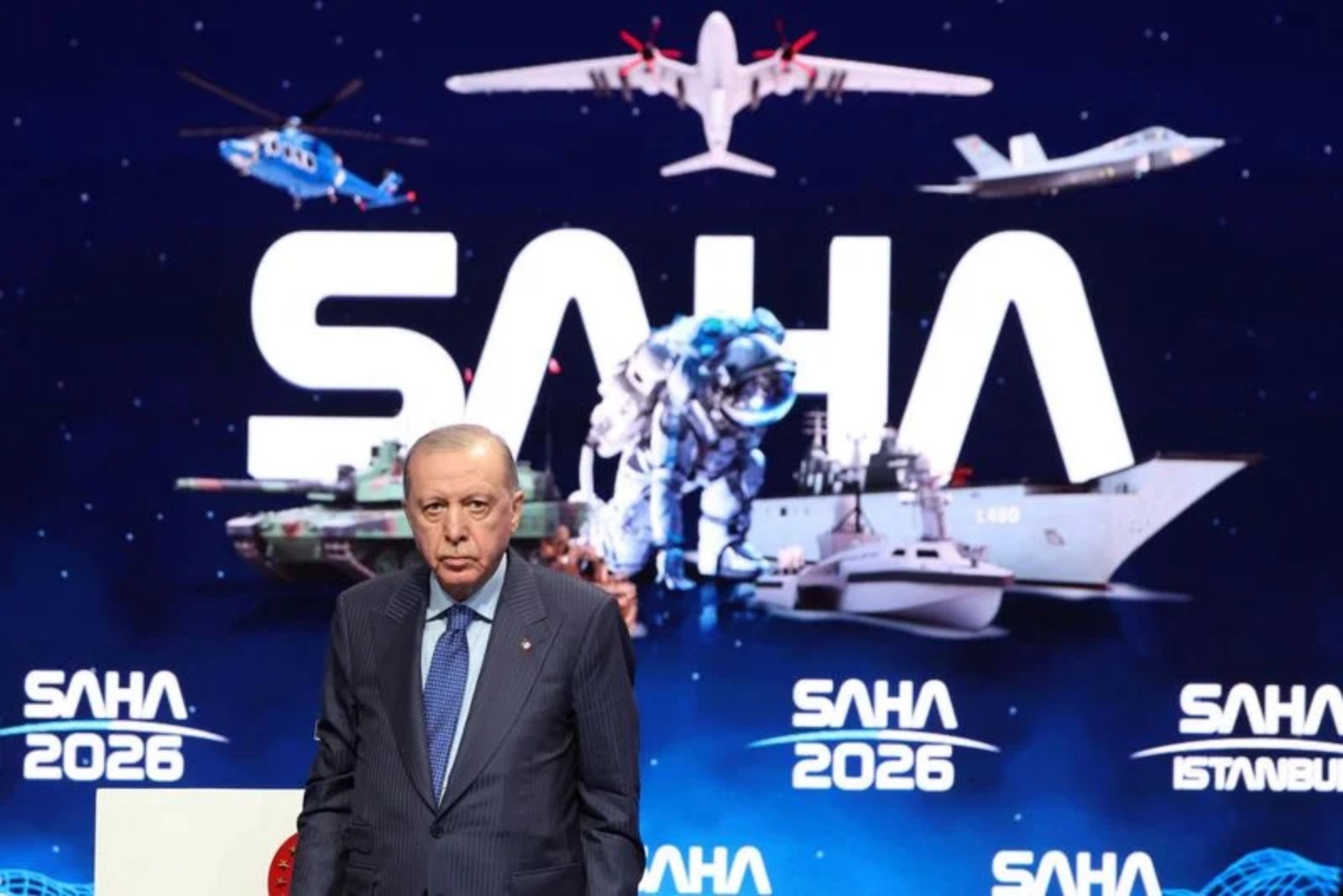
Turkey's industry growth has not been without controversy. At a recent defence exhibition in Istanbul, Ankara displayed a prototype domestic intercontinental ballistic missile. The unveiling prompted criticism from some experts who questioned the practical feasibility and strategic messaging after a promotional video depicted a hypothetical launch trajectory that appeared to be aimed at North America. Such episodes illustrate how technological demonstrations can create reputational friction with potential partners.
Global spending backdrop
Rising military budgets internationally have helped expand opportunities for exporters. Analysis from the Stockholm International Peace Research Institute indicates global military spending rose 24% to nearly $2.9 trillion in the five-year period to 2025, with a 75% increase in Europe during that time. Those trends, combined with Ankara's stepped-up R&D support, underpin the Turkish industry's bid for deeper market penetration.
Analyst perspectives
Experts point to the combination of platform capability and industrial depth as central to Turkey's recent credibility. Can Kasapoglu, a senior fellow at the Hudson Institute, said the Turkish defence industry had made a "major leap" by exporting advanced systems, notably aerial drones. He and other observers contend the conflict in Ukraine highlighted the importance of not just advanced platforms but also the industrial capacity to sustain them.
Arda Mevlutoglu, a defence analyst, suggested that conditions exist for closer cooperation with Europe if political obstacles can be managed. He argued Europe needs rapidly deliverable solutions and that progress will depend on high-level political will. Mevlutoglu also described Turkey as undergoing a process of realignment and recalibration toward both Europe and NATO.
Outlook
Turkey's defence sector is navigating a complex mix of accelerating demand, domestic capability expansion and diplomatic friction. Ankara's aim to convert export momentum into deeper industrial partnerships in Western markets faces both commercial openings and political barriers. How those dynamics resolve will shape opportunities for Turkish suppliers and influence broader supply chains and procurement patterns among allies seeking to rebalance their defence industrial bases.