
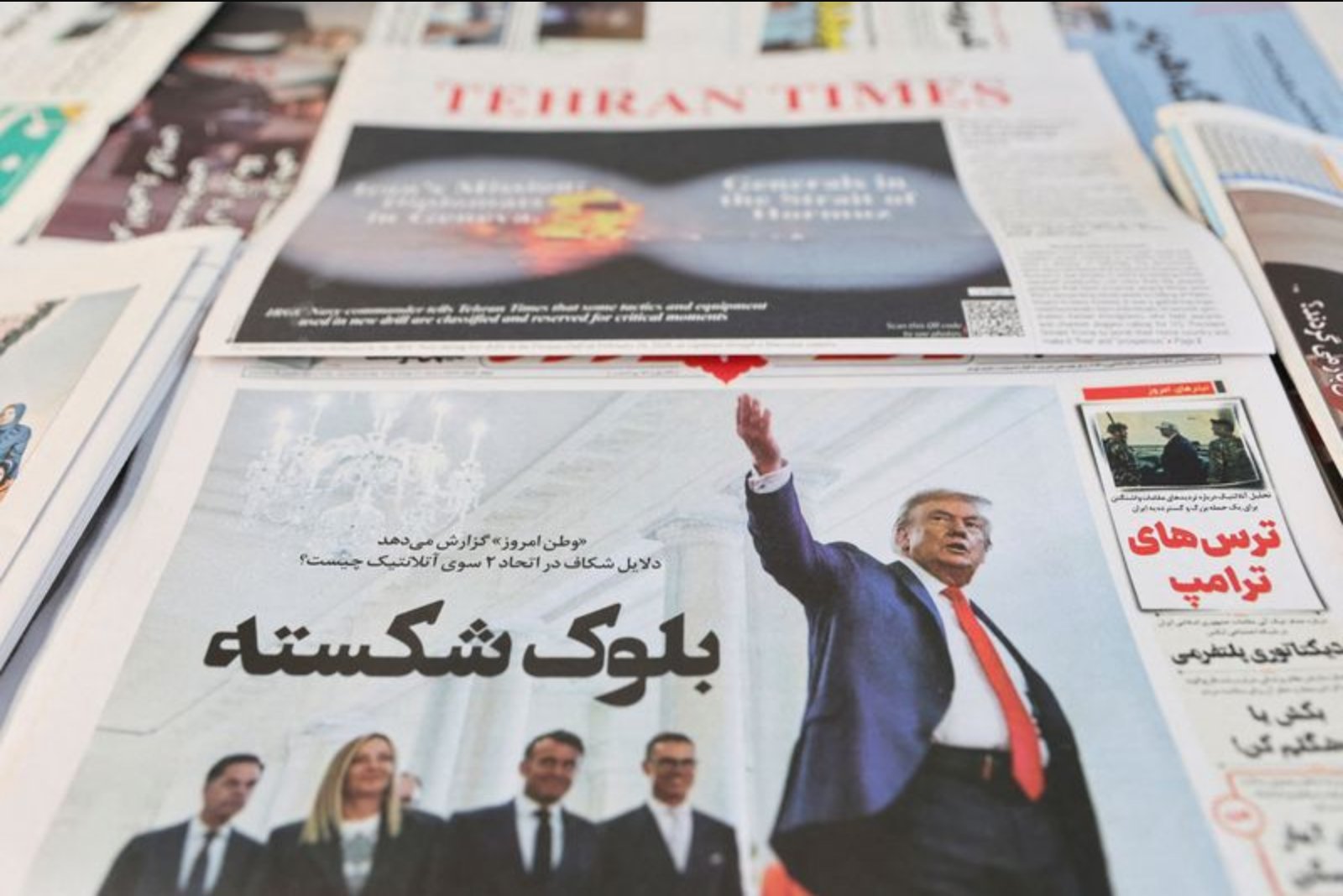
President Donald Trump has directed a major concentration of U.S. military assets to the Middle East and ordered preparations for what officials say could be a multi-week air assault on Iran, a posture that has moved the administration closer to a possible large-scale military confrontation. The president has not publicly provided a detailed explanation to the American people for why such an intense campaign might be warranted, despite repeatedly signaling a readiness to pursue forceful measures.
That emphasis on foreign policy and the expanded use of military force has been the dominant feature of the administration's agenda during the first 13 months of the president's second term, often overshadowing domestic concerns such as the rising cost of living that public opinion surveys place high on voters' lists of priorities.
Inside the White House, however, there is not unanimous backing for immediate military action against Iran. A senior administration official told staff that, despite the president's aggressive rhetoric, there remains no "unified support" within the administration to go forward with an attack. That official, speaking on the condition of anonymity because they were not authorized to speak publicly, also said aides are wary of sending a "distracted message" to undecided voters who are more worried about economic matters.
Advisers and Republican campaign officials have emphasized to the president that the campaign should remain focused on the economy, according to a person who attended a private briefing earlier this week that included multiple cabinet secretaries. The president was not present at that meeting, which was reportedly meant to align messaging around domestic priorities.
A separate White House official, in response to questions posed for this analysis, framed the president's foreign policy as delivering concrete benefits. That official said the administration's actions "have directly translated into wins for the American people." "All of the President's actions put America First - be it through making the entire world safer or bringing economic deliverables home to our country," the official added.
The stakes are clear for November's elections, which will determine whether the president's Republican Party retains control of both chambers of the U.S. Congress. Losing one or both chambers would create a significant obstacle for the administration in the remaining years of the presidency.
Political strategists warn that a protracted conflict with Iran could be politically perilous for Republicans. Rob Godfrey, a Republican strategist, said the president must remember the political base that backed him through "three consecutive times" in securing the party's nomination and continues to support him; that base is generally skeptical of foreign entanglements, given the campaign promise to end what they characterize as "forever wars."
Republicans plan to make their midterm case around policies that include individual tax cuts passed by Congress last year and measures to lower housing costs and some prescription drug prices. Campaign officials are mindful that military escalation could complicate that message.
Some elements of the president's political coalition supported a recent rapid raid that ousted Venezuelan President Nicolas Maduro last month. But many analysts and advisers caution that Iran presents a far tougher adversary, and support for a military campaign may be more conditional if the White House moves toward conflict with Tehran.
The president has, in recent public statements, reiterated threats to strike Iran unless it reaches a satisfactory agreement on its nuclear program, saying Tehran "better negotiate a fair deal." Officials note that U.S. forces targeted nuclear sites in Iran in June, and Iran has warned it would retaliate forcefully if struck again.
The president was reelected in 2024 campaigning on an "America First" platform that emphasized reducing inflation and avoiding costly foreign conflicts. Public opinion data indicate he has struggled to convince many Americans that his administration is making sufficient progress in lowering high prices.
Lauren Cooley, a Republican strategist, suggested that the president's supporters might back military action against Iran if it were "decisive and limited." She added that any administration action would need to be clearly connected to protecting U.S. security and preserving economic stability at home in order to maintain broader public and political support.
Even with those caveats, polls show limited public appetite for another foreign war. That dynamic, combined with what aides describe as the president's difficulty maintaining a consistent economic message that fully addresses voters' concerns about the cost of living, makes escalation with Iran a politically risky path. The president has acknowledged in a recent interview that his party could face challenges in the midterm elections.
Observers note that foreign policy has rarely been a decisive factor for midterm voters historically. Yet by deploying a substantial array of aircraft carriers, warships and warplanes to the Middle East, the administration may have constrained its options. The visible buildup could make it politically difficult to refrain from military action unless Iran makes significant concessions, the sort that, to date, it has shown little inclination to accept. Failure to act after such a deployment could open the president to criticism of weakness on the international stage.
The administration's publicly stated reasons for possible strikes have been varied. Earlier this year the president threatened strikes in January in response to Iran's harsh crackdown on nationwide street protests, but those plans were not carried out. More recently he has framed threats around the need to end Iran's nuclear program and has at times invoked the prospect of "regime change." Yet neither the president nor senior aides have outlined how an air campaign would accomplish such comprehensive goals.
One White House official stressed that the president "has been clear that he always prefers diplomacy, and that Iran should make a deal before it is too late." That official reiterated the administration's position that Iran "cannot have a nuclear weapon or the capacity to build one, and that they cannot enrich uranium."
What many observers describe as a relative lack of clarity from the administration stands in contrast to past presidential practice in which leaders sometimes made detailed public cases for military actions. The administration's current mix of public warnings, military posturing and internal debate leaves voters and political stakeholders assessing both the humanitarian and economic implications of any escalation with Iran.
Summary
The president's focus on Iran has produced a large U.S. military buildup in the Middle East and preparations for a possible multi-week air campaign. Inside the administration, officials acknowledge a lack of unified support for an attack and emphasize the need to avoid distracting voters from economic concerns ahead of the midterm elections. Political strategists warn that escalation carries significant risks for Republican electoral prospects, while the administration maintains it is acting to protect American interests and economic outcomes.
Key Points
- Trump ordered a major military buildup in the Middle East and preparations for a potential multi-week air campaign against Iran.
- Senior officials say there is no unified support in the administration for an attack; aides are concerned about distracting undecided voters who prioritize the economy, affecting sectors such as consumer spending and healthcare.
- November's midterm elections will determine control of both chambers of Congress, and a prolonged conflict with Iran could impact market confidence and sectors tied to defense and energy.
Risks and Uncertainties
- Political risk: A sustained military campaign could erode Republican support among voters and affect election outcomes, with implications for fiscal and regulatory policy that influence markets.
- Strategic risk: The visible deployment of forces may pressure the administration to act, raising the possibility of a miscalculation or protracted engagement that would affect defense contractors and global energy markets.
- Public messaging risk: Continued focus on foreign policy at the expense of economic messaging could undermine efforts to persuade voters that the administration is addressing inflation and living costs, impacting consumer confidence and related sectors.