
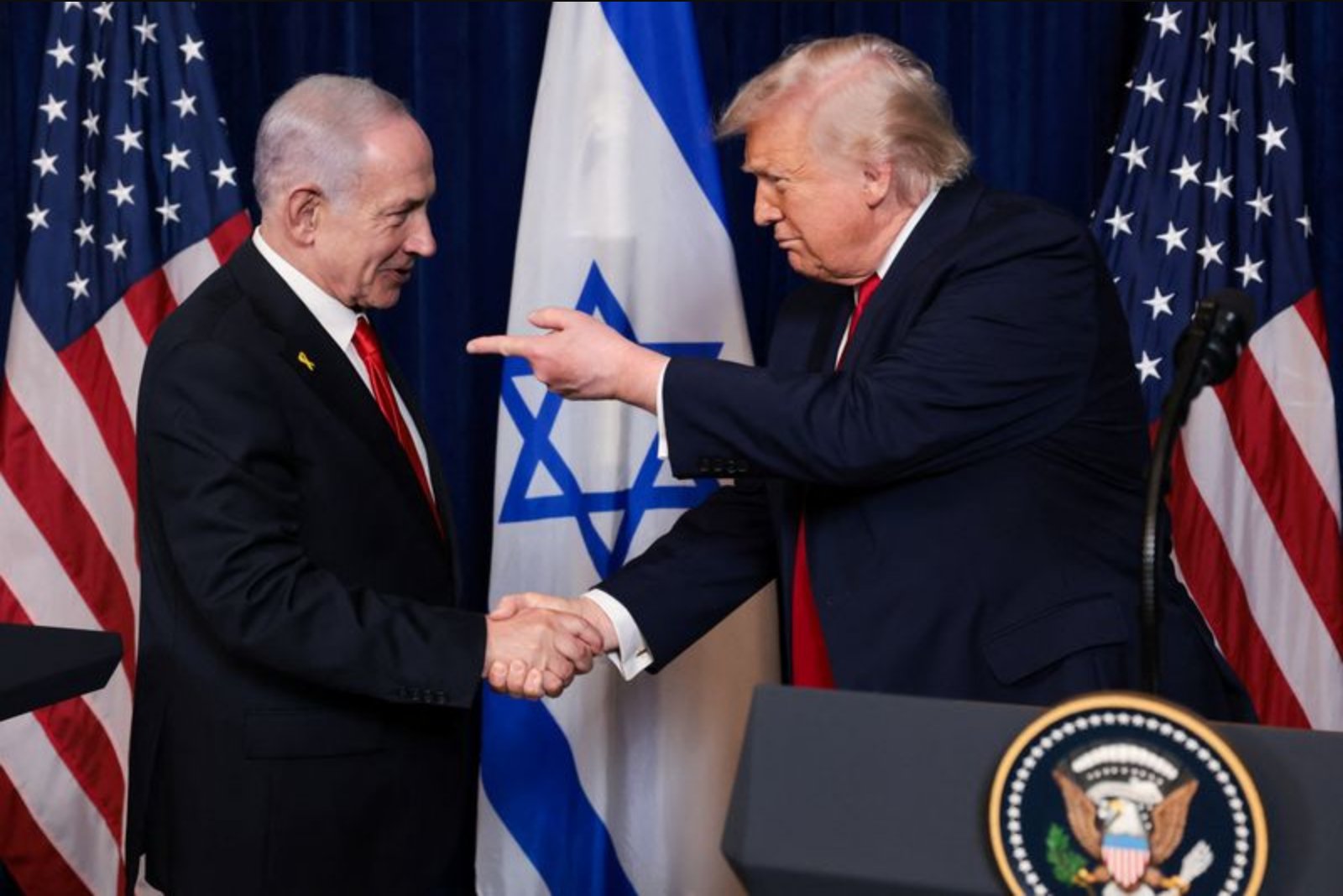
JERUSALEM, March 5 - U.S. President Donald Trump renewed his public appeal on Thursday for Israel's president to grant Prime Minister Benjamin Netanyahu a pardon from corruption charges, arguing that the prime minister should be preoccupied only with the war involving Iran.
"President Herzog must give Bibi a pardon today. I don't want there to be anything troubling Bibi other than the war with Iran ... Herzog is a disgrace ... he promised me five times to give Bibi a pardon."
Trump made the remarks in an interview with Israel's N12 television, using Netanyahu's nickname and pressing President Isaac Herzog to act immediately on the pardon request. The president characterized Herzog's handling of the matter in sharply critical terms and said Herzog had assured him on multiple occasions that a pardon would be forthcoming.
In response, President Herzog's office said that while Israel is engaged in a war, he is not addressing the request for a pardon. The office emphasized the country's commitment to the rule of law and framed the decision as one that will be taken in line with legal responsibilities and the national interest.
Herzog's statement included a direct explanation of his approach: "The president will examine the request according to the law, the good of the state, his conscience and free of any internal or external pressure," it said. The statement also noted Herzog's respect for Trump's contributions to Israel's security and his stance on Iran, while underlining Israeli sovereignty in legal matters.
Key background
- Netanyahu is the first sitting Israeli prime minister to face criminal charges. He denies accusations of bribery, fraud and breach of trust, which stem from a 2019 indictment.
- Netanyahu filed a formal pardon request in November.
- Trump has made multiple public appeals previously urging President Herzog to grant Netanyahu clemency.
- The United States and Israel launched a joint bombing campaign against Iran on Saturday, an event referenced in the broader context of the conflict.
Legal considerations
Under Israeli law the president has the authority to pardon convicts, but there is no precedent for issuing a pardon while a trial is still in progress. The process for considering and granting a pardon can be lengthy, and the statement from Herzog's office indicates the decision will be weighed against legal criteria, the welfare of the state and the president's conscience.
What comes next
Herzog's office said he will review the pardon request in accordance with the law and without succumbing to internal or external pressure. Given the lack of precedent for mid-trial pardons and the declared wartime context, the legal and political handling of the petition is likely to proceed cautiously.