
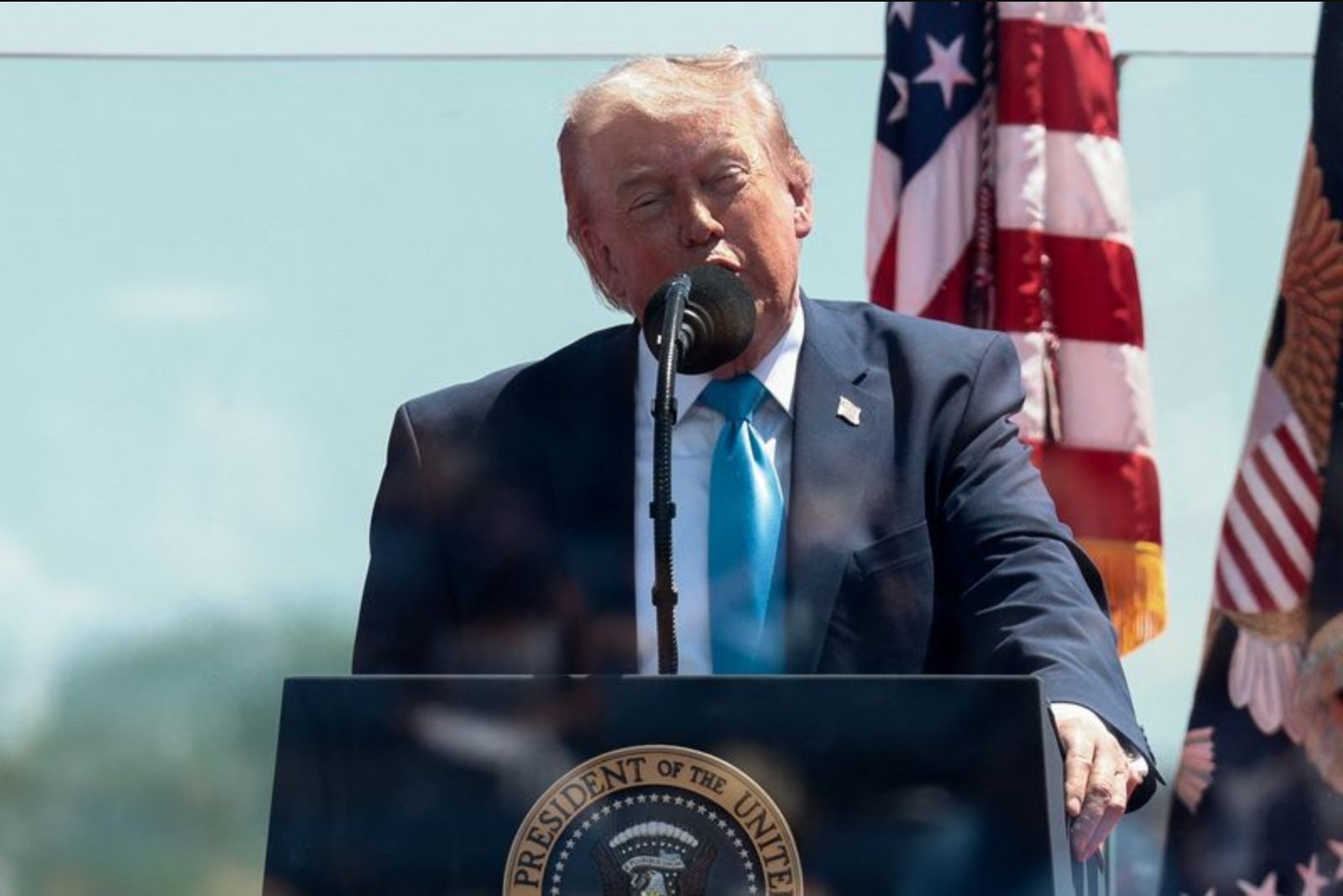
NEW LONDON, Connecticut, May 20 - President Donald Trump told graduates at the U.S. Coast Guard Academy on Wednesday that the United States might have to increase military pressure on Iran but would hold off to see whether a negotiated settlement is concluded.
“We’ll see what happens,” Trump said during the commencement address. “We hit them very hard. We may have to hit them even harder - but maybe not.”
His comments repeated an “either/or” formulation he has used since announcing a ceasefire six weeks ago, presenting the choice as either a return to more intensive military action or the signing of a diplomatic agreement by Iran.
“We will not let Iran have a nuclear weapon. It’s very simple,” Trump told the cadets. He went on to characterize Iran’s military forces as largely depleted, saying that its navy and air force were effectively gone along with “just about everything.”
“Everything’s gone. Their navy’s gone. Their air force is gone. Just about everything. The only question is, do we go and finish it up? Are they going to be signing a document? Let’s see what happens,” he said.
Earlier on Wednesday, the president said negotiations with Iran were in their final stages, while also warning that additional attacks could follow unless Iran agrees to a deal addressing its nuclear program. Those remarks reinforced the dual-track message that either a diplomatic resolution will be reached or the United States could resume intensified military operations.
Context provided by the president at the academy emphasized both a firm pledge to prevent Iran from acquiring nuclear weapons and the uncertainty around whether current talks will yield a signed agreement. His language framed the situation as contingent on Iranian choices and on the outcome of negotiations that he described as nearing completion.
The remarks come in the context of a ceasefire the president announced about six weeks earlier and represent a continuation of the same choice-oriented rhetoric about whether to pursue further military action or accept a diplomatic settlement.
Graduates and observers heard a succinct statement of policy intent from the podium: a refusal to permit a nuclear-armed Iran coupled with a conditional openness to conclude talks if Iran signs a document that meets U.S. demands.
How events unfold will depend on the trajectory of those final-stage negotiations and on any decisions by U.S. leadership about further military steps.