
World March 9, 2026

Trump Says No Decision Yet on Sending U.S. Forces to Secure Iran’s Enriched Uranium

President characterizes troop deployment discussions as far from a decision amid recent U.S.-Iran exchanges

By Maya Rios
Trump Says No Decision Yet on Sending U.S. Forces to Secure Iran’s Enriched Uranium

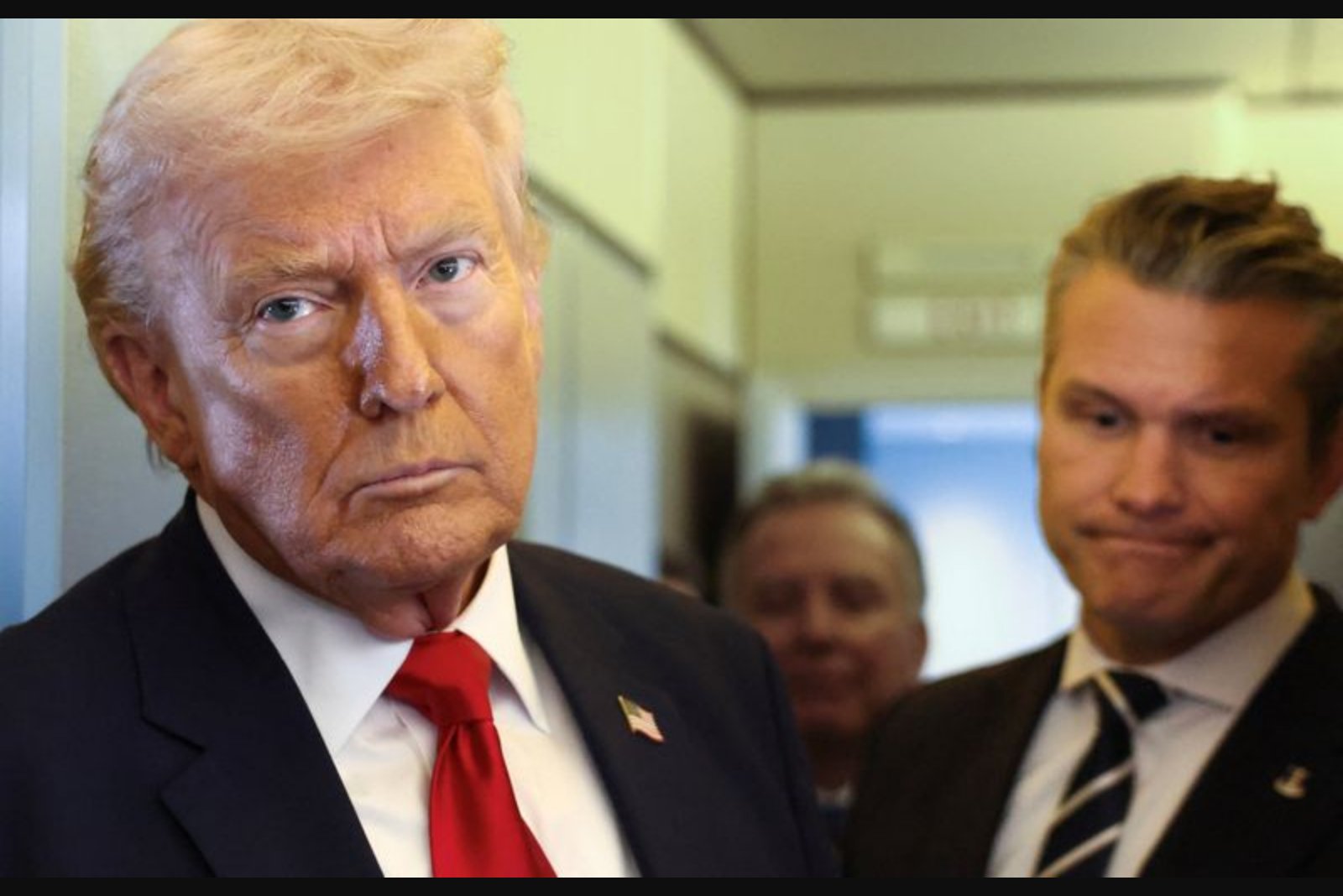
President Donald Trump told the New York Post on March 9 that the United States has not decided to deploy troops into Iran to secure highly enriched uranium and that such a choice is "nowhere near" being made. The comment came as U.S. and Israeli strikes, and Iranian retaliatory actions across the Middle East, have intensified a dispute over Tehran’s nuclear activities. Iran maintains its enrichment program is for civilian purposes and denies seeking nuclear weapons.

Key Points

  • President Trump stated on March 9 that the U.S. has not decided to send troops into Iran to secure highly enriched uranium and described such a decision as "nowhere near." - Sectors impacted: defense, geopolitics.
  • The comments followed a recent uptick in military actions - U.S. and Israeli strikes against Iran and Iranian retaliatory attacks across the Middle East - tied to a longstanding dispute over Iran’s nuclear activities. - Sectors impacted: energy markets, defense contractors.
  • Iran denies pursuing nuclear weapons and says its uranium enrichment program is solely for civilian energy use; enrichment can produce either reactor fuel or material usable for warheads depending on enrichment levels and duration. - Sectors impacted: nuclear energy, international security.

President Donald Trump said on March 9 that the U.S. government has not reached a decision about sending American forces into Iran to seize and safeguard highly enriched uranium, describing any move toward deployment as distant from happening.

"We haven’t made any decision on that. We’re nowhere near it," Trump told the New York Post when questioned about reports of discussions between Israel and the United States on the possible use of special forces to secure uranium stockpiles inside Iran.

The president’s remarks came amid a recent escalation in hostilities tied to a long-running dispute over Iran’s nuclear program. The tension intensified roughly ten days earlier when the United States and Israel carried out strikes against Iran, and Iran subsequently conducted attacks across the Middle East in response.

Last month, the president asserted that Iran was beginning to rebuild its nuclear program, a claim tied to earlier U.S. strikes in June of the previous year that he said had "obliterated" that program. The statement repeated a contested characterization and was offered without accompanying evidence in the comments cited.

Iran has consistently denied any desire to obtain nuclear weapons. Iranian officials say the country’s uranium enrichment activities are intended for civilian ends. The process of enriching uranium can yield material suitable for either power generation or, if enrichment continues to higher levels, for nuclear warheads - the differentiating factor being the duration and extent of the enrichment process.

The president’s indication that a deployment decision is not imminent leaves open the range of policy options under consideration, while confirming that discussions reported publicly - including those reportedly involving Israel - have not translated into an approved operational step to move U.S. troops into Iran to secure atomic material.


Contextual note - The exchange reported here focuses on official statements and reported discussions; it does not report on any operational planning details or timelines beyond the president’s public comment that no decision has been made.

Risks

  • Further escalation between Iran, the U.S., and Israel could heighten geopolitical risk and affect regional stability, with potential repercussions for markets sensitive to conflict - particularly energy and defense sectors.
  • Uncertainty remains about any future U.S. operational decisions; absence of a decision now does not preclude future changes in posture, creating policy and planning uncertainty for governments and affected industries.
  • Conflicting public claims about the status of Iran's nuclear program - including assertions made without presented evidence - contribute to informational uncertainty, complicating assessment and response by policymakers and market participants.

More from World

Researchers sue U.S. government over visa policy they say targets disinformation studies Mar 9, 2026 Trump Says U.S. Is 'Very Far' Ahead in Conflict with Iran; Calls War 'Very Complete' Mar 9, 2026 Two Young Men Charged in Manhattan After Homemade Bombs Thrown at Anti-Muslim Rally Mar 9, 2026 NATO Systems Intercept Second Iranian Missile Over Turkey as Ankara Warns of Firm Response Mar 9, 2026 Supreme Court to Weigh Challenge Over Air Force Hazardous-Waste Detonations in Guam Mar 9, 2026