
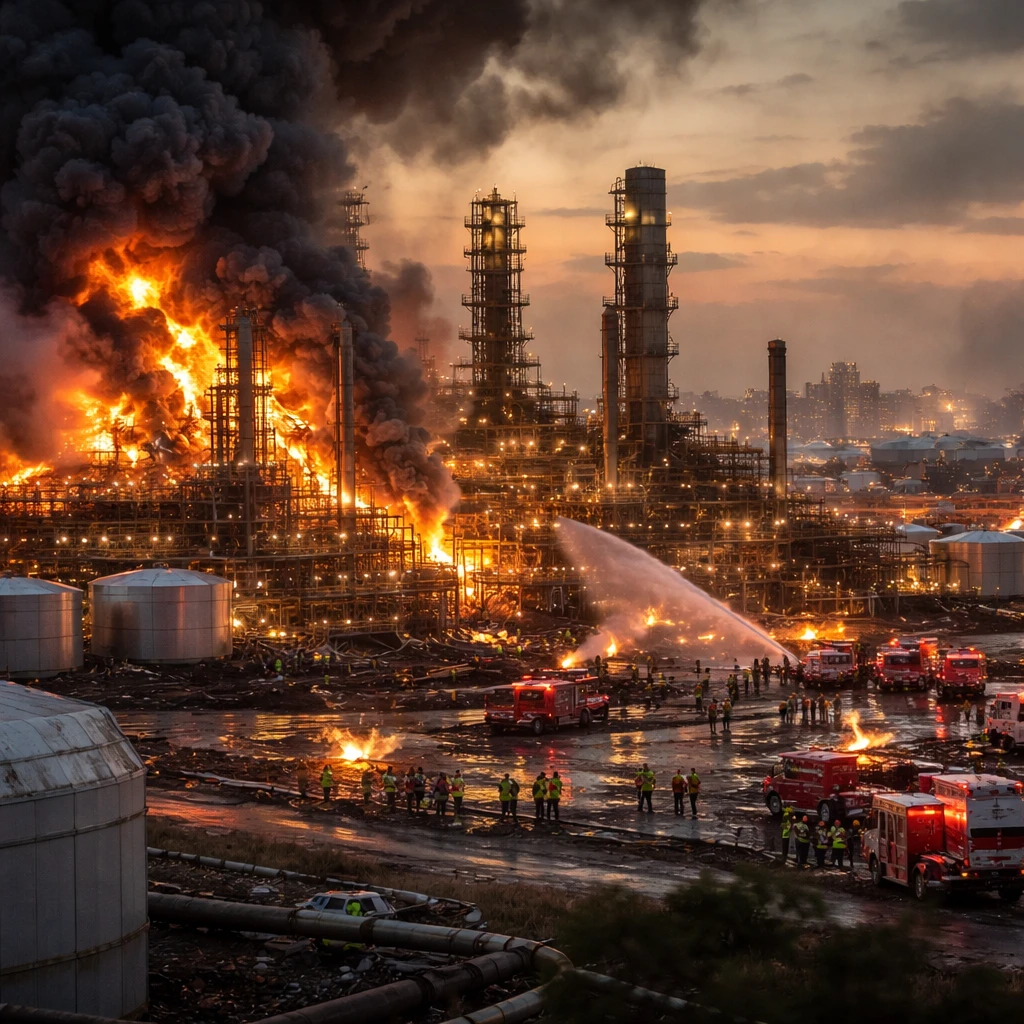
U.S. President Donald Trump said Israel "violently lashed out" when it attacked Iran's South Pars gas field and announced that Israel would not carry out additional strikes on that facility unless Iran first targeted a third party. The series of attacks that followed on Wednesday and Thursday widened the conflict in the Gulf, inflicted damage on major energy infrastructure and intensified disruptions to global fuel supplies.
Wednesday's strike on the South Pars field - a significant component of Iran's gas production - pushed oil prices up and triggered threats by Tehran to hit oil and gas targets across the Gulf. Iran also launched missiles that struck facilities in Qatar and Saudi Arabia, according to regional reports and statements.
QatarEnergy, the state oil company of Qatar, reported "extensive damage" after missiles from Iran struck the Ras Laffan Industrial City. Ras Laffan is a major processing hub and handles roughly one-fifth of the world's gas supply, underscoring the scale of the disruption caused by the attacks.
Saudi authorities said they intercepted and destroyed four ballistic missiles launched toward Riyadh on Wednesday, and that an attempted drone strike targeted a gas facility in the kingdom's east. On Thursday, Iran again targeted Qatari gas facilities and launched missiles toward the Saudi capital, according to official statements. QatarEnergy reported "sizeable fires" and extensive damage at several of its liquefied natural gas facilities following the early-morning missile attacks on Thursday.
President Trump said the United States had not received prior notice of Israel's operation and asserted that Qatar was not involved. In a post on X on Wednesday, he wrote that Israel had acted out of anger over events in the Middle East and had "violently lashed out" at the South Pars gas field in Iran. He added that Iran had been unaware of the relevant facts regarding the attack and, in response, had struck a portion of Qatar's LNG infrastructure "unjustifiably and unfairly."
Trump further stated that "NO MORE ATTACKS WILL BE MADE BY ISRAEL pertaining to this extremely important and valuable South Pars Field unless Iran unwisely decides to attack a very innocent, in this case, Qatar." He warned that if Iran did attack Qatar, "the United States of America, with or without the help or consent of Israel, will massively blow up the entirety of the South Pars Gas Field at an amount of strength and power that Iran has never seen or witnessed before."
Earlier reporting cited that Trump had approved an Israeli plan to attack Iran's natural gas field. South Pars is the Iranian portion of the world's largest natural gas deposit, which Iran shares with neighboring Qatar. Qatar is a close U.S. ally and hosts the United States' largest military base in the Gulf region.
Since the conflict began, Tehran has targeted not only Israel but also U.S. diplomatic and military sites across the Gulf, while warning neighboring states against providing bases for operations against Iran. With no immediate sign of de-escalation, U.S. planners are considering the deployment of several thousand additional troops to the Middle East, according to a U.S. official and three people familiar with the planning. Those troops could be tasked with restoring safe passage for oil tankers through the Strait of Hormuz, a strategic chokepoint responsible for about one-fifth of global oil trade.
Regional diplomatic response
The foreign ministers of six Islamic countries, meeting in Riyadh, condemned Iran's strikes on its Gulf neighbors and urged an immediate halt to the attacks. In a joint statement, the ministers said Iran's targeting of residential areas and civilian infrastructure - including oil facilities, airports and desalination plants - was unjustifiable under any circumstances.
Saudi Foreign Minister Prince Faisal bin Farhan, speaking after the consultative meeting in Riyadh, said the pressure from Iran "will backfire politically and morally and certainly we reserve the right to take military actions, if deemed necessary." Around the time the ministers convened, interceptors were observed being launched from an area near the Riyadh hotel where the conference took place.
The United Arab Emirates reported that it shut down its Habshan gas facility after intercepting missiles that the UAE foreign ministry described as a "terrorist attack" by Iran. The strikes and interceptions have prompted emergency responses at multiple energy sites around the Gulf.
Human toll
Human rights and local authorities have reported mounting casualties since the escalation began. The U.S.-based Iran human rights group HRANA estimates that more than 3,000 people have been killed in Iran since the U.S.-Israeli strikes started on February 28. Authorities in Lebanon reported 900 dead and said roughly 800,000 people had been displaced from their homes. Iranian strikes have also led to deaths in Iraq and other Gulf states, and at least 13 U.S. service members have been killed in the conflict, according to the reporting.
Market and investment commentary
Wednesday's attacks and subsequent strikes across the Gulf have increased pressure on global energy markets by damaging infrastructure that supplies and processes large volumes of natural gas. Trade flows through the Strait of Hormuz and damage to facilities such as Ras Laffan have raised concerns about near-term supply tightness and price volatility.
Some market observers say better data can improve investment choices amid such volatility. A promotional note accompanying market commentary suggested that institutional-grade data combined with AI-driven analysis can help investors identify opportunities. That messaging recommended tools marketed under names such as InvestingPro+ and WarrenAI as aids to investment decisions, while noting no guarantees of outcomes.
Outlook
The situation remains fluid. Attacks on major gas processing sites, cross-border missile exchanges and the possibility of additional U.S. troop deployments create multiple vectors of risk for energy markets, regional stability and civilian populations. Diplomatic efforts by regional ministers have condemned the strikes and called for cessation, but officials also warned of the option to respond militarily if the attacks continue.