
U.S. President Donald Trump said on Saturday he was not interested in negotiating with Iran and raised the prospect that the ongoing air campaign could render talks irrelevant if Tehran’s military were destroyed and its potential leaders eliminated. Speaking to reporters aboard Air Force One, Trump said the campaign might continue until there was no one left to accept surrender, stating,
"At some point, I don’t think there will be anybody left maybe to say 'We surrender,'"and that decisive military results could make negotiations a moot point.
The conflict, described by officials as a U.S.-Israeli war against Iran, entered a second week with exchanges of strikes that have extended across the region. Iran’s president issued an apology to neighboring states for attacks on U.S. facilities in those countries in an effort to calm tensions in the Gulf, a move that provoked criticism from hardline elements at home and prompted a series of contradictory signals from Iran’s temporary leadership.
President Masoud Pezeshkian publicly apologized to neighboring countries affected by Iran’s actions and urged them not to become participants in the U.S.-Israeli strikes on Iran. He rejected the idea of unconditional surrender demanded by Trump as "a dream," and said the temporary leadership council had agreed to suspend attacks on nearby states unless strikes on Iran originated from their territory. His remarks, however, set off debate inside Iran, with hardliners critical of the apology.
Later in the day, Pezeshkian’s office reiterated that Iran’s military would respond firmly to attacks emanating from U.S. bases in the region. The president also reposted his comments on social media but omitted the apology that had provoked hardline anger. A senior judiciary figure on the temporary leadership council, Mohseni-Ejei, asserted that some regional territories were being used to launch attacks against Iran and indicated that retaliatory strikes would continue. The secretary of the Supreme National Security Council, Ali Larijani, said on state television that there was no internal rift among officials over how the conflict was being conducted.
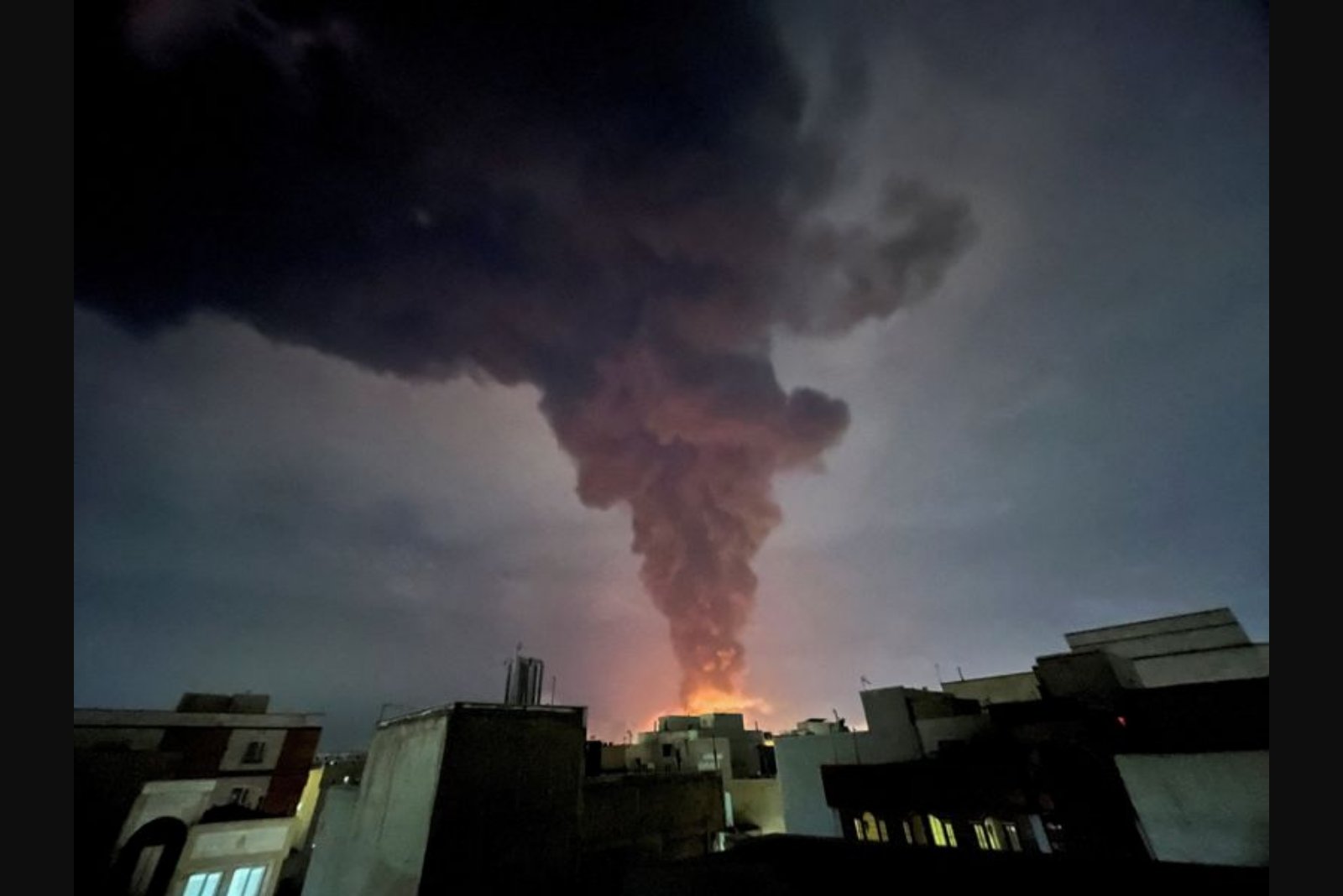
Iran’s Revolutionary Guards claimed their drones struck a U.S. air combat center near Abu Dhabi and reported strikes on U.S. forces at a base in Bahrain; explosions were also reported in Doha. Those claims were not independently verifiable. In parallel, Iranian state media said strikes had hit fuel depots in three areas of Iran, including Karaj to the west of Tehran.
The spreading war has produced direct strikes against Israel and Gulf Arab states hosting U.S. military installations. Iran’s attacks have reportedly killed 10 people in Israel, while the conflict has inflicted mounting civilian casualties inside Iran and Lebanon and caused U.S. military losses. Iran’s U.N. ambassador reported at least 1,332 Iranian civilian deaths and thousands wounded as a result of U.S.-Israeli attacks, while at least six U.S. service members have been killed. The remains of the U.S. service members arrived at an Air Force base in Delaware on Saturday.
Israel intensified operations against Hezbollah in Lebanon, warning Beirut that it faced a "very heavy price" if it did not rein in Iran-aligned militants. Fresh airstrikes pummeled Hezbollah strongholds and Israel mounted an airborne raid in eastern Lebanon. Video footage showed further destruction in the Hezbollah-controlled southern suburbs of Beirut, where buildings had been reduced to smoking rubble. Lebanon’s health ministry said the death toll from Israeli attacks on Lebanon since Monday had risen to around 300 after at least four people were killed when an Israeli strike hit an apartment in the Ramada hotel building in central Beirut. That was the first strike to hit the heart of the capital since hostilities with Hezbollah resumed.
Gulf states reported attacks as well. The Kuwaiti army reported a drone strike on fuel storage tanks owned by Kuwait International Airport. Saudi Arabia said it foiled a drone attack on Riyadh’s diplomatic quarter, with no injuries reported. Riyadh has warned Tehran that continued Iranian attacks on the kingdom and its energy sector could prompt a reciprocal response, according to four people familiar with the matter.
In Oslo, an explosion damaged the U.S. embassy compound early on Sunday, producing smoke visible to eyewitnesses but causing only minor damage and no injuries. The cause of the blast and those responsible were not immediately known, and U.S. authorities did not immediately comment.
On the economic front, the apparent strategy of maximum disruption has driven up costs of the conflict by pushing energy prices higher and damaging global business and logistics links. Major oil and gas producers in the region have announced output reductions: Kuwait’s national oil company began cutting output on Saturday, adding to earlier cuts from Iraq and Qatar. Markets have reacted sharply, global oil prices have surged to multi-year highs, and the Strait of Hormuz has been effectively shut, aggravating concerns about the availability of supply and the functioning of shipping routes.
The human toll and economic fallout appear to be prompting shifts in Iran’s internal politics. Hardline clerics have called for a swift selection of a new supreme leader, and media reported meetings could occur as soon as Sunday. The political maneuvering follows intense debate over the president’s apology to neighboring states and the temporary leadership council’s responses to escalating regional strikes.
On the battlefield, Iranian and allied forces have struck targets across the Gulf and the Levant. In addition to the claims about strikes near Abu Dhabi and Bahrain, Iranian forces were reported to have targeted U.S. facilities housed in neighboring states. Israel continued to target suspected command centers, missile sites and Hezbollah positions, and blasts were heard in several cities across the region. The fighting has produced large-scale civilian displacement and widespread infrastructure damage in multiple countries.
Leaders on all sides have delivered mixed messages in recent days. Israel’s prime minister said members of Iran’s Islamic Revolutionary Guard Corps who lay down arms would be unharmed, while Iranian officials alternately signaled restraint toward neighboring countries and declared continued retaliatory action against those perceived as allowing attacks to be launched from their territory. The result is a regional environment marked by both intermittent restraint and escalating strikes, creating uncertainty about near-term prospects for de-escalation.
As the confrontation continues, markets and governments are monitoring energy flows, transport corridors and military supply lines closely. The multiple attacks on fuel infrastructure, reductions in output by regional producers and closure of critical maritime chokepoints have already influenced commodity markets and are likely to affect supply chains and logistics operations globally if the campaign persists or widens.
With casualties mounting, key infrastructure hit and leadership questions emerging inside Iran, the trajectory of the conflict remains uncertain. Officials from across the region and beyond are weighing responses as both military operations and economic disruptions intensify.
Summary
President Trump said he was not pursuing negotiations with Iran and suggested the military campaign might continue until Iran’s military was neutralized and potential leaders were no longer in place. The conflict spread across the Gulf and Lebanon, with strikes reported on fuel facilities, military installations and urban areas. Iran’s president apologized to neighboring countries but faced criticism at home, while hardliners pushed for a swift selection of a new supreme leader. The fighting has driven up energy prices, prompted production cuts by Gulf producers, and disrupted global markets and logistics.