
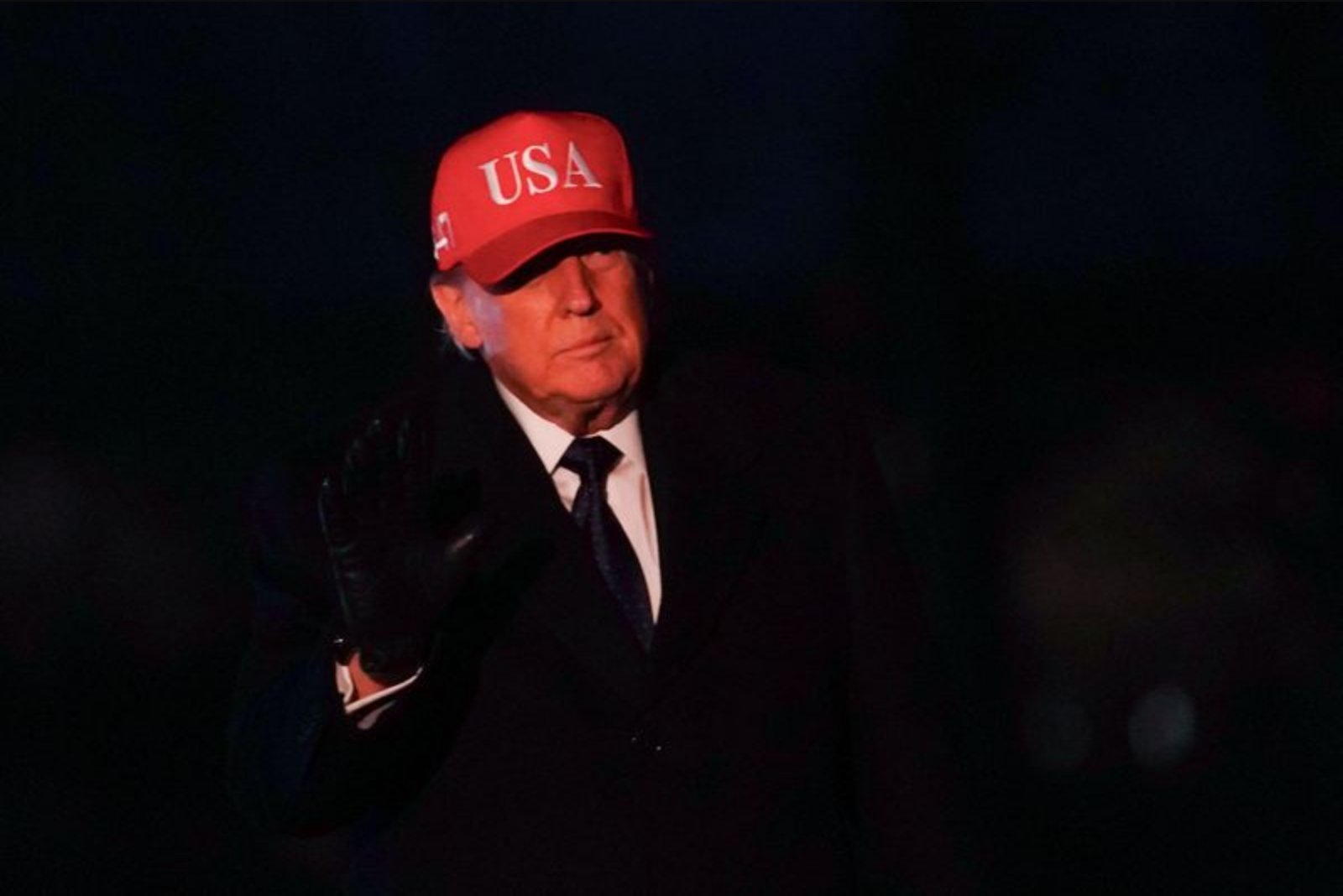
President Donald Trump will host a gathering of Latin American leaders in Florida on Saturday under the banner of the "Shield of the Americas," a U.S.-led initiative intended to deepen ties between Washington and governments in the Western Hemisphere as the administration seeks to counter an expanding Chinese presence in the region. The summit comes days after U.S. strikes on Iran opened a new theatre of geopolitical tension in the Middle East, and ahead of the president's planned talks with Chinese President Xi Jinping in Beijing at the end of March.
U.S. officials see the meeting as an opportunity to pull Latin American capitals closer to Washington following years of rising Chinese trade, loans and infrastructure projects across the hemisphere. Administrations in Washington have become increasingly concerned about Beijing’s investments in ports, telecommunications and other strategic infrastructure, and the summit is expected to make these concerns a central theme of the discussions.
Kristi Noem will serve as special envoy for the "Shield of the Americas," the White House announced Thursday. Noem had been the administration’s Homeland Security secretary until she was removed from that position this week after mounting criticism from members of Congress.
The invitation list highlights a cohort of conservative, security-oriented leaders whose policy preferences align with the U.S. agenda on migration, crime and private-sector-led economic approaches. Among those expected are Argentine President Javier Milei, Chile’s president-elect Jose Antonio Kast, and Salvadoran President Nayib Bukele, whose aggressive campaign against gangs has drawn human rights critiques and has been held up as a model by some right-leaning governments in the region.
Several regional politicians have toured Bukele’s large-scale detention facility, described by officials as a "mega-prison," and U.S. authorities deported more than 200 Venezuelans last year without trial. Also slated to attend are Honduran President Nasry Asfura, who won a contested election narrowly with U.S. backing, and Ecuador’s President Daniel Noboa, who has adopted elements of the U.S. economic agenda and recently announced joint operations with American forces in a campaign targeting drug trafficking.
The leaders expected at the summit generally favor strong, enforcement-first responses to crime and migration and policies that tilt toward privatization rather than expanded state provision. Their ascendancy in parts of the region reflects a broader rightward political shift in Latin America at a time when those countries are being courted economically and strategically by both Washington and Beijing.
Ryan Berg, director of the Americas Program at the Center for Strategic and International Studies, noted this week that the summit is the first occasion in President Trump’s second term that the U.S. has assembled Latin American leaders in such a format. He said conversations are likely to focus on security issues - including drug trafficking and money laundering - as well as China’s role across ports, telecommunications and other infrastructure sectors.
Berg cited data showing China’s trade with Latin America reached a record $518 billion in 2024, and that Beijing provided more than $120 billion in loans to governments across the Western Hemisphere. That deeper economic engagement, from satellite tracking stations in Argentina to a port in Peru and economic support for Venezuela, has been a source of friction for successive U.S. administrations.
U.S. policy responses have sought to limit or reverse Chinese influence over strategic assets. Examples cited by U.S. officials include recent pressure on regional governments to restrict Beijing’s involvement in ports and energy projects and moves by Panamanian authorities against a Hong Kong-based company with ties to operations in the Panama Canal, a globally significant freight route.
Washington has also taken direct action in the region. The administration states that U.S. forces captured Venezuelan President Nicolas Maduro on January 3 and moved to seize control of the country’s oil exports, and that it has stepped up enforcement of the long-standing U.S. embargo on Cuba. Several U.S. administration officials said these moves were intended, at least in part, to blunt China’s ability to leverage loans or other economic ties to secure access to discounted Venezuelan oil, a dynamic they say is now curtailed.
For the Trump administration, the Florida summit serves multiple priorities: projecting strength close to home amid rising global tensions, reinforcing alliances with like-minded regional leaders, and attempting to restrict China’s expanding commercial and strategic footprint across Latin America. Observers expect the talks to emphasize security cooperation and infrastructure safeguards, while leaving open how effectively Washington can translate the summit’s rhetoric into longer-term policy changes that shift the trajectory of Chinese engagement in the region.