
World March 19, 2026

Trump Compares U.S. Strikes on Iran to Pearl Harbor During Meeting with Japan’s Prime Minister

Remark in Oval Office evokes World War II attack as President defends surprise tactics; Japan’s leader visibly taken aback

By Derek Hwang
Trump Compares U.S. Strikes on Iran to Pearl Harbor During Meeting with Japan’s Prime Minister

President Donald Trump drew an explicit parallel between recent U.S. strikes on Iran and Japan’s December 7, 1941 attack on Pearl Harbor while defending the operations in a Washington meeting with Japanese Prime Minister Sanae Takaichi. Trump questioned why Japan had not warned him about Pearl Harbor and said the notion of surprise was shared, prompting a visible reaction from Takaichi. The exchange recalled the wartime attack that led the United States into World War Two and cited the heavy civilian toll from subsequent events in 1945.

Key Points

  • President Trump compared U.S. strikes on Iran to Japan’s Dec. 7, 1941 attack on Pearl Harbor while defending the operations in a meeting with Prime Minister Sanae Takaichi - relevant to defense and diplomatic relations.
  • Takaichi showed a visible reaction in the Oval Office when Trump invoked the wartime attack, indicating sensitivity around historical wartime events - relevant to diplomatic relations and political optics.
  • The article reiterates historical facts: Pearl Harbor killed 2,390 Americans, the U.S. declared war on Japan the next day, and the U.S. defeat of Japan in August 1945 followed atomic bombings that killed hundreds of thousands of civilians - these facts frame the gravity of the comparison.

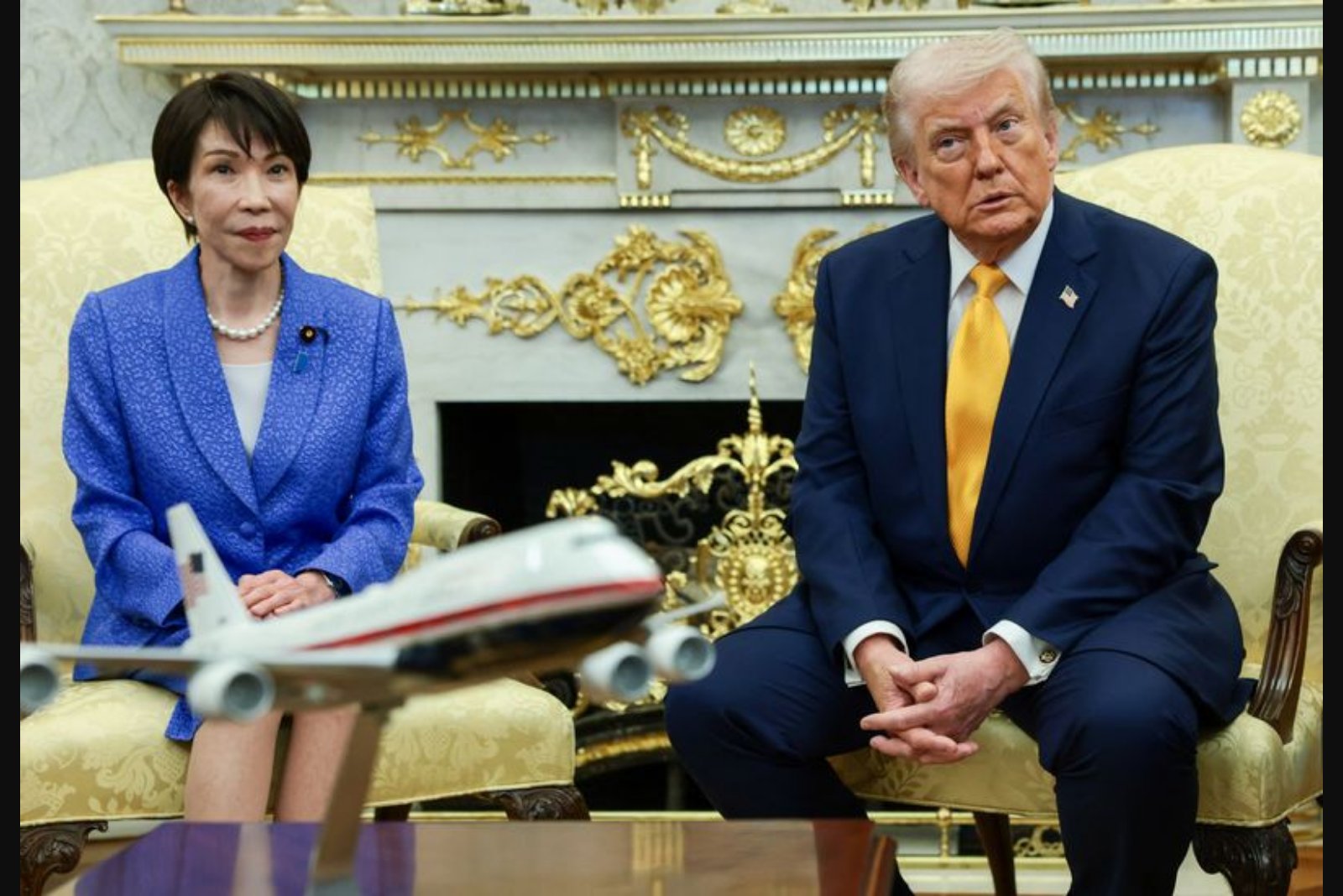
President Donald Trump on Thursday invoked the Japanese attack on Pearl Harbor when defending U.S. strikes on Iran during a meeting with Japan’s Prime Minister Sanae Takaichi in the Oval Office in Washington.

In response to a journalist’s question about why he had not informed allies of his war plans, Trump said: "We wanted surprise. Who knows better about surprise than Japan? Why didn’t you tell me about Pearl Harbor?" He added: "You believe in surprise, I think much more so than us."

Seated beside him, Prime Minister Takaichi displayed a startled reaction: her eyes widened and she shifted in her chair as the president evoked the episode that drew the United States into World War Two.

The attack on the U.S. naval base at Pearl Harbor in Hawaii on Dec. 7, 1941, resulted in the deaths of 2,390 Americans, and the United States declared war on Japan the following day. President Franklin D. Roosevelt described the attack as "a date which will live in infamy."

The United States ultimately defeated Japan in August 1945. The end of the war came days after U.S. atomic bomb attacks on Hiroshima and Nagasaki, which the article notes killed hundreds of thousands of civilians.


Context of the exchange

The Oval Office remarks came as Trump was defending U.S. military actions against Iran. The president used the historic example of Pearl Harbor to underscore his point about the value of surprise in military operations, and he directly addressed Japan in making that comparison. The prime minister's visible reaction underscored the sensitivity of invoking a wartime attack that pulled the United States into global conflict.


Notable details

  • Trump framed surprise as a strategic value and referenced Pearl Harbor when questioned about not notifying allies of military plans.
  • Prime Minister Sanae Takaichi reacted visibly during the Oval Office exchange.
  • The article reiterates the human toll of the Pearl Harbor attack - 2,390 Americans killed - and references subsequent events in 1945, including atomic bombings that resulted in hundreds of thousands of civilian deaths.

Risks

  • Diplomatic unease - The president’s reference to Pearl Harbor prompted a visible reaction from Japan’s prime minister, indicating potential strain or discomfort in bilateral relations - impacting diplomatic and political sectors.
  • Historical sensitivity - Evoking a wartime attack with significant civilian casualties may intensify public and political scrutiny of military actions - relevant to defense policy and public affairs.
  • Public perception and political optics - The comparison to a seminal wartime event could shape domestic and international perceptions of U.S. military strategy, with implications for government communications and foreign policy management.

More from World

U.S. Southern Command Says Forces Are Not Training to Invade Cuba, But Are Poised to Protect Interests Mar 19, 2026 Mexico Extends Invitation to Spain's King for World Cup Opener as Diplomatic Strains Ease Mar 19, 2026 UC Berkeley Agrees to Strengthen Protections Against Antisemitism, Plaintiffs' Lawyers Say Mar 19, 2026 Rafael Caro Quintero Enters Early Plea Negotiations with U.S. Prosecutors, Lawyer Says Mar 19, 2026 Qalibaf Emerges as Central Power Broker in Tehran Amid Leadership Losses Mar 19, 2026