
World May 21, 2026 04:51 PM

Trump Announces Additional 5,000 U.S. Troops to Be Sent to Poland

President cites his relationship with Poland's newly elected president as the reason for the deployment amid prior questions about troop movements in Europe

By Nina Shah

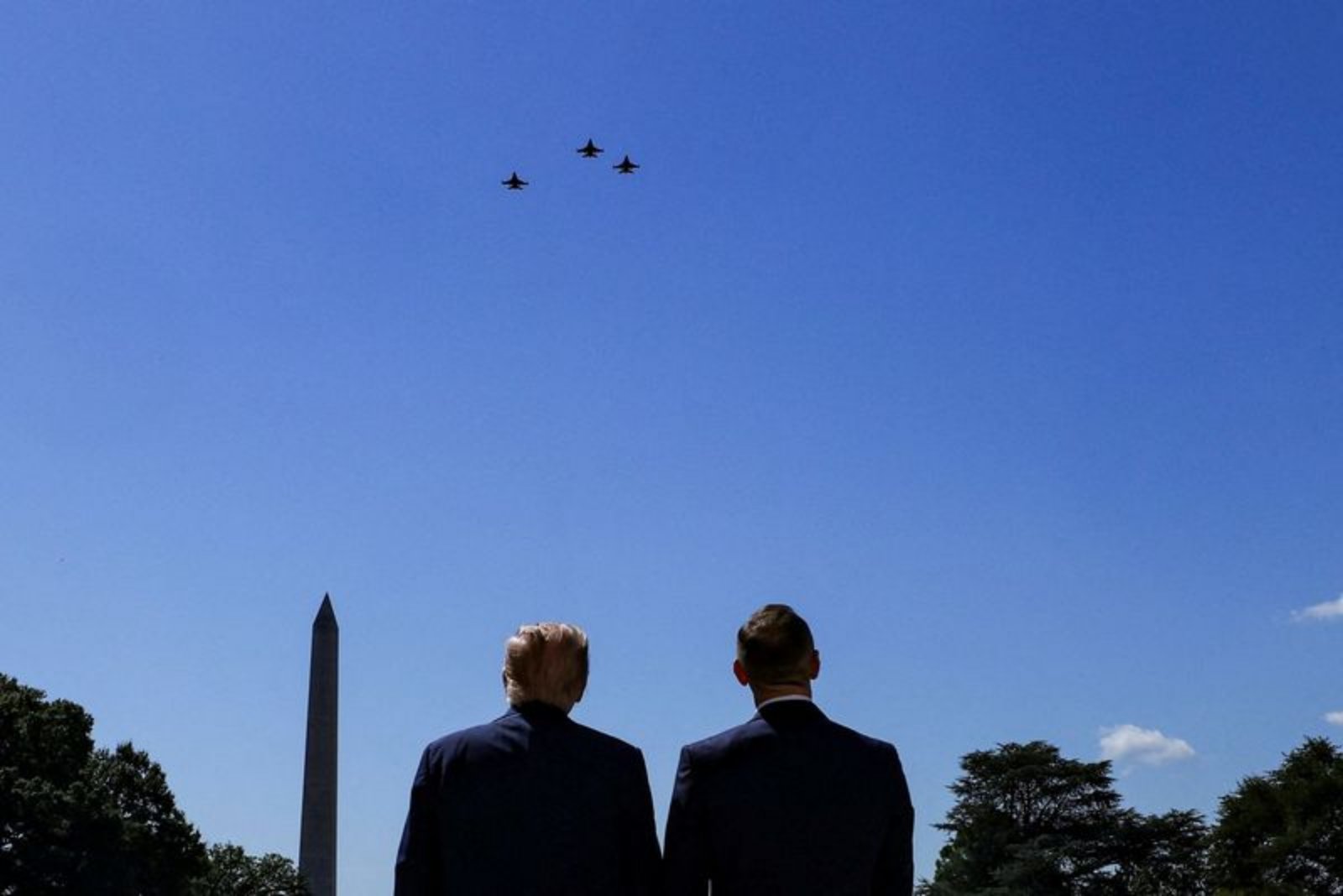
On May 21, President Donald Trump announced that the United States will send 5,000 more troops to Poland, attributing the decision to his relationship with Poland's newly elected president, Karol Nawrocki. The declaration comes after U.S. Vice President JD Vance had said a deployment to Poland was delayed and amid a broader U.S. review of its military footprint in Europe and expectations Washington might scale back forces in favor of greater NATO burden-sharing.

Trump Announces Additional 5,000 U.S. Troops to Be Sent to Poland

Key Points

  • President Trump announced an additional deployment of 5,000 U.S. troops to Poland, citing his relationship with Poland's president Karol Nawrocki - sectors impacted include defense and defense contracting.
  • The announcement follows a recent remark by U.S. Vice President JD Vance that a troop deployment to Poland had been delayed - this creates uncertainty for defense planning and allied coordination.
  • The U.S. has been reviewing its troop presence in Europe and had been expected to possibly scale back forces as part of shifting burden-sharing with NATO - implications for defense budgets and regional security arrangements exist.

May 21 - The United States will dispatch an additional 5,000 troops to Poland, President Donald Trump said on Thursday. In a post on Truth Social, Trump pointed to his personal rapport with Poland's conservative nationalist president, Karol Nawrocki, as the motivating factor behind the decision.

Trump's announcement follows a recent statement by U.S. Vice President JD Vance, who had told reporters that a planned U.S. troop deployment to Poland had been delayed. The administration has been conducting a review of American forces stationed in Europe and had been widely expected to reduce that presence after Trump pressed NATO members to assume a larger role in European defense.

In his social media post, Trump framed the troop movement in the context of the Polish election and his endorsement, saying: "Based on the successful Election of the now President of Poland, Karol Nawrocki, who I was proud to Endorse, and our relationship with him, I am pleased to announce that the United States will be sending an additional 5,000 Troops to Poland."

Trump has previously hosted Nawrocki at the White House. The two met in May of last year when Trump publicly supported Nawrocki during a critical period before the Polish vote. Nawrocki went on to defeat the candidate backed by the party of Polish Prime Minister Donald Tusk, whose party is described in reporting as pro-European and centrist.

The two leaders met again at the White House in September of the prior year, where Trump said at the time that the United States could expand its military presence in Poland and vowed to ensure the country's defense.

Beyond the statements and meetings, the announcement comes amid competing signals about U.S. force posture in Europe - on one hand the presidential cited bilateral ties and specific assurances toward Poland, and on the other hand U.S. officials have been reviewing the broader footprint and there had been expectations of a potential scale back in light of calls for greater NATO responsibility.


Context limitations - Available public comments referenced a delayed deployment and a broader review of U.S. forces in Europe. The announcement ties the decision to the relationship between the U.S. president and Poland's newly elected president, as stated by the president himself. Details such as timelines, unit composition, and operational specifics for the additional troop movement were not provided in the public post cited.

Risks

  • Timing and implementation uncertainty - a prior statement by the U.S. Vice President noted a deployment delay, indicating potential changes to the schedule and execution of the announced troop movement. This affects defense logistics and contractors involved in deployments.
  • Policy inconsistency risk - simultaneous signals of a possible scale back of U.S. forces in Europe and an announced increase tied to bilateral political ties introduce uncertainty for allied planning and defense procurement decisions.
  • Limited operational detail - the announcement did not provide specifics on unit types, deployment timeline, or mission parameters, leaving risks around readiness, basing, and budgetary impacts for defense and government funding sectors.

More from World

Experts Say Trump Tariff Threats Won’t Cure Global Forced Labour Problem Jun 5, 2026 Peru Runoff Poised on a Knife-Edge as Sanchez Narrows Gap With Fujimori, Ipsos Poll Finds Jun 4, 2026 Kennedy Center Directed to Revert Name After Federal Ruling Jun 4, 2026 Colorado Appeals Court Orders New Trial for Paramedics in Elijah McClain Death Jun 4, 2026 U.S. Treasury Adds Cuban President Miguel Diaz-Canel to Sanctions List Jun 4, 2026