
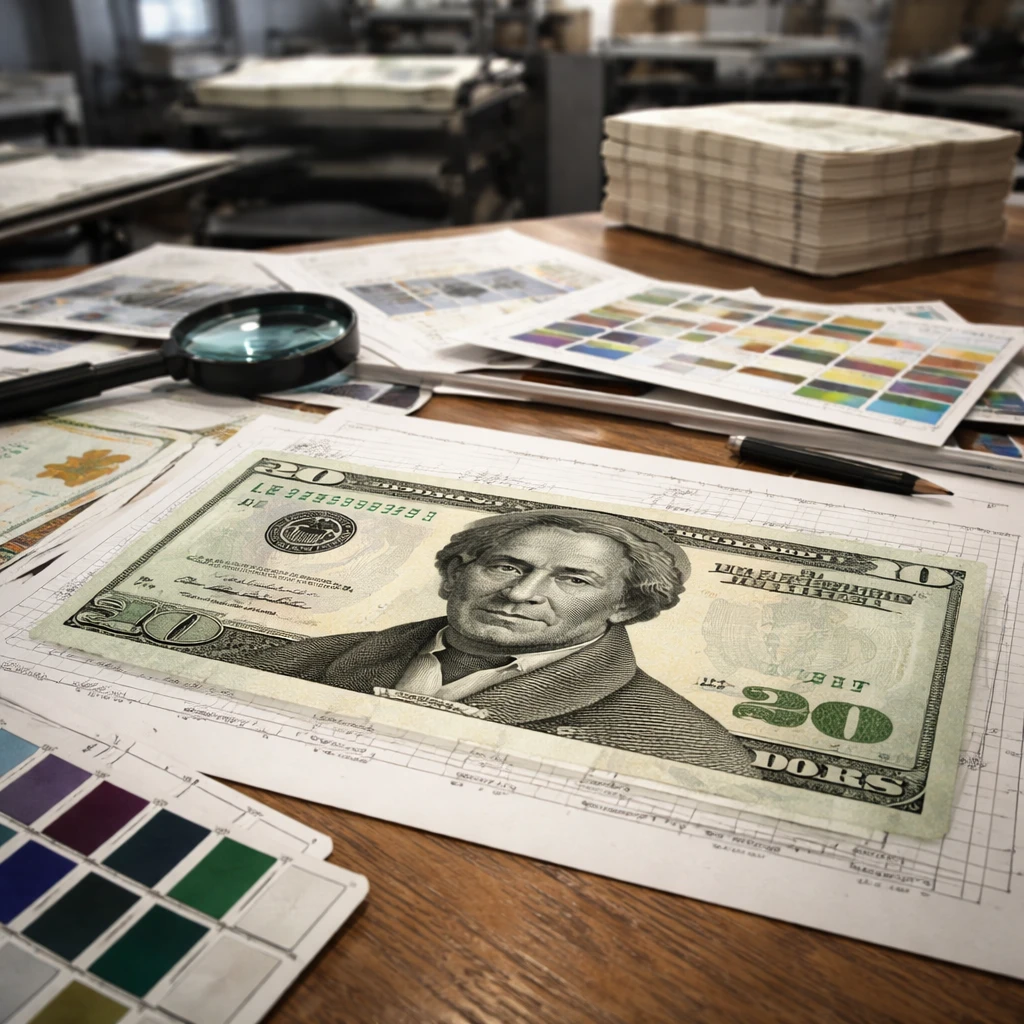
Treasury Secretary Scott Bessent said in a Monday interview with Spectrum News that the Treasury Department is not currently planning to put Harriet Tubman on the U.S. $20 bill. Asked whether the decade-old initiative would move forward, Bessent replied, "We are not at present."
Bessent did not expand on that answer, and a Treasury spokesperson declined to comment beyond the secretary’s remark.
The plan to feature Tubman on the $20 note was first announced by the Obama administration in 2016. At the time then-Treasury Secretary Jacob Lew said the decision reflected thousands of responses from Americans. Tubman, who was born into slavery in the early 1820s and later assisted hundreds of enslaved people to escape, would have been the first African American depicted on the face of U.S. paper currency.
During his first presidential campaign, Donald Trump criticized the move as "pure political correctness," and suggested alternative placements such as the $2 bill or another denomination. No progress on the redesign took place during Trump’s initial term in office.
Under the Biden administration, Treasury Secretary Janet Yellen revived the project but indicated the redesigned $20 would not be available until about 2030, citing the need to integrate sophisticated anti-counterfeiting measures into any new note.
Bessent has been questioned about the Tubman $20 in other public forums. In May 2025, in a tense exchange with Representative Joyce Beatty, a Black Democrat from Ohio, he was asked for an update. He replied, "I can't, my staff will get back to you."
At the same time that the Tubman redesign has stalled, some officials in the current Trump administration have pursued a separate concept: a proposed $250 bill bearing the sitting president’s portrait to mark the United States’ 250th anniversary of independence. When asked about that effort in relation to the Tubman project, Bessent told Spectrum News that the $250 proposal "requires an act of Congress, because you can’t have a living person (on U.S. currency), and it was to commit [sic] - for the 250th anniversary."
He added that altering an existing denomination, whether a $1 through $100 note, "takes many years in advance."
The Treasury’s current public statements leave the future of the Harriet Tubman $20 uncertain. Officials cited in prior announcements emphasized public input and technical security requirements as factors shaping the timeline, but the department has offered no further specifics since Bessent’s brief comment to Spectrum News.
Given the limited commentary from Treasury, questions remain about the schedule and priorities for any currency redesigns. The department has not provided a timetable or detailed rationale beyond the statements quoted above.