
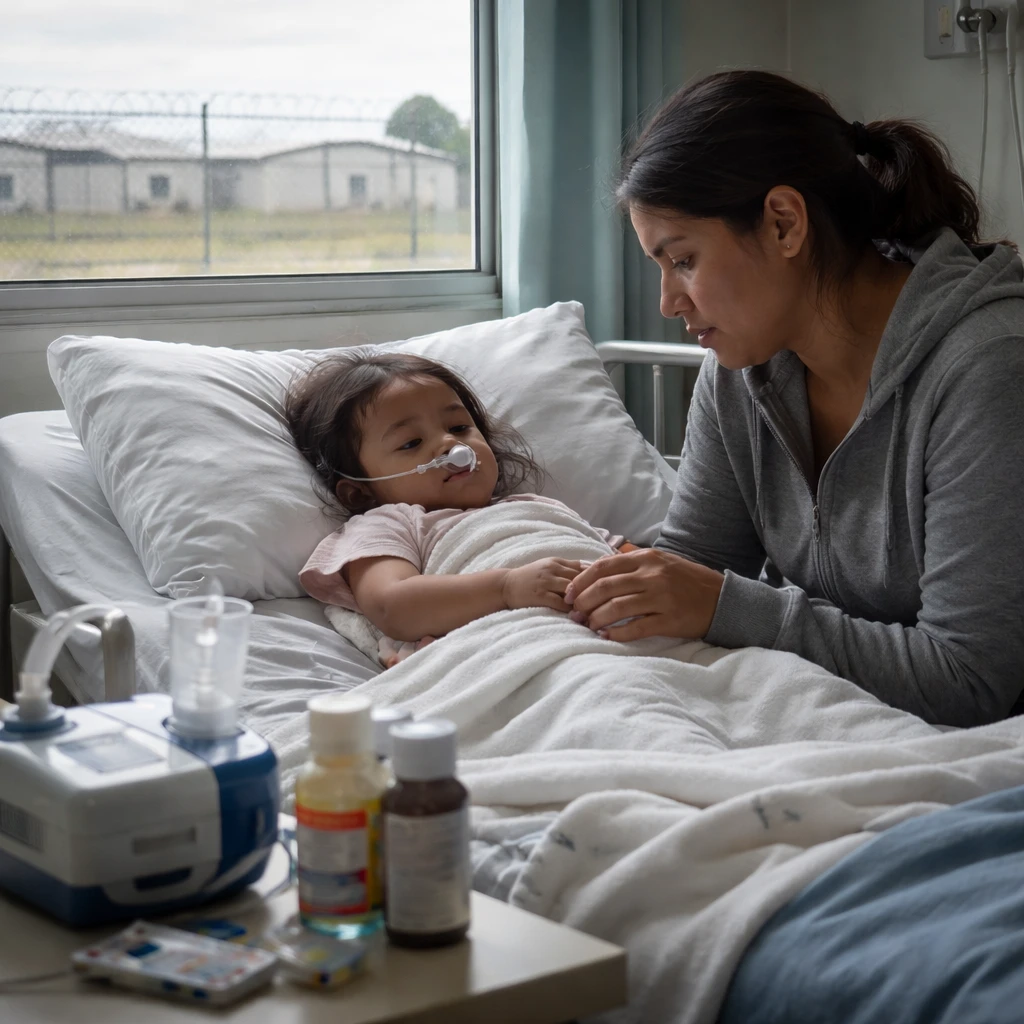
NEW YORK, Feb 7 - A federal complaint filed in Texas alleges that an 18-month-old girl held by U.S. immigration authorities was returned to a detention center and deprived of medication and nutritional supplements following hospitalization for severe respiratory illness.
The child, referred to in the lawsuit as "Amalia," was among three family members detained during a routine check-in with immigration officials on Dec. 11 and held at a facility in Dilley, Texas, according to the court filing. The suit says that Amalia was hospitalized from Jan. 18 to Jan. 28 for conditions that the complaint describes as life-threatening, and that she was sent back to Dilley amid a measles outbreak.
The family was ultimately released by immigration authorities in President Donald Trump’s administration after the parents filed the lawsuit on Friday. The suit had asked for the release of all three family members.
Medical treatment and alleged removal of supplies
According to the lawsuit, Amalia developed a high fever on Jan. 1 that rose to as much as 104 degrees Fahrenheit (40 degrees Celsius), began vomiting frequently and had difficulty breathing. The complaint states she was taken to the hospital on Jan. 18 with extremely low oxygen saturation levels.
The lawsuit lists diagnoses made during that hospitalization as COVID-19, respiratory syncytial virus, viral bronchitis and pneumonia. During the hospital stay she was placed on supplemental oxygen. On discharge, the suit says, she was provided with a nebulizer and a respiratory medication and given nutritional drinks after losing about 10% of her body weight.
When Amalia returned to the Dilley detention center, the complaint alleges that detention staff seized the nebulizer, the respiratory medication and the nutritional drinks provided to help her regain weight.
Advocacy, legal action and official responses
Elora Mukherjee, an attorney representing the family, is quoted in the complaint saying, "Baby Amalia should never have been detained. She nearly died at Dilley." Mukherjee also asserted that hundreds of children and families held at the Dilley facility lack adequate drinking water, nutritious food, educational opportunities and proper medical care, and that they should be released.
The Department of Homeland Security did not immediately respond to a request for comment, the filing notes. The lawsuit also records that NBC News first reported on the legal action.
Context within other litigation
The complaint references broader legal scrutiny of the administration’s detention and deportation practices. It notes a Jan. 31 federal judge ruling in Michigan that criticized the administration and ordered the release of a 5-year-old boy who had been detained by immigration agents in Minnesota; the administration is now seeking to deport that child, the lawsuit states.
The family at the center of this suit are identified as parents originally from Venezuela who have lived in the United States since 2024 with their daughter, who is a Mexican citizen. The complaint says all three intend to file asylum applications in the United States.
What the lawsuit alleges and what is known
The suit lays out a sequence of events and medical findings: onset of fever and vomiting on Jan. 1; hospital admission on Jan. 18 for dangerously low oxygen levels; diagnosis with COVID-19, respiratory syncytial virus, viral bronchitis and pneumonia; use of supplemental oxygen and provision of a nebulizer and respiratory medication at discharge; and the alleged confiscation of those medical items and nutritional supplements upon return to the Dilley facility. It also links the return to detention with a measles outbreak at the facility.
The complaint seeks relief in federal court in Texas and frames the family’s detention and the handling of Amalia’s medical needs as central claims.