
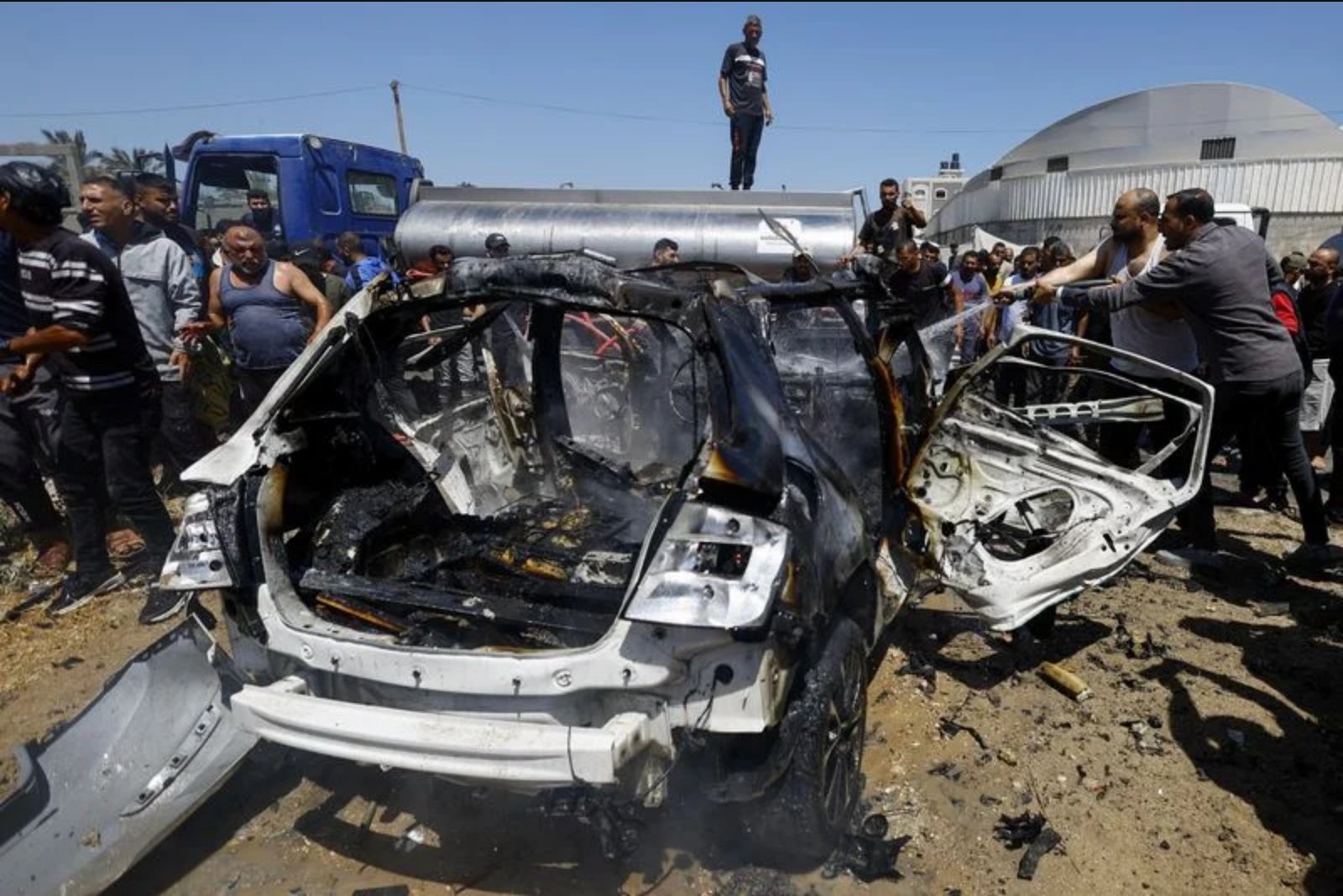
CAIRO, June 3 - Health authorities in Gaza reported that Israeli strikes on Wednesday resulted in the deaths of three Palestinians. The Palestinian militant group Hamas said ending such attacks is a necessary step for further negotiations over the implementation of a U.S.-brokered ceasefire.
Medical sources identified one of the fatalities as the result of an airstrike near the Mughraqa area in the central Gaza Strip. The Israeli military said it had targeted an individual it described as acting suspiciously close to forces operating in an area under Israeli control, stating the strike was intended to remove an immediate threat.
In a separate incident, medics reported that two brothers, Saqer and Moamen Khalil Abu Karim, were killed in the courtyard of a home in the nearby Maghazi refugee camp. Israel’s military did not immediately provide a comment on that specific strike.
The ceasefire arrangement brokered by U.S. President Donald Trump has not prevented Israeli strikes in Gaza. Since the ceasefire took effect, Israel has maintained control over more than half of the enclave following a conflict that began with Hamas attacks on southern Israel in October 2023. Efforts to move forward with the second phase of the deal - which includes disarmament by the group and withdrawals by the Israeli army - have reached an impasse.
Sources close to the negotiations had anticipated further discussions in Egypt this week, but Hamas denied that it had dispatched representatives to Cairo. A Hamas official said the group remains in daily contact with mediators and emphasized that Israeli attacks must stop for talks to progress.
"Israel has so far rejected ending its attacks, it continues to restrict aid and goods coming into Gaza and expand its occupation, in stark violation of the ceasefire agreement," the official said.
Israel, for its part, maintains that its strikes are aimed at preventing imminent attacks and states that it permits aid and goods to enter Gaza.
Gaza health authorities report that some 930 Palestinians have been killed by Israeli strikes since the truce began; these figures do not differentiate between combatants and civilians. Over the same period, Israel’s military has reported that four Israeli soldiers were killed by militants.
Contextual notes:
- The second phase of the ceasefire deal referenced in talks includes both the disarmament of the militant group and the withdrawal of Israeli forces.
- Negotiations on implementing that phase are currently deadlocked, and planned meetings in Egypt did not involve Hamas delegates according to the group.