
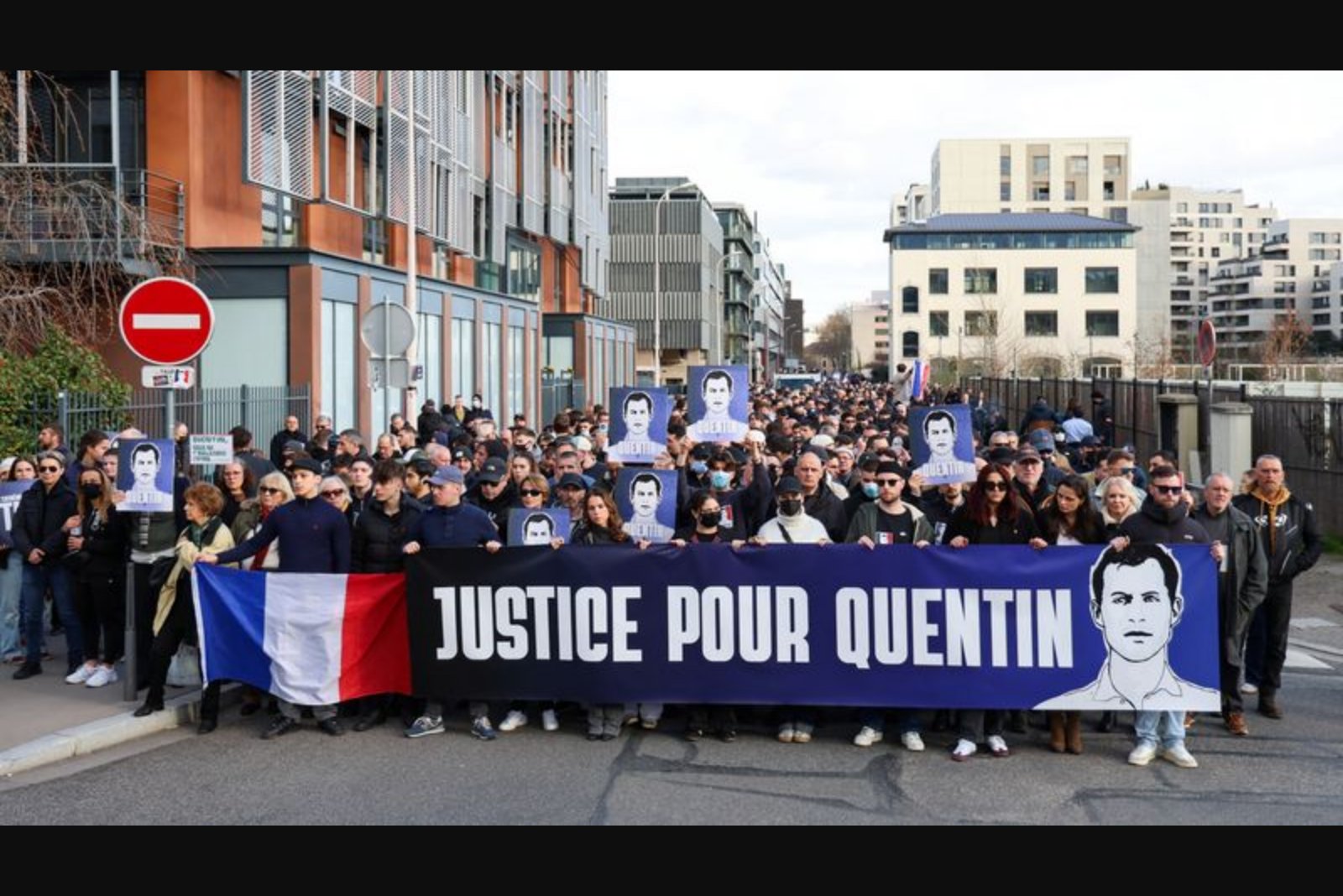
Thousands of people took to the streets of Lyon on Saturday following the death last week of Quentin Deranque, a 23-year-old far-right activist who was beaten to death in an incident that has provoked national shock. Many participants in the Lyon march covered their faces with surgical masks and sunglasses and were heard chanting slogans such as "we are at home" and "antifa assassin".
Local authorities said they had passed on video evidence to prosecutors showing participants giving Nazi salutes and directing racist insults during the demonstration. Police had expressed concern in advance that the Lyon event - a city with a significant presence of both far-right and antifascist groups - could escalate into violence. By 8:00 p.m. (1900 GMT) the main march had largely broken up, but law enforcement sources said an increased police presence would remain in the city throughout the night.
On Saturday morning French President Emmanuel Macron called for calm ahead of the rallies and said he would convene a meeting with ministers next week to discuss all violent groups. Former centre-right Prime Minister Dominique de Villepin described the killing of Deranque, 23, as "France’s Charlie Kirk moment," a reference made in the wake of last year’s shooting of a U.S. conservative activist.
Authorities have opened formal inquiries implicating seven people in connection with Deranque’s death. Among those under formal investigation is a former aide to a lawmaker from the hard-left France Unbowed (LFI) party; the party has publicly condemned the killing. According to reporting in the newspaper Le Monde, Deranque’s death is the first incident alleged to have been carried out by hard-left individuals since 2022. Other news reports indicate at least five killings in the same period have been attributed to far-right individuals, one of which is being investigated as terrorism.
The Lyon march was organized by Aliette Espieux, an anti-abortion activist, and some far-right groups had announced plans to join. At the same time the far-right party National Rally urged its supporters to stay away from the rallies because of concerns about unrest. Along the route small groups chanted "we are all antifascist" and images broadcast on BFMTV showed a banner declaring a local antifascist stance hanging from a building near the start of the march.
Lyon mayor Gregory Doucet said he had tried to prevent the march from taking place and expressed worry about calls for far-right groups from France and elsewhere in Europe to travel to Lyon for the event. In his remarks to reporters he said: "We have fought against far-right violence during our term. We have managed to close down many premises, to shut down organisations because we know that certain individuals are violent and so we were worried."
Local authorities estimated the turnout in Lyon at about 3,200 people. Smaller demonstrations were also scheduled in a number of other French towns.
As investigations continue and authorities track footage and witness accounts, the demonstrations in Lyon have underscored the tensions between opposing political groups. Officials have signaled that security deployments will remain in place while prosecutors and investigators pursue the inquiries into the killing and the events surrounding the march.