
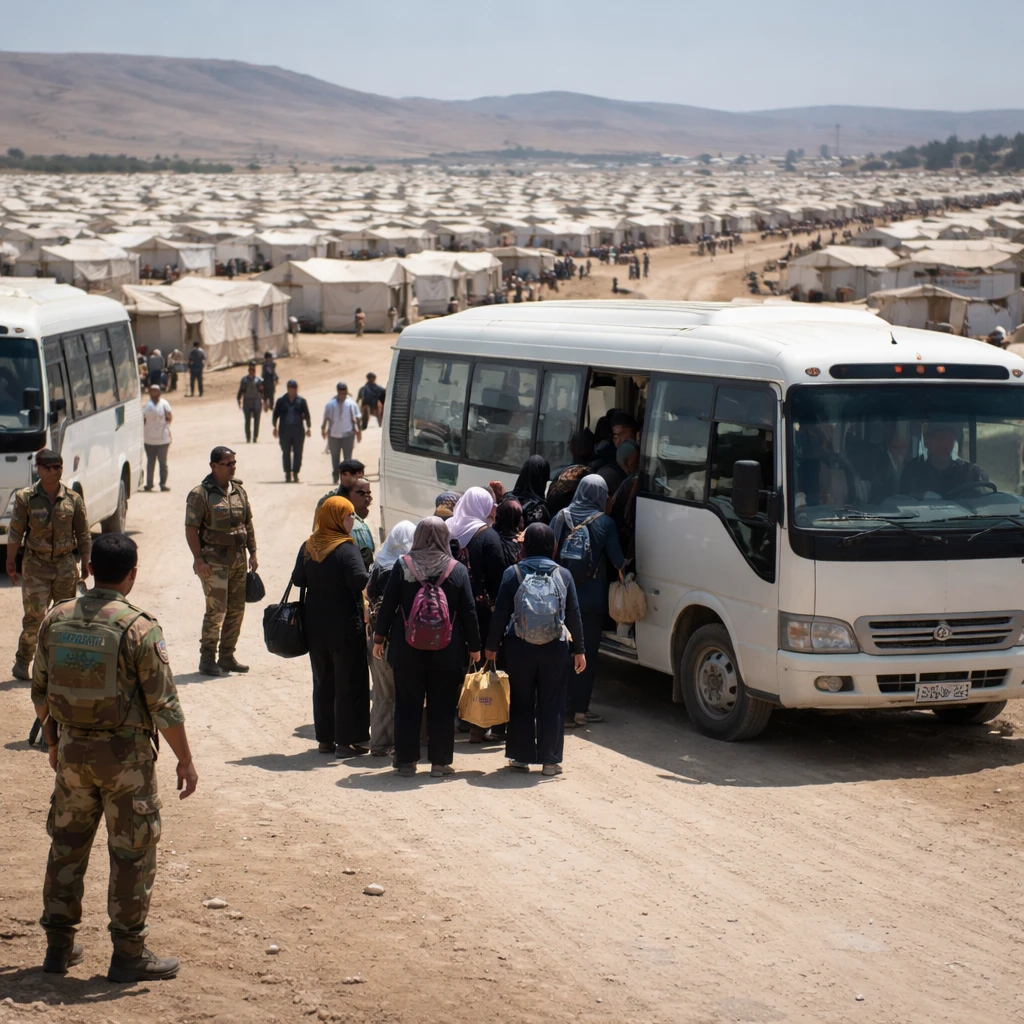
ROJ CAMP, Syria, Feb 16 - Syrian Kurdish forces on Monday released 34 Australian nationals from the Roj camp, officials said, and arranged for them to be transported to Damascus and flown to Australia.
Hukmiya Mohamed, a co-director of Roj camp, said the 34 Australians were released to members of their families who had traveled to Syria to take custody of them. After the handover, they were placed on small buses for the trip to Damascus, from where they are to be flown back to Australia.
Roj is one of two large camps in northeastern Syria that hold people associated with or believed to be affiliated with Islamic State militants. The camp currently houses more than 2,000 people representing 40 different nationalities, the majority of whom are women and children.
Since Islamic State lost its last territorial foothold in Syria in 2019, thousands of people thought to be linked to the group have been held at Roj and at a second facility, al-Hol. The fate and movement of those held in the camps have been the subject of multiple transfers and returns in recent years.
The release of the Australians follows military and political developments in northern Syria earlier this year. Syrian government forces seized swathes of territory from the Kurdish-led Syrian Democratic Forces in January and a ceasefire was reached on January 29. In a separate operation last week, the U.S. military completed a mission that transferred 5,700 adult male Islamic State detainees from Syria to Iraq.
The handover at Roj involved family members traveling to the camp to receive the Australians, who were then placed on buses for onward travel to Damascus. Authorities indicated flights from Damascus will carry the group to Australia, though specific flight details were not provided. The broader population remaining in Roj and al-Hol continues to include thousands of people from many countries, most of them women and children, under the supervision of camp management and security forces.
Context and next steps
The movement of these 34 Australians is part of a pattern of detainee and family transfers tied to the aftermath of the Islamic State's territorial defeat. Transfers to third countries and repatriations have occurred intermittently as governments and local authorities manage the complex humanitarian and security issues presented by the camps.