
Thailand confirmed on Friday that it will take part in a U.N.-backed conciliation process initiated by Cambodia to address a protracted maritime dispute, but said it will suspend other bilateral mechanisms and talks for now.
The move follows Cambodia's decision this week to initiate a compulsory conciliation procedure under the United Nations Convention on the Law of the Sea (UNCLOS). Cambodia chose that route after Thailand last month ended a 2001 framework agreement that had governed talks on a disputed maritime belt.
Both nations have for more than 25 years asserted competing claims over an area of about 26,000 square kilometres (10,000 square miles) in the Gulf of Thailand. That maritime zone is estimated to hold nearly 12 trillion cubic feet of natural gas and large quantities of oil, with a combined estimated value of around $300 billion.
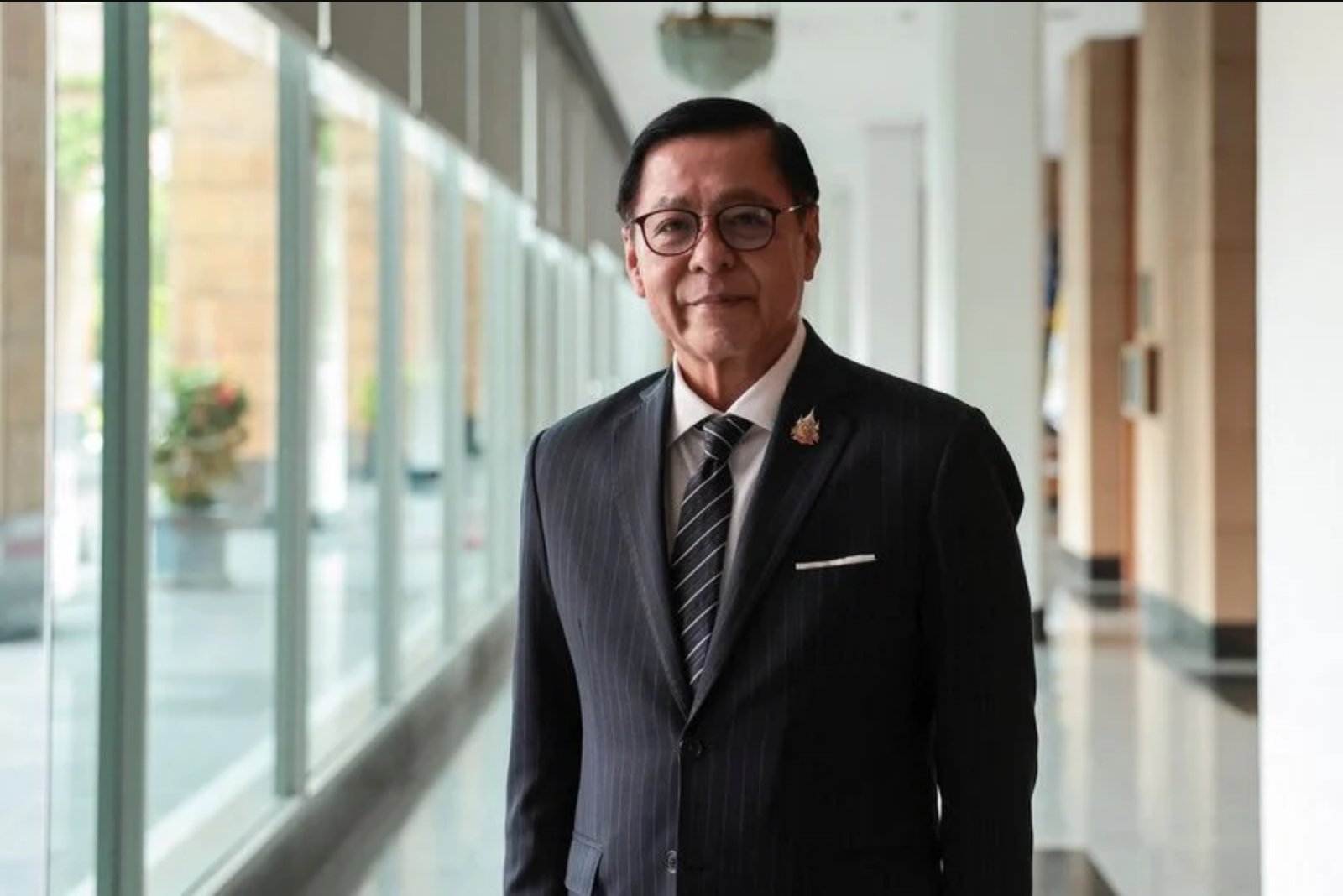
Thailand's foreign minister, Sihasak Phuangketkeow, said Bangkok would send two representatives to participate in the U.N.-backed conciliation process. At the same time, he voiced frustration at Cambodia for bringing resource-sharing questions into the formal conciliation talks.
"I told my Cambodian colleagues, 'Why don't we give talks a chance? Six months or something,'" Sihasak said. "'If we cannot make progress, then we can agree on the next step, which of course includes compulsory conciliation, but it also includes voluntary conciliation.'"
Sihasak also said Cambodia had made public its decision to use the compulsory conciliation pathway on Tuesday before formally notifying Thailand. "And since June 2, we've not had any discussion informally, formally with the Cambodian side," he said.
A Cambodian government spokesperson rejected the Thai foreign minister's claim that formal notice had not been provided in advance. The spokesperson released what they described as a timestamped email and a paper copy of the notification, saying delivery occurred on Tuesday morning. Those notices could not be immediately independently verified.
Cambodian Foreign Minister Prak Sokhonn said bilateral attempts to resolve the dispute had been exhausted, prompting Cambodia to pursue the UNCLOS conciliation process. "Cambodia hopes that the Thai government will engage with this process in good faith," he said.
Despite agreeing to take part in the U.N.-facilitated negotiations, Thailand's prime minister, Anutin Charnvirakul, said Bangkok will not conduct any other direct talks with Cambodia for the time being. That includes discussions intended to manage or resolve land border issues.
"We will use UNCLOS, which means from now on there will be no more talks ... or other forms of cooperation," the prime minister said. "We will not discuss the restoration of relations yet."
He added that all border gates between the two countries would remain closed.
The relationship between the neighbouring states has been tense since two rounds of intense clashes along their shared border last year, which resulted in nearly 150 fatalities and displaced at least 300,000 people on both sides. A ceasefire that was put in place in December remains in effect.
Sihasak argued that Cambodia's choice of compulsory conciliation - a U.N.-backed procedure involving a five-member panel that issues non-binding recommendations - was unlikely to improve broader bilateral relations. "We simply don't agree with how they approached this," he said.
So far, East Timor, also known as Timor Leste, is the only country that has previously used the U.N.-backed compulsory conciliation process to settle a long-running maritime dispute, resolving its case with Australia in just under two years.
Sihasak suggested that a bilateral, friendly negotiation could potentially deliver a quicker outcome than the formal U.N. route, but acknowledged the uncertainty around timing. "If we do this through bilateral talk in a friendly way, it may take a shorter time to reach an amicable solution," he said. "Now, we don't know how long this will take."
The decision by both governments to pursue a U.N. conciliation route while halting other forms of bilateral dialogue sets the stage for a formalized, international process to examine claims and propose recommendations, even though any conclusions from such a panel would be non-binding. Meanwhile, closure of border crossings and the suspension of cooperative mechanisms maintain elevated tensions between the two countries, with potential implications for cross-border movement and any joint economic activity that had depended on bilateral engagement.