
World February 20, 2026

Tentative Agreement Reached to End Six-Week Nurses Strike in New York City

Contract offers multi-year pay increases, health protections and AI safeguards as thousands prepare to vote

By Marcus Reed
Tentative Agreement Reached to End Six-Week Nurses Strike in New York City

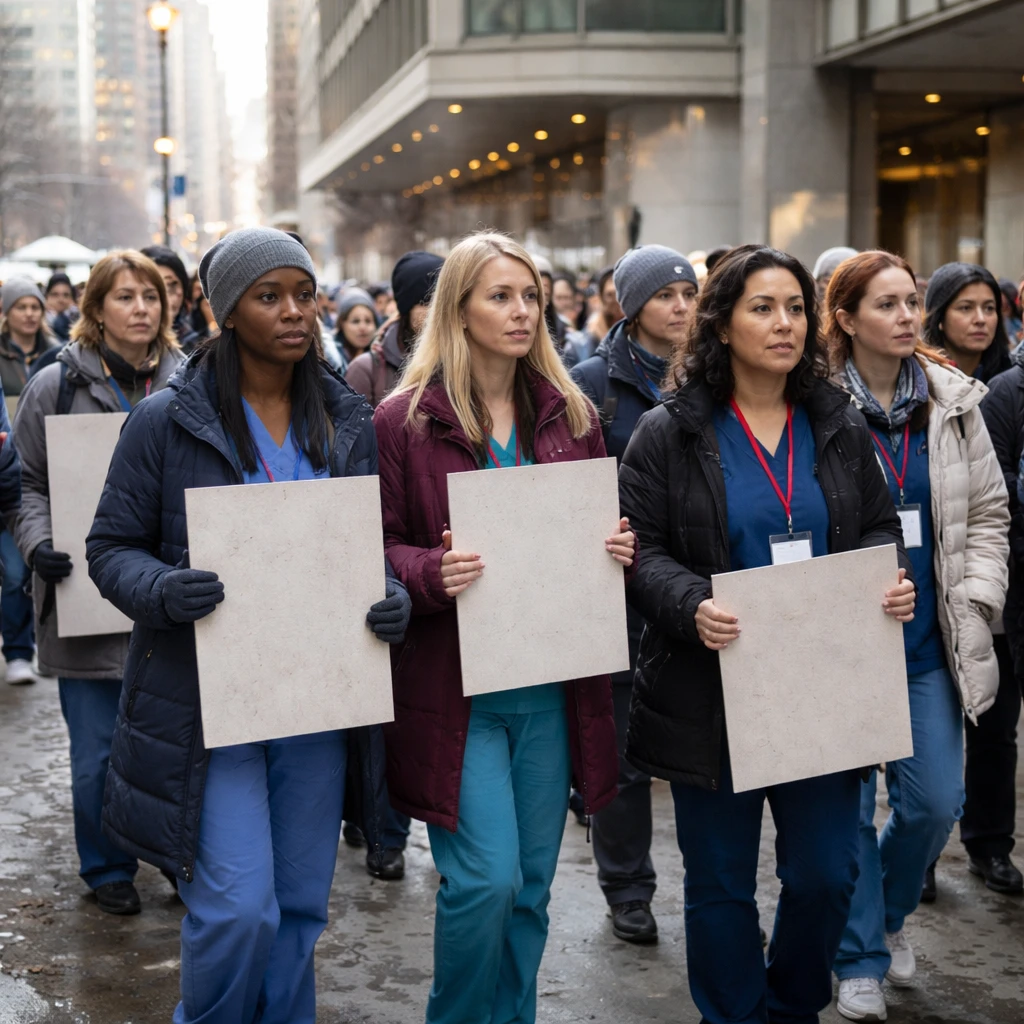
The New York State Nurses Association announced a tentative contract with NewYork-Presbyterian that could conclude a six-week walkout by approximately 4,200 nurses at the hospital system. The proposed deal includes more than 12% salary increases over three years, protections for health benefits and new measures addressing the use of artificial intelligence. The wider strike, which began when 15,000 nurses walked out on January 12, produced staffing shortages and prompted a state of emergency to allow temporary coverage from out-of-state and foreign workers.

Key Points

  • Approximately 4,200 nurses at NewYork-Presbyterian will vote on a tentative contract that includes more than 12% pay increases over three years, health benefits protections and provisions on artificial intelligence.
  • The strike began on January 12 when 15,000 nurses at three major health systems walked out seeking better pay and safer working conditions; two-thirds of those nurses had returned to work on February 14 after deals with Montefiore and Mount Sinai.
  • The work stoppage created staffing shortages and led Governor Kathy Hochul to declare a state of emergency to permit out-of-state and foreign medical workers to provide temporary coverage - impacting hospital operations and the broader healthcare labor market.

After six weeks on the picket lines, the final contingent of striking nurses in New York City has announced a tentative settlement with their employer, the nurses' union said on Friday. If ratified, the agreement would mark the end of what the union called the largest nurses work stoppage in the city's history.

The contract up for a vote this weekend by roughly 4,200 NewYork-Presbyterian nurses would raise salaries by more than 12% across a three-year span, preserve health benefits and introduce specific protections concerning the deployment of artificial intelligence, according to the New York State Nurses Association (NYSNA).

The labor action began on January 12, when a total of 15,000 nurses employed by three major health systems walked out seeking higher pay and improvements to workplace safety. The departures produced staffing shortages and led New York Governor Kathy Hochul to declare a state of emergency - a move intended to allow out-of-state and foreign medical workers to fill roles while nurses were on strike.

Two-thirds of the nurses involved in the initial walkout returned to their posts on February 14 after reaching separate agreements with Montefiore and Mount Sinai hospitals. That left the NewYork-Presbyterian group as the last major cohort negotiating a settlement.

NYSNA President Nancy Hagans, commenting on the NewYork-Presbyterian deal, said, "For a month-and-a-half, through some of the harshest weather this city has seen in years, nurses at NYP showed this city that they won’t make any compromises to patient care."

A NewYork-Presbyterian spokesperson, Angela Karafazli, issued a statement expressing satisfaction with the mediated outcome, saying, "We are pleased to have reached a tentative settlement with NYSNA, through the mediator, that reflects our tremendous respect for our nurses."

The proposed settlement will be decided by the membership of the affected bargaining unit this weekend. If approved, it would conclude the six-week stoppage that had put pressure on hospital staffing and required contingency measures to maintain patient services during the dispute.


Contextual notes

The negotiating points highlighted by the union and hospital include multi-year wage increases, the protection of existing health benefits and new contractual language intended to govern how artificial intelligence is used within the system. Detailed terms beyond the broad outlines announced by NYSNA and NewYork-Presbyterian were not provided in the union's public statement.

Risks

  • The tentative agreement must be ratified by the voting membership of the affected bargaining unit; the vote outcome is uncertain and could prolong staffing disruptions if rejected - this affects hospital operations and patient services.
  • Staffing shortages occurred during the strike and required emergency measures; similar shortages could re-emerge if negotiations break down elsewhere or if implementation of the agreement is delayed - this is a risk to healthcare delivery and facility staffing models.
  • Details beyond the headline terms of the agreement were not released in the union statement, leaving uncertainty about specific contract provisions and how new AI safeguards will be operationalized within the hospital system - this could affect clinical workflows and administrative planning.

More from World

Catholic clergy regain access to Broadview immigration center, distribute ashes and communion after court order Feb 20, 2026 Congress Poised to Vote on Curtailing President’s Authority to Strike Iran as Military Prepares Feb 20, 2026 Trump Says He Is Weighing a Limited Military Strike on Iran Feb 20, 2026 Explainer: Possible Charge Facing King Charles’ Brother After Arrest Feb 20, 2026 U.S. Signals Terrorism Concern After Death of French Far-Right Activist Feb 20, 2026