
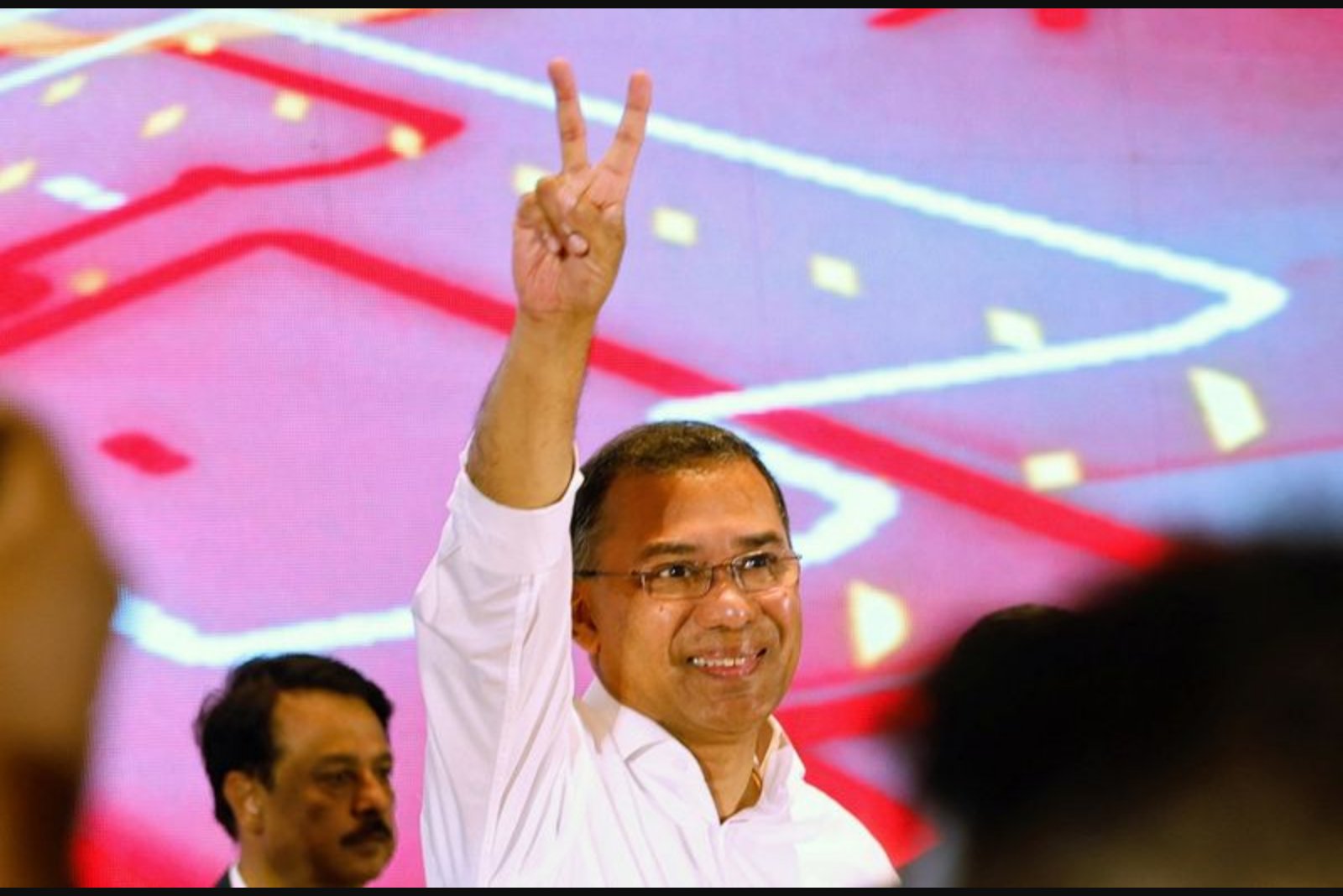
Dhaka, Feb 17 - Tarique Rahman was sworn in as prime minister on Tuesday after his Bangladesh Nationalist Party secured a sweeping parliamentary victory, marking a major shift in the nation's political landscape.
Rahman, 60, the son of former prime minister Khaleda Zia and the late President Ziaur Rahman, assumed office with a list of pressing priorities. Officials and analysts have highlighted the need to restore political stability, to rebuild investor confidence and to revive key sectors such as the garment industry following prolonged turmoil that followed the Gen Z-led uprising which toppled Sheikh Hasina's government in 2024.
The transitional period ahead of the election was overseen by an interim administration led by Nobel laureate Muhammad Yunus. Breaking with usual protocol, the swearing-in ceremony took place outdoors in the South Plaza of the Jatiya Sangsad Bhaban, the national parliament building, rather than at Bangabhaban, the president's official residence where such events are commonly held.
President Mohammed Shahabuddin administered the oaths to Rahman and his cabinet. The event was attended by senior political figures, diplomatic representatives, civil and military officials and guests from invited countries, including delegations from China, India and Pakistan.
The BNP achieved a commanding two-thirds majority in the new parliament, marking its return to power after nearly two decades. The Islamist party Jamaat-e-Islami, contesting its first election since a 2013 ban was lifted following the ouster of Sheikh Hasina, captured a record 68 seats.
Sheikh Hasina's Awami League was barred from contesting after its registration was revoked by the Election Commission. With Jamaat and its allies - including the National Citizen Party, which is led by youth activists who played prominent roles in the movement that removed Hasina - the opposition bench will be reconfigured under the new parliament's composition.
Rahman's political trajectory has been long and tumultuous. He returned to Bangladesh last year after 17 years of self-imposed exile in London, arriving shortly before his mother's death. His opponents have repeatedly raised allegations of corruption, which Rahman denies, but his return to the country reinvigorated BNP supporters and reshaped the party's campaign strategy.
In his first public remarks after the election, Rahman appealed for calm. He said, "Peace, law and order must be maintained at any cost," and urged his followers to refrain from retaliation, warning: "We will not tolerate any kind of chaos."
Context and immediate priorities
The new administration faces the task of stabilising governance after the upheaval that followed the 2024 uprising. Restoring investor confidence and reviving vital economic sectors, especially the garment industry which is a significant part of the national economy, are listed among the administration's immediate concerns.
How the government addresses these priorities, and how the newly configured parliament operates with a strong BNP majority and a reconstituted opposition, will determine the pace of political and economic normalisation in the months ahead.