
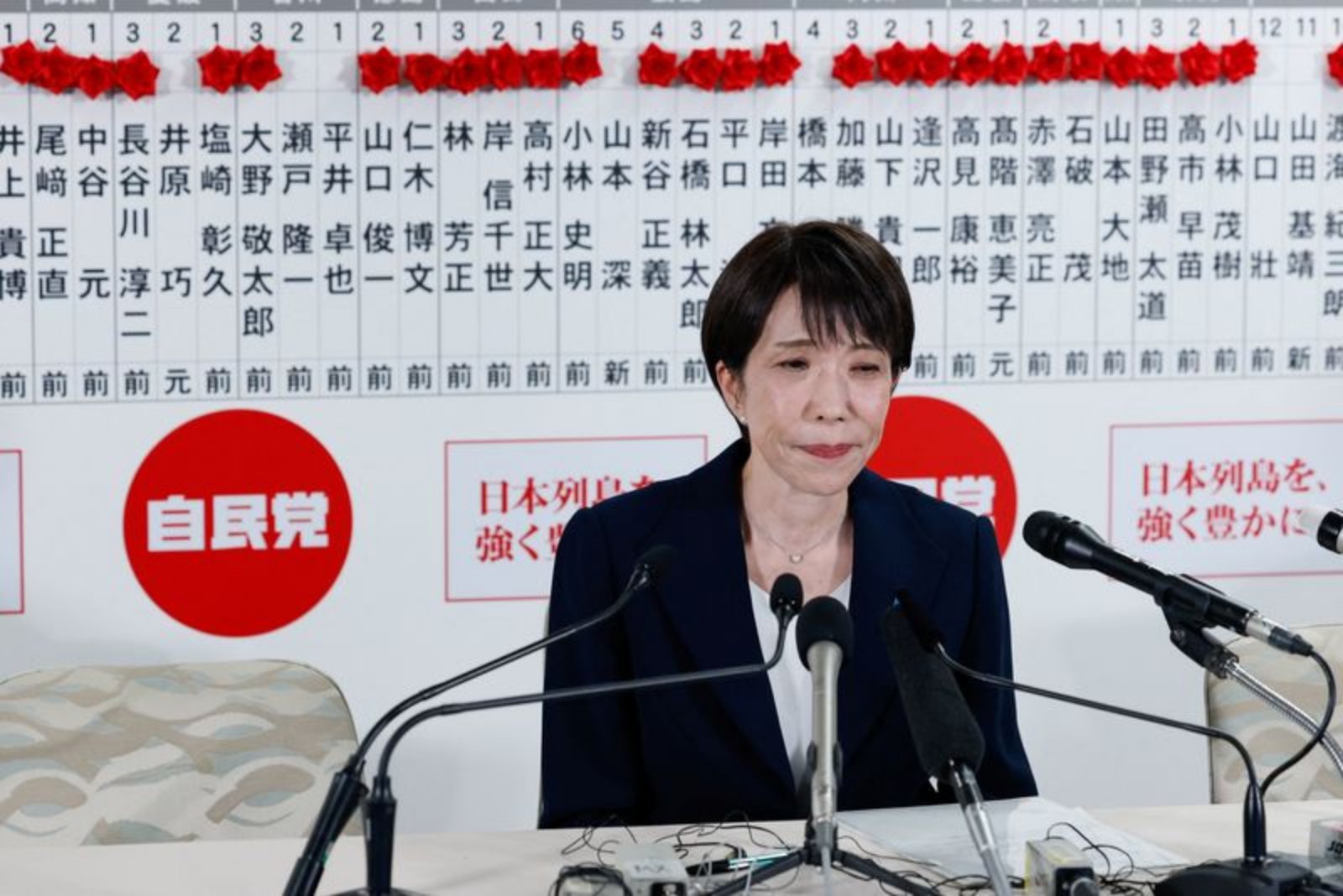
Japan’s recent lower-house election has delivered a commanding parliamentary majority to Prime Minister Sanae Takaichi, significantly reducing internal opposition to an assertive security program that Beijing has criticized as a revival of militarism.
As vote tallies showed the ruling bloc capturing 352 of the 465 seats in the lower house, Takaichi said she would "work flat out to deliver" an agenda focused on building armed forces capable of deterring Chinese threats to islands near Japan, including those close to Taiwan. The scale of the victory has emboldened plans to expand defence capacity and alter long-standing limits on Japan’s security posture.
Takaichi’s posture on Taiwan sparked a diplomatic storm in November when she suggested Japan could respond militarily if China attacked the democratically governed island and such action also threatened Japanese territory. Beijing reacted angrily at the time, pledging to "resolutely prevent the resurgence of Japanese militarism" if Tokyo persisted on what it called a "wrong path."
China has since imposed a suite of economic countermeasures tied to the dispute, including a boycott of travel to Japan and export restrictions on items such as rare earths it said could be used in military equipment.
External reactions and regional signalling
Observers say Takaichi’s victory will make Japan more forward-leaning on defence policy. "I expect to see Japan very forward-leaning on defence policy, such as her statements on a Taiwan contingency," said Kevin Maher, a former U.S. diplomat now with NMV Consulting in Washington. "One impact could be that President Xi Jinping comes to understand her strong stance," he added.
Shingo Yamagami, a senior fellow at the Sasakawa Peace Foundation and a former Japanese ambassador to Australia, described the election’s unstated theme as China. Writing on X, he framed the choice as one between acquiescing to or standing up to what he called belligerent actions and economic coercion, and he argued Japanese voters chose the latter.
Taiwan’s de facto ambassador to Japan, Lee Yi-yang, quickly congratulated Takaichi, noting on Facebook that the outcome underscored Japan was not cowed by China’s "threats and pressure."
China’s foreign ministry reiterated its objections following the vote. Spokesman Lin Jian urged Takaichi to retract her Taiwan remarks and said Beijing’s policy toward Japan would not shift as a result of one election. "We urge Japan’s ruling authorities to take seriously, rather than ignore, the concerns of the international community, and to pursue the path of peaceful development instead of repeating the mistakes of militarism," Lin said.
Defence plans and policy shifts
Takaichi, who has expressed admiration for Britain’s former leader Margaret Thatcher, is already moving to raise military expenditures. Her government is accelerating defence spending to reach a record 2% of gross domestic product by the end of March. She has also promised to relax restrictions on arms exports and to enable joint defence equipment projects with partner countries.
Officials say the administration intends to draft a new national security strategy, likely by year end, which could further speed military spending. An LDP lawmaker, speaking on condition of anonymity because of the sensitivity, told Reuters that defence outlays could be pushed toward roughly 3% of GDP under such a plan.
Tokyo’s recalibration draws lessons from nearly four years of war in Ukraine, prompting a focus on building munitions stockpiles and acquiring new systems such as drones to prepare for the possibility of prolonged conflict with a more powerful opponent.
At the same time, analysts highlight fiscal tensions. Jeffrey Hornung of the RAND Corporation noted that Takaichi’s simultaneous proposals for tax cuts and consumer-focused stimulus could strain public finances and limit how far defence spending is advanced. "Maybe you’ll see an effort to spend more, but because of her plans to spend on consumer measures, they may not choose to push much further," he said.
Constitutional question looms
The electoral landslide also increases prospects for tackling a politically sensitive constitutional objective without directly adding to the budget - formally recognising the Self-Defence Forces as a military in Japan’s pacifist constitution.
With a two-thirds majority in the lower house, Takaichi could table an amendment to that effect. Any constitutional change would still require a two-thirds majority in the upper house - which her coalition does not currently control - and final approval in a national referendum. Hornung judged the path as "not a slam dunk," but said it is probably the best opportunity for any prime minister to take this step.
Market and sectoral implications
The contours of Takaichi’s programme point to clear sectoral implications. Rising defence budgets and a loosening of arms-export rules could benefit domestic defence manufacturers and firms involved in aerospace, electronics and drone production. Measures to stockpile munitions and procure equipment would place demand pressure on defence supply chains and related manufacturing sectors.
Conversely, China’s punitive measures, such as tourism boycotts and export controls on key inputs including rare earths, touch on sectors beyond defence - notably tourism, materials processing and any industries dependent on those exports. Fiscal trade-offs between consumer stimulus and defence outlays could also influence broader macroeconomic policy and market sentiment.
Outlook and uncertainties
While the election has materially strengthened the prime minister’s hand, several uncertainties remain. Fiscal constraints could temper the pace and scale of defence expansion. Beijing’s punitive economic actions could persist or escalate, affecting trade flows and particular supply chains. And constitutional revision faces substantial legislative and popular hurdles that mean any change is far from guaranteed.
For now, Japan’s electorate has handed Takaichi a mandate to pursue a more assertive security posture, and Tokyo is preparing policy moves that will be watched closely across the region and by markets with exposure to defence, materials and tourism sectors.