
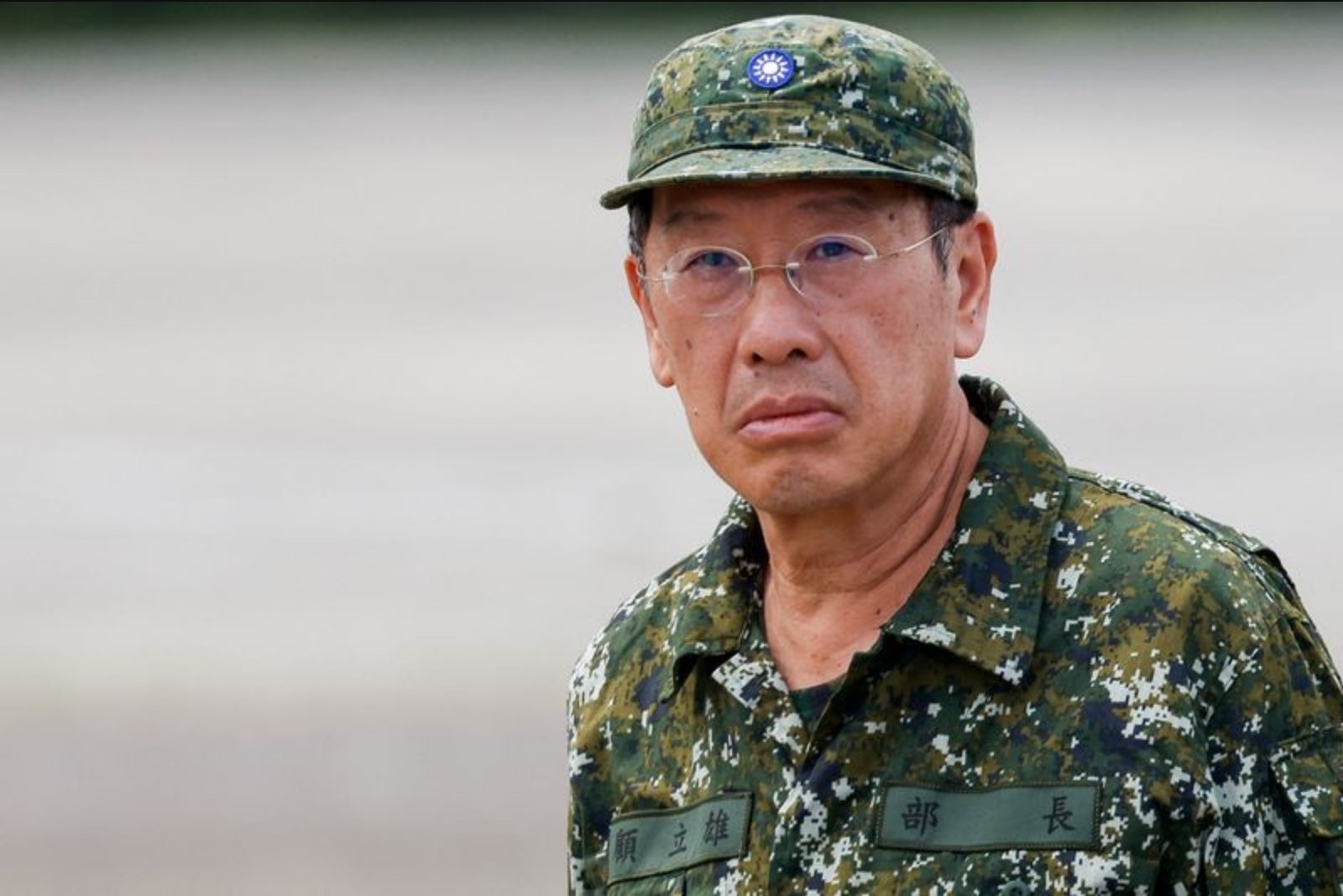
Taipei - Taiwan's Defence Minister Wellington Koo said on Tuesday that, to his knowledge, the United States has not informed Taipei of any delays to the internal review of a second arms sale to the island. Koo said his understanding was that Washington's internal procedures for reviewing the sale are continuing as planned.
Koo's remarks follow reporting that a significant U.S. arms package for Taiwan, valued at about $14 billion and including advanced interceptor missiles, is ready for U.S. presidential approval and could be signed after the U.S. president's planned visit to China. That report said the package could be approved after the trip, though no formal announcement of a second sale has been made by the U.S.
Over the weekend, the U.S. president indicated he was looking to postpone his early April visit to China by roughly a month because of the Iran war. Asked whether that shift might affect the timing of the arms package, Koo emphasized close coordination between Taipei and Washington and said, "As we understand it, their internal review procedures are proceeding on schedule. I don't think we have received any related information indicating delays."
China strongly objects to weapons sales to Taiwan, which it regards as part of its own territory, and has repeatedly called for an end to such transfers. Chinese President Xi Jinping told the U.S. president in February that arms sales to Taiwan need to be handled with prudence, according to accounts of that discussion.
The United States disclosed an $11 billion weapons sale to Taiwan in December. While the larger $14 billion package has been reported as ready for approval, the U.S. government has not formally unveiled that second package.
Some observers have expressed concern that efforts by the U.S. president to secure a favourable trade arrangement with China could lead to constraints on U.S. military support for Taiwan. The United States does not maintain formal diplomatic relations with Taipei, but U.S. law requires it to provide Taiwan with the means to defend itself.
Beyond the diplomatic signals, Taiwan and other U.S. partners in the region are watching how the redeployment of U.S. forces to the Middle East could affect American readiness in Asia. Koo noted that allies and partners are attentive to the potential impact of shifting forces - and of weapons being expended rapidly in the Iran war - on readiness to respond to incidents involving China or North Korea.
On the subject of U.S. operations and troop movements, Koo said he could not comment on details of U.S. deployments. He did say that Taiwan's military will keep monitoring developments closely across the Taiwan Strait and throughout China, stressing that vigilance will continue. "Our main focus remains on observing the relevant indicators and signs and we will continue to pay close attention," he said.
Contextual note - The U.S. has not formally announced a second arms package, and Taipei reports no formal notice of delay. The situation remains subject to developments in U.S. internal review processes and to broader diplomatic and military developments in the Middle East and East Asia.