
Overview
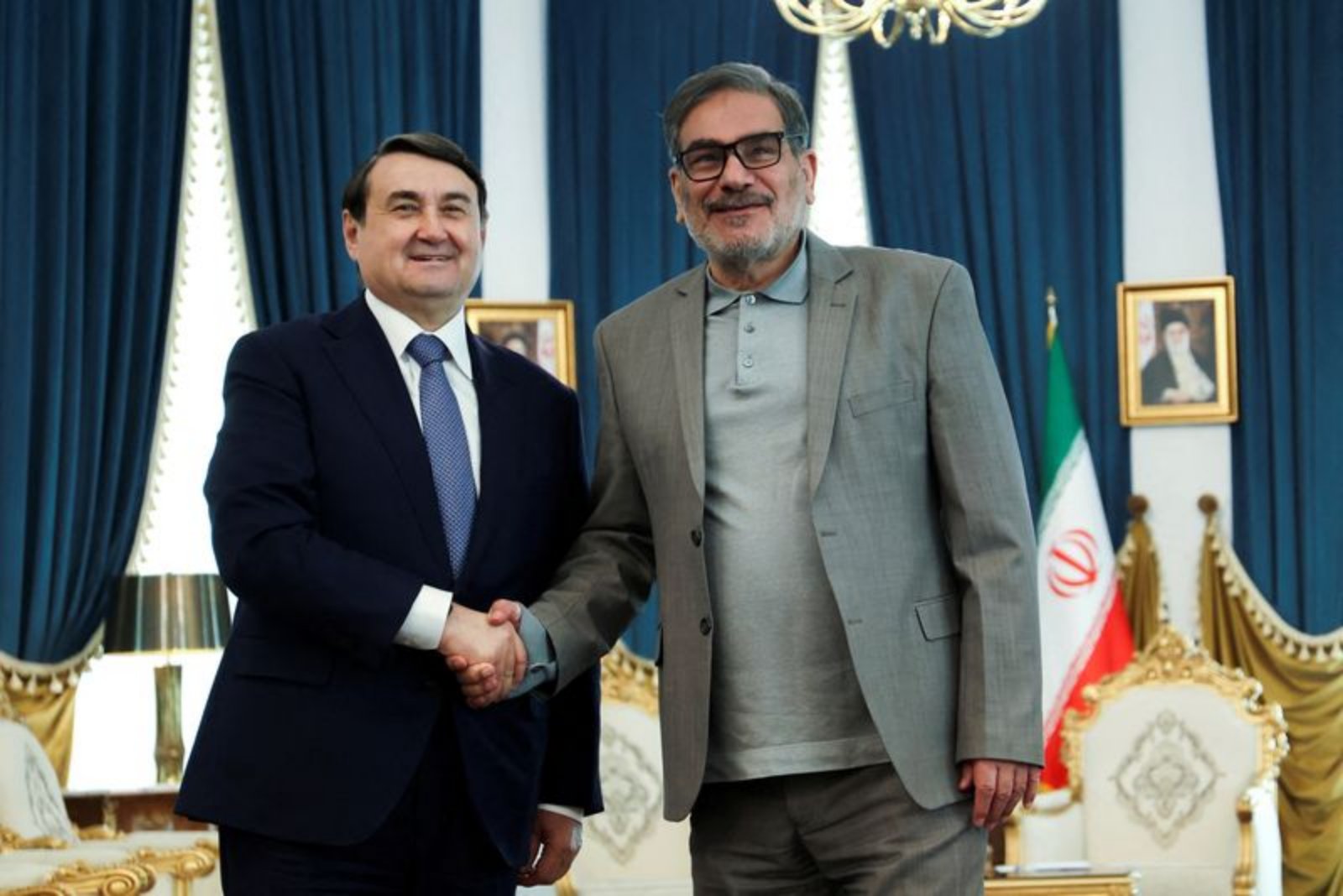
Ali Shamkhani, the 70-year-old former Revolutionary Guard commander who narrowly escaped death when Israeli strikes destroyed his Tehran residence in June 2025, has been reaffirmed in a central leadership role in Iran’s security apparatus. Once pulled alive from the rubble, Shamkhani has returned to the heart of policy-making as secretary of a newly created Defence Council, a post confirmed by Supreme Leader Ali Khamenei.
Context and immediate role
The Defence Council was established after last year’s 12-day war that included military strikes by Israel and the United States against Iran’s nuclear facilities and military installations. Its mandate is to coordinate Iran’s wartime actions at a moment when the United States has warned of possible new air strikes originating from ships positioned nearby if negotiations fail to produce a new agreement to limit Tehran’s nuclear programme.
In the weeks since his extraction from the rubble, Shamkhani drew public attention with a remark to Iranian filmmaker Javad Mogouei that was published in October, saying: "Bastards, I am alive." The comment recalled a hard-fought personal escape, and has been cited as symbolic of his persistence in Iranian political and military life.
Shamkhani’s confirmation returns him to the nucleus of decision-making at a time when Tehran faces heightened pressures. U.S. President Donald Trump outlined the case for a potential attack on Iran during his State of the Union address to Congress, saying he would not allow what he described as the world’s biggest sponsor of terrorism to obtain a nuclear weapon. Iran rejects the label of sponsor of terrorism and insists it does not seek nuclear arms, while Western states and Israel regard parts of Tehran’s nuclear programme as a cover for weaponisation.
Public statements and posture
Shamkhani has set a clear public posture toward any U.S. military action. Posting on X in January 2026, he said: "A 'limited strike' is an illusion. Any military action by U.S. - from any origin and any level - will be considered the start of war, and its response will be immediate, all out, and unprecedented, targeting heart of Tel Aviv and all those supporting the aggressor." The statement underscores the high-stakes tone from Tehran and frames any strike as likely to trigger a broad and severe response.
Military pedigree and early career
Born in 1955 to an ethnic Arab family in Khuzestan province, an oil-rich region and principal battlefield during the 1980-1988 Iran-Iraq war, Shamkhani rose through IRGC ranks in the conflict. He initially commanded Guards forces in Khuzestan, which faced Saddam Hussein’s armies throughout the war. By 1982, he was serving as deputy to IRGC commander-in-chief Mohsen Rezaei, and by the end of the conflict he had commanded the Guards’ ground forces while also holding a cabinet post.
In 1989, following Supreme Leader Ali Khamenei’s appointment, Shamkhani was moved to the regular navy, which had suffered in engagements with U.S. forces. Within a year he was appointed to lead both the regular navy and the IRGC naval forces, directing a strategic shift toward asymmetric maritime tactics designed to offset conventionally superior adversaries.
Diplomatic and political roles
Shamkhani’s portfolio has also included diplomatic assignments. He served as Iran’s defence minister under President Mohammad Khatami from 1997 to 2005. During that tenure he made a visit to Saudi Arabia, the first by an Iranian defence official since the 1979 revolution, an initiative that contributed to a measured easing of tensions between the two regional rivals.
More recently, he led negotiations, mediated by China, that culminated in a 2023 agreement restoring diplomatic ties with Riyadh, eight years after protesters breached the Saudi embassy in Tehran. His appointments have frequently coincided with periods when Tehran sought to engage adversaries while avoiding the appearance of concession.
As the long-serving head of the Supreme National Security Council (SNSC) for a decade, Shamkhani was a central figure during the 2015 nuclear deal and through the 2018 U.S. withdrawal from that agreement, an episode that shaped his scepticism of the accord. He left the SNSC in 2023 and has since acted as a political adviser to Supreme Leader Khamenei.
The SNSC itself is described as the overarching body for security and defence policy, and during his tenure Shamkhani functioned as Khamenei’s representative there. With tensions rising and the prospect of conflict circulating in diplomatic and military circles, Shamkhani appears positioned to exert influence among a cohort of politically experienced former IRGC commanders.
Statements reflecting deterrence and posture
In an October 2025 interview, Shamkhani said in hindsight Iran should have considered building nuclear weapons in the 1990s, a comment that emphasised his focus on deterrence following the major air strikes Iran endured from both Israel and the United States during the 12-day war. Those remarks have been interpreted as reflecting a hardening stance on the role of military capability as a strategic deterrent.
Sanctions, allegations and family scrutiny
Shamkhani and members of his family have faced U.S. sanctions and allegations tied to commercial activity. The U.S. Treasury sanctioned him in 2020, and in 2025 it designated his son, Mohammad Hossein, for operating a network of vessels that transported sanctioned oil from Iran and Russia to international buyers. The Treasury has described the family’s shipping interests as a "shipping empire" that accrued substantial wealth and played a role in facilitating the circumvention of U.S. sanctions.
Shamkhani has not publicly responded to allegations of corruption. In 2025 his daughter, Fatemeh, became the subject of public backlash after a widely circulated video showed her in a revealing gown at an opulent wedding. The episode prompted criticism of elite privilege and amplified tensions between the conservative ethos of Iran’s ruling establishment and the lifestyles of those linked to the corridors of power.
This account summarises Shamkhani’s trajectory from wartime IRGC commander to a returning figure at the centre of Iran’s security decision-making, and outlines the policy, diplomatic and personal controversies that surround his role.