
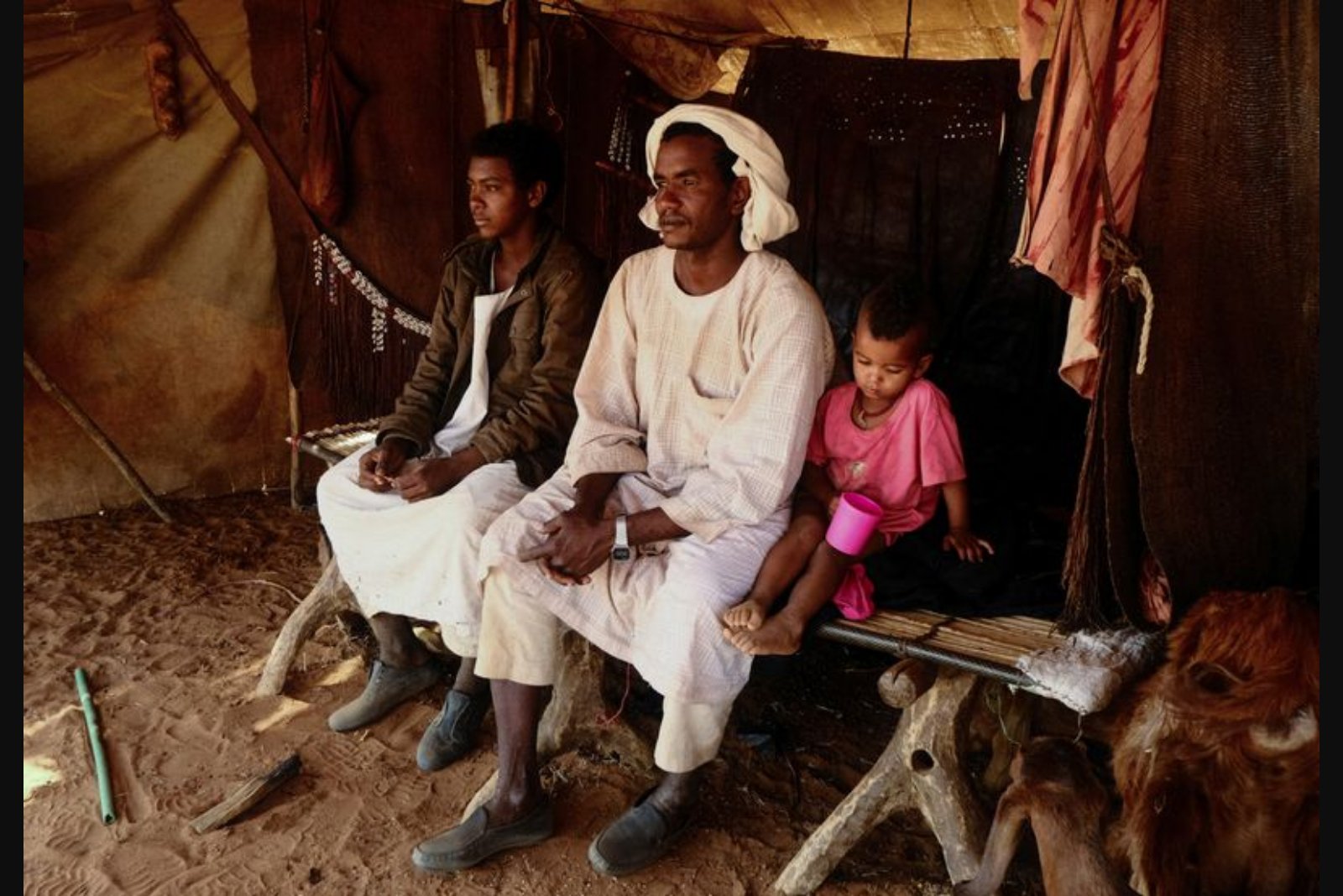
Al-Obeid outskirts - Gubara al-Basheer and his relatives, who previously roamed Sudan’s arid plains with their camels and herds, say their mobility has been halted by the conflict that erupted in 2023. Where once they traveled freely between markets, water sources and pastures, they are now confined to desert fringes outside the central city of al-Obeid, vulnerable to armed robbers and rising ethnic animosity.
Al-Obeid, a major urban centre and the capital of North Kordofan state, has seen some of the fiercest fighting in recent months. Local researcher Ibrahim Jumaa said the war between the Sudanese army and the paramilitary Rapid Support Forces - the RSF - has forced nearly 14 million people to flee their homes, triggered waves of ethnic bloodshed, and spread famine and disease.
Jumaa told Reuters the conflict has also upended the delicate arrangements governing land ownership and traditional livestock routes that once underpinned the livelihoods of nomadic communities and helped regulate relations across tribes.
"We used to be able to move as we wanted. Now there is no choice and no side accepts you," al-Basheer said, describing how free movement and access to markets have evaporated. He added: "In the past there were a lot of markets where we could buy and sell. No one hated anyone or rejected anyone. Now it’s dangerous."
Those stranded on the desert margins face multiple threats beyond the frontlines. Hamid Mohamed, another shepherd confined to the outskirts of al-Obeid, described a surge in theft. "There are so many problems now. We can’t go anywhere and if we try we get robbed," he said.
Jumaa noted that nomadic groups number in the millions across Sudan and that the disturbance to established grazing corridors and market networks has broader implications for food security and local commerce.
The RSF traces its roots to Arab militias known as the Janjaweed, which were accused of genocide in Darfur in the early 2000s. During the current conflict, the U.S. and rights groups have accused the RSF of committing genocide against non-Arabs in West Darfur, allegations connected to long-running disputes over land. The RSF has denied responsibility for ethnically charged killings and has said those responsible for abuses will be held to account.
Throughout the fighting, the RSF has formed ties with some Arab tribes and, at times, granted those alliances latitude to loot and abduct civilians. Local accounts point to episodes of banditry and targeted seizures of livestock that compound the economic squeeze on herders.
At the same time, Jumaa and others emphasize that not all Arab tribes or tribesmen have taken up arms. "We require a national programme to counter hate speech, to impose the rule of law, and to promote social reconciliation, as the war has torn the social fabric," Jumaa said, underlining the need for measures to restore civic order and rebuild fractured community ties.
Implications
The situation around al-Obeid highlights how protracted conflict fractures rural economies, curtails pastoral mobility and exposes vulnerable populations to criminal violence. Disruption of markets and livestock routes threatens the livelihoods of nomadic families and has knock-on effects for local food supplies and humanitarian needs.