
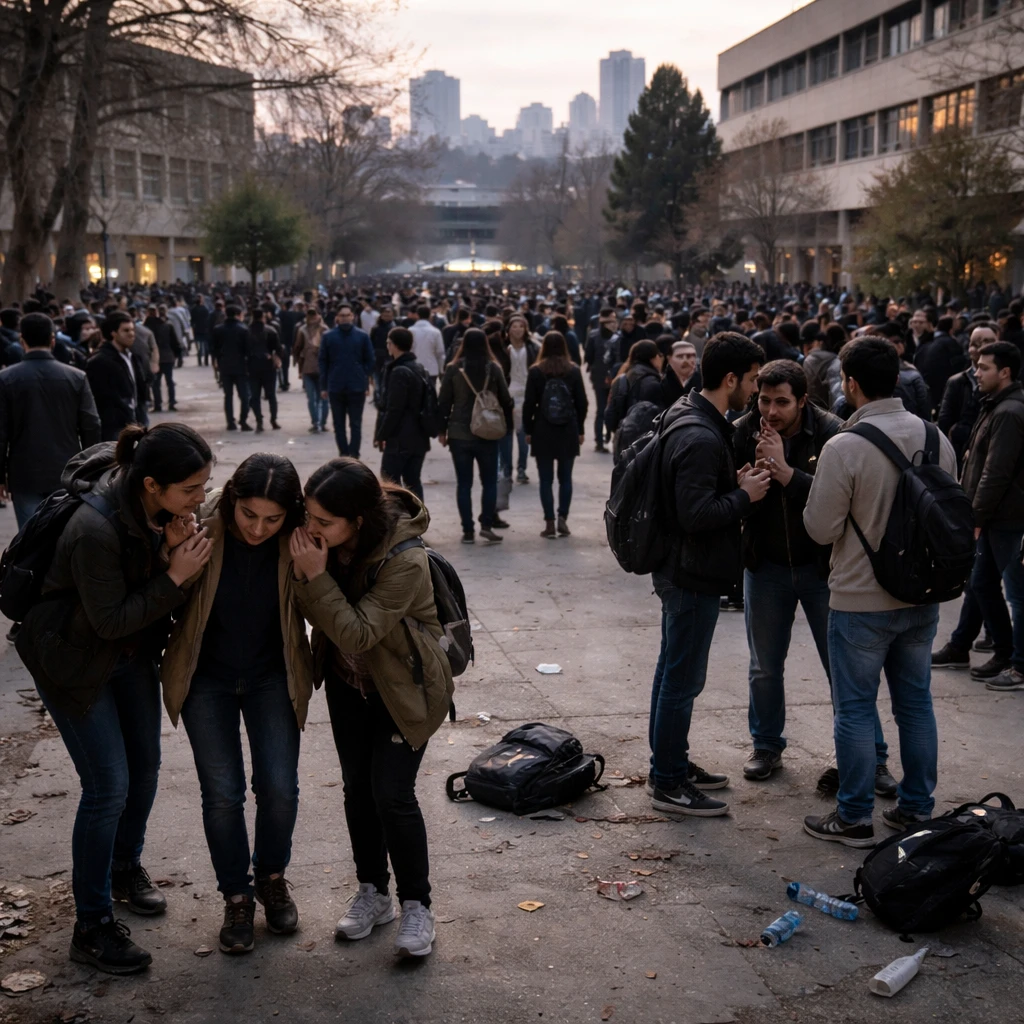
DUBAI, Feb 22 - Students held demonstrations that turned into clashes at a number of Iranian universities for a second straight day, according to reports circulating on local news outlets and social media. The unrest comes at a time when Iran is reported to be facing a U.S. military buildup while it pursues a potential nuclear agreement with Washington.
State television aired video clips it said showed individuals "pretending to be students" attacking pro-government students in Tehran who were participating in rallies denouncing disturbances that took place in January. The footage, as described by state TV, depicted these alleged attackers throwing rocks and injuring students who were taking part in the pro-government events.
Separate footage posted by the U.S.-based rights group HRANA showed demonstrations at universities in the northeastern city of Mashhad. HRANA said the entry of security forces into those protests resulted in injuries among participants.
A video circulating on Saturday was described as showing lines of marchers at Tehran's Sharif University of Technology. The footage purportedly captured chants condemning Supreme Leader Ayatollah Ali Khamenei as a "murderous leader" and calls for Reza Pahlavi, described in the footage as the exiled son of Iran's toppled shah, to become a new monarch.
The recent wave of protests began in December over economic problems and rapidly turned political. Those demonstrations last month were met with a severe response that the material describes as the most violent domestic crackdown since the 1979 Islamic Revolution, during which thousands of people were reportedly killed.
The reports of university unrest come amid broader geopolitical developments referenced in coverage of the events, namely reports of a U.S. military buildup at a time when Iran is seeking to reach a nuclear deal with Washington. The combination of continued domestic demonstrations, reported clashes at academic institutions, and external military movements frames a tense and uncertain environment.
Reporting limitations
The information in this article is drawn from local news agencies, social media posts, state television footage, and video material published by HRANA. Where sources described footage as "purported" or "said," those characterizations are retained to reflect the original reporting language.