
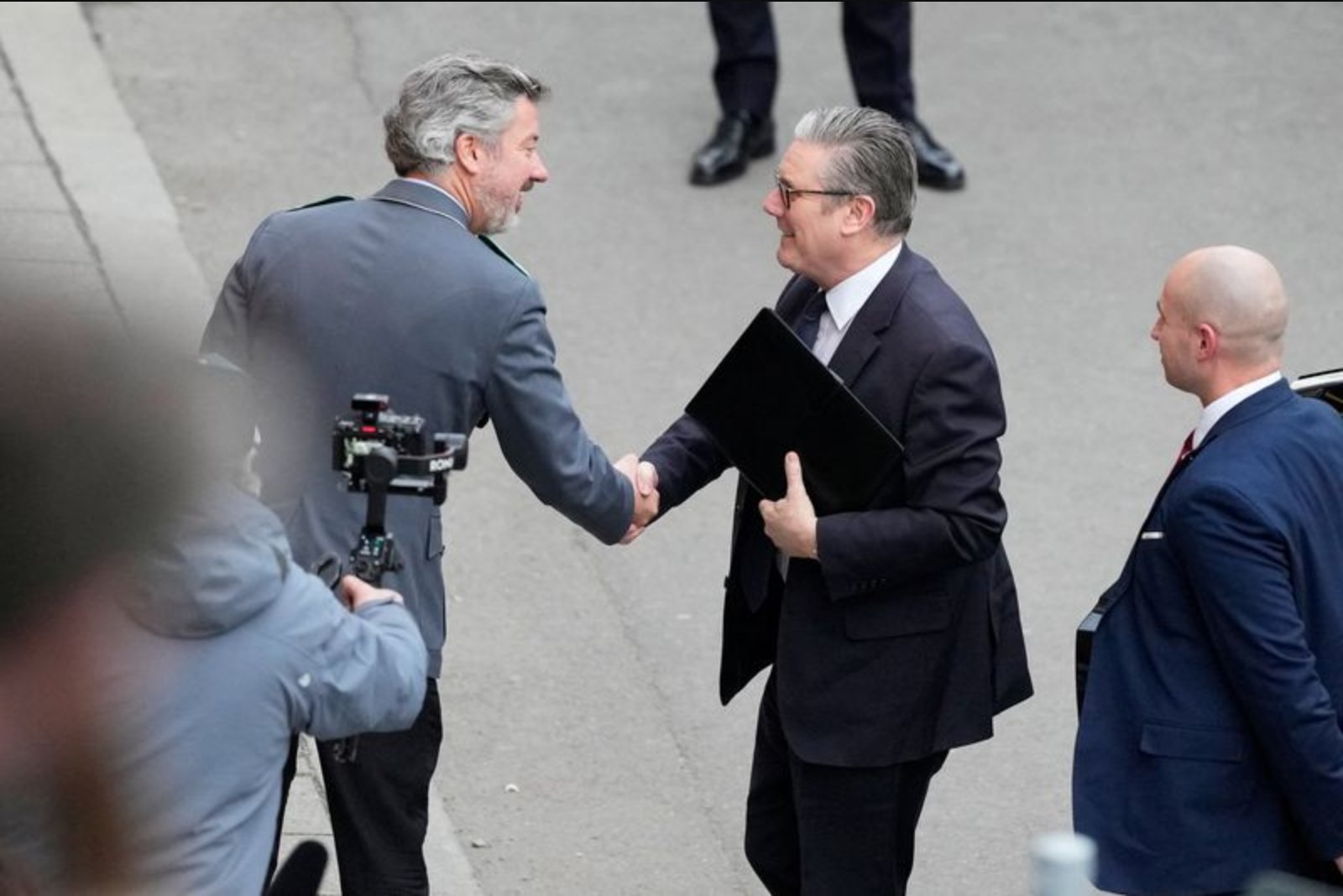
LONDON, Feb 13 - Britain is prepared to strengthen defence ties with Europe to help counterbalance NATO's dependence on the United States, Prime Minister Keir Starmer said on Saturday at the Munich Security Conference. In remarks drawn from extracts released by his office, Starmer called for more integration across Europe’s defence industry and a rethink of procurement to avoid needless duplication.
Starmer acknowledged the central role of the U.S. in European security, saying Washington is an indispensable ally that has delivered an unparalleled contribution to the continent's defence. At the same time, he argued that a NATO shaped more by European capabilities would lessen overdependence on the United States.
"I’m talking about a vision of European security and greater European autonomy, that does not herald U.S. withdrawal but answers the call for more burden-sharing in full, and remakes the ties that have served us so well," Starmer said in the speech extracts.
The prime minister pointed to what he called unnecessary fragmentation across the continent's defence industrial base, which he said has left Europe as a "sleeping giant." He proposed a new approach to defence procurement intended to remove duplicative programmes and better align industrial capacity across European states.
Starmer's remarks come amid tensions within the NATO alliance linked to U.S. President Donald Trump, who has tested alliance unity through actions such as expressing an interest in acquiring Greenland from Denmark, a NATO member, and by pressing European states to increase their defence spending.
Since taking office in 2024, Starmer has sought to reset the United Kingdom's relationship with the European Union, four years after the country left the bloc. He has also played a coordinating role among European partners providing support to Ukraine in response to Russia's invasion.
Efforts for Britain to participate in the EU's SAFE defence fund stalled last year. According to the speech extracts, Starmer said he remains open to joining a reconfigured version of SAFE and is exploring alternative avenues to enhance defence cooperation with Europe.
Reflecting on the political shifts since the Brexit era, the prime minister said the United Kingdom had changed. "We are not the Britain of the Brexit years anymore," the extracts quoted him as saying, warning that retreating into isolation would cede control of the nation's security. "There is no British security without Europe, and no European security without Britain," the extracts added.
Starmer assumed office following successive Conservative governments whose approaches to negotiating Britain's exit from the EU at times strained relations with Brussels. His speech framed closer UK-Europe defence collaboration as a strategic and practical necessity rather than a geopolitical pivot away from the United States.
Summary
At the Munich Security Conference Keir Starmer announced Britain's willingness to deepen defence cooperation with European partners to reduce NATO's overreliance on the U.S., advocated closer industrial integration and procurement reform, and reaffirmed the importance of the transatlantic alliance.
Key points
- Britain is ready to work more closely with Europe on defence to reduce NATO’s overreliance on the United States - impacts defence and government procurement sectors.
- Starmer called for integration of Europe's defence industry and a new approach to procurement to avoid duplication - affects defence manufacturing and industrial supply chains.
- He maintained that the U.S. remains an indispensable ally while advocating greater European autonomy within NATO - relevant to international security policy and defence spending decisions.
Risks and uncertainties
- Existing political divisions within NATO, highlighted by tensions linked to the U.S. presidency, could complicate efforts to rebalance burden-sharing - risk to diplomatic and defence policy coordination.
- Breakdown of talks over Britain's participation in the EU's SAFE defence fund last year illustrates institutional and political obstacles to integration - risk to EU-UK defence funding and joint procurement initiatives.
- Potential fragmentation in Europe's defence industrial base may persist without concrete procurement reforms - risk to defence manufacturing efficiency and economies of scale.