
Sri Lanka is handling an emergent maritime situation after the sinking of an Iranian warship in waters off its southern coast, officials said on Thursday, as Colombo reported efforts to safeguard lives aboard a second Iranian vessel detected inside Sri Lanka's exclusive economic zone.
Cabinet spokesman Nalinda Jayatissa told parliament that the government was aware of another Iranian ship near Sri Lanka's maritime boundary and that the President and defence officials were fully informed. Jayatissa said authorities were "addressing the situation" and reiterated the government's priority was to "safeguard lives." He declined to confirm whether the second ship was a military vessel.
The announcement followed a U.S. submarine strike on Wednesday that sank the IRIS Dena, which Sri Lankan officials said went down 19 nautical miles off Galle. Sri Lanka reported 87 bodies had been recovered from the sea and that two freezer units had been dispatched from Colombo to preserve the recovered remains.
Iranian Foreign Minister Abbas Araqchi condemned the strike on social media, saying the vessel had been struck in international waters without warning and was thousands of miles from the Gulf, where exchanges of strikes between U.S., Israeli and Iranian forces have been reported. Araqchi added that the United States "will bitterly regret the precedent it has set," and said the ship had been a guest of India's navy and was carrying almost 130 sailors.
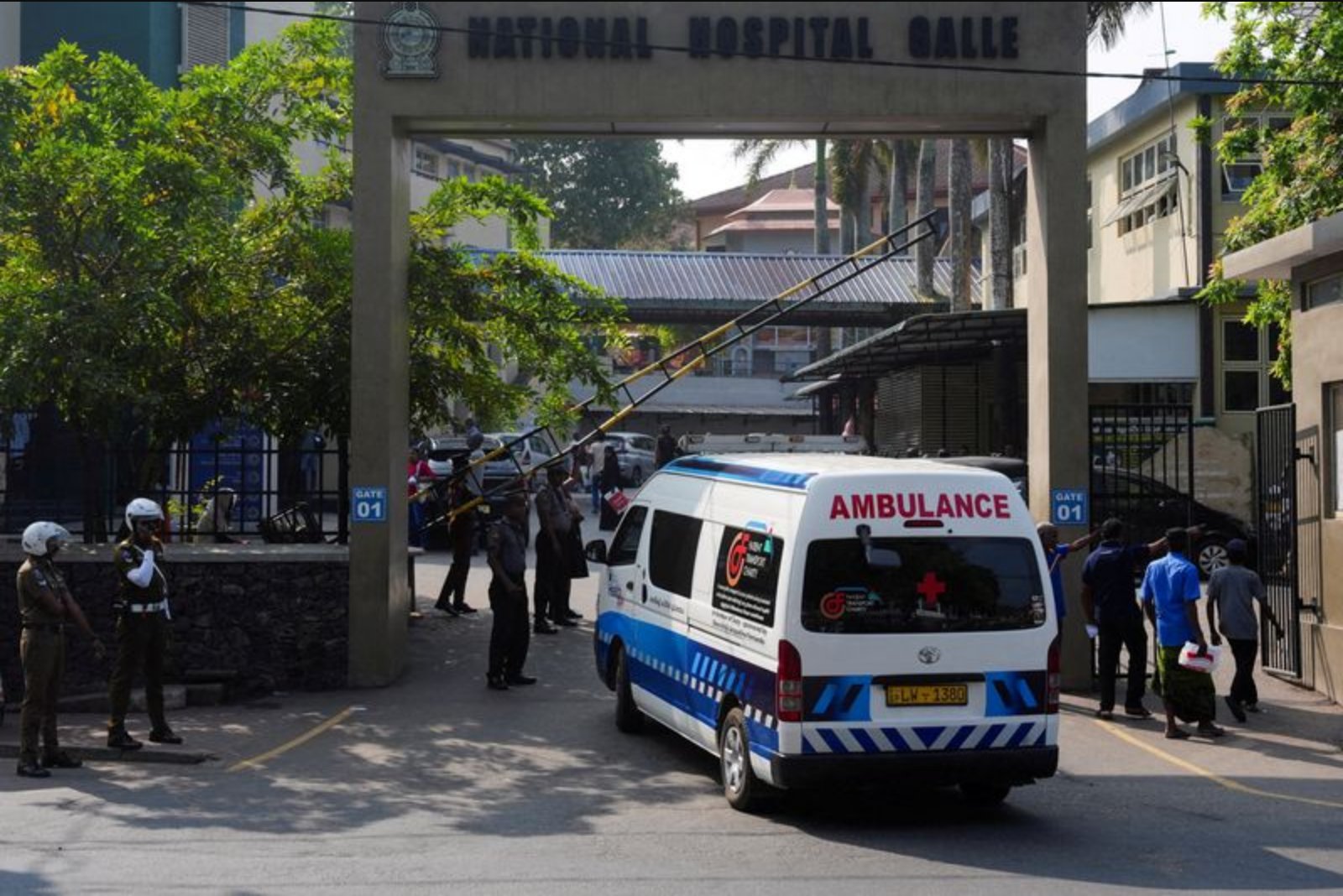
Sri Lankan military teams had responded to an early-morning distress signal from the IRIS Dena on Wednesday and found 32 survivors, who were taken to hospital for treatment of minor injuries. Authorities said the rescued sailors were expected to be discharged from hospital on Thursday. Search-and-rescue operations were continuing for an estimated 10 people still unaccounted for, the government said.
A Pentagon video circulated by U.S. officials and described by U.S. Defence Secretary Pete Hegseth showed the warship being struck by a large explosion that shattered the rear of the vessel, reportedly causing the stern to lift and the ship to begin sinking. Secretary Hegseth said the ship thought it was safe in international waters but was hit by a torpedo.
Sri Lankan officials and the drill's online materials said IRIS Dena had participated in a naval exercise organised by India in the Bay of Bengal from February 18 to 25 and was en route back after the exercise when it was attacked. An Indian Navy spokesperson had not responded to a request for comment following the sinking.
Onshore, hospital staff attended to the survivors while law enforcement secured the ward where recovered personnel were being treated. The government noted that steps had been taken to preserve the recovered bodies pending further procedures. Jayatissa's comments in parliament aimed to reassure lawmakers that the highest levels of government were monitoring developments closely.
The presence of a second Iranian vessel inside Sri Lanka's exclusive economic zone prompted Colombo to make clear it was taking a measured approach focused on life preservation. Officials said they were coordinating with defence agencies and the presidency to manage both the humanitarian and security dimensions of the incident.
Authorities emphasized ongoing search-and-rescue work for those still missing and the treatment of survivors, while the diplomatic fallout included strong statements from Iranian officials protesting the circumstances of the attack and its location far from the Gulf theatre where other exchanges have occurred.