
Sri Lankan officials on Friday said they had moved to bring a second Iranian naval vessel into harbour and were relocating 208 members of its crew to a navy facility, two days after a separate Iranian warship was struck and sunk in waters near the island.
President Anura Kumara Dissanayake framed the action as a humanitarian response, saying the country had a "humanitarian responsibility" to receive the sailors amid a widening conflict involving the United States, Israel and Iran that has caused market turbulence and disrupted trade and travel.
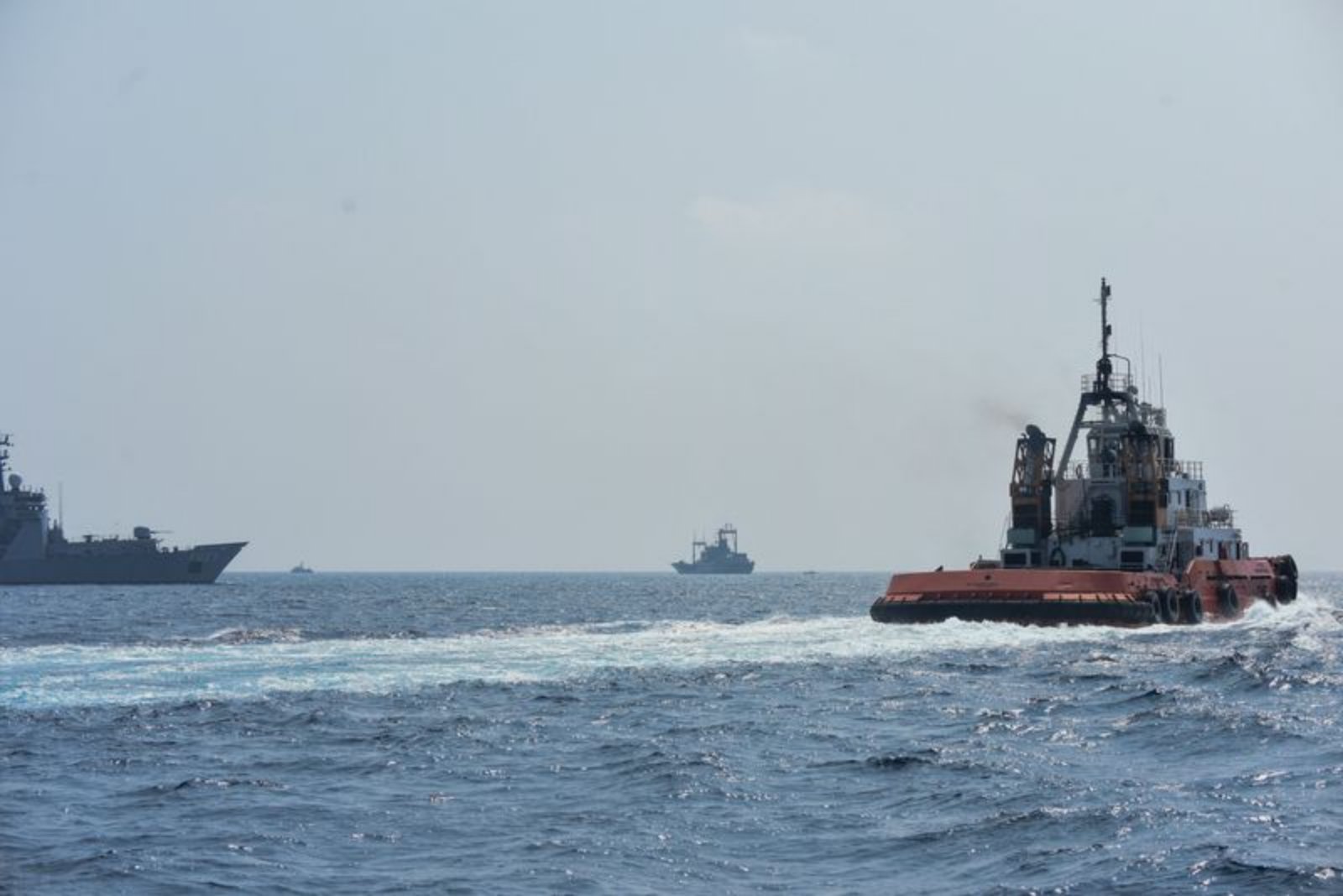
The Sri Lankan Navy identified the second vessel as the naval auxiliary IRIS Booshehr. Photographs released by the Presidential Media Division showed Iranian sailors carrying luggage as they disembarked, and images also captured Sri Lankan tug boats and navy vessels coming alongside the Booshehr.
Dissanayake previously announced the ship would be moved to Trincomalee harbour on the country's eastern coast. Officials said the Booshehr had been stranded in Sri Lanka's exclusive economic zone, outside the nation's maritime boundary.
"About 15 crewmen are still aboard the Iranian ship to help with navigation," a Sri Lankan government source said.
That source and a second unnamed government official reported that the vessel was experiencing engine problems. Both officials declined to be identified because of the sensitivity surrounding the matter.
Authorities said the 208 crew members were first taken to the port in Colombo, Sri Lanka's commercial capital, where they received medical examinations. They were then moved in groups to a navy camp in Welisara, roughly 18 km (10 miles) from the port, officials added.
The defence ministry declined to comment on the situation, and the navy spokesman's office could not be reached for comment.
The arrival of the Booshehr came a day after the Iranian warship IRIS Dena was struck and sunk while returning from India following a naval exercise. The Dena was hit by a torpedo from a U.S. submarine in the Indian Ocean about 19 nautical miles off Sri Lanka's coast, an attack that killed 87 people on board and has broadened the geographic scope of the U.S.-Israeli conflict with Iran.
Iran's foreign minister extended thanks to Sri Lanka for assisting survivors from the sunken warship. Iranian Deputy Foreign Minister Saeed Khatibzadeh, speaking to reporters in New Delhi where he was attending a conference, characterized the vessel that came under attack as "ceremonial, unloaded, unarmed."
Sri Lanka has substantial trade ties with both Washington and Tehran. The United States purchases about 40% of Sri Lanka's apparel exports, while Iran is identified as one of Sri Lanka's principal buyers of tea. Officials and observers have linked the regional hostilities to disruptions in markets and commercial routes, a dynamic cited by the president in explaining the decision to accept and assist the stranded sailors.
As this situation develops, Sri Lanka's handling of the Booshehr underscores the practical and diplomatic challenges faced by smaller maritime states when larger powers engage in military action nearby. For now, the crew are under the care of Sri Lankan authorities and a small contingent remains aboard the auxiliary ship to aid navigation while it is moved into harbour for further assessment.