
Spain's latest initiative to legalize at least half a million undocumented residents has already put immigration offices under severe pressure and left many migrants scrambling for answers, according to union officials, lawyers and migrants contacted by Reuters. The campaign - announced by the government last month - aims to open a window for regularization from early April through June, but scant operational details and no extra state funding have sown confusion across the system.
Union leaders say frontline staff are still clearing a backlog of cases and fear they will not be able to cope with the expected deluge of applications. "Our offices are completely jammed. If there are no more people, if there is no technological reinforcement, without more money, this is impossible," said César Pérez, a union representative for Spain's immigration officers. Pérez told Reuters that many colleagues were still processing legal status applications submitted in June 2025.
While the government has signalled that a "specific, preferential and differentiated procedure" will be designed for the legalization window, the unpublished draft of the full decree dated February 18th and seen by Reuters provided no operational specifics. Ministries charged with Inclusion, Interior and Territorial Policy declined to answer detailed questions, and a migration ministry spokesperson said the final decree was still being prepared.
Administrative capacity and funding shortfalls
On its website in January, the migration ministry indicated that no additional budget or staffing had been allocated to handle the anticipated spike in applications. That contrasts with earlier mass regularizations in Spain, where extra personnel and information points were added to manage increased demand. Union officials and civil servants warn that the absence of similar reinforcements this time risks overwhelming offices at launch.
To bridge the anticipated gap, sources familiar with internal discussions say the government is weighing non-traditional measures, including enlisting non-governmental organisations and trade unions to support application processing. Another option under consideration is extending immigration offices' opening hours. However, none of these measures has been formally adopted, leaving administrators doubtful the process will kick off smoothly.
One person involved in migration ministry discussions summed up that while authorities are optimistic, "coordinating everyone will not be easy. We can expect chaos at launch." The lack of a confirmed operational plan has already contributed to a sense of impending disorder among the staff who will administer the scheme.
Migrants left uncertain and seeking answers
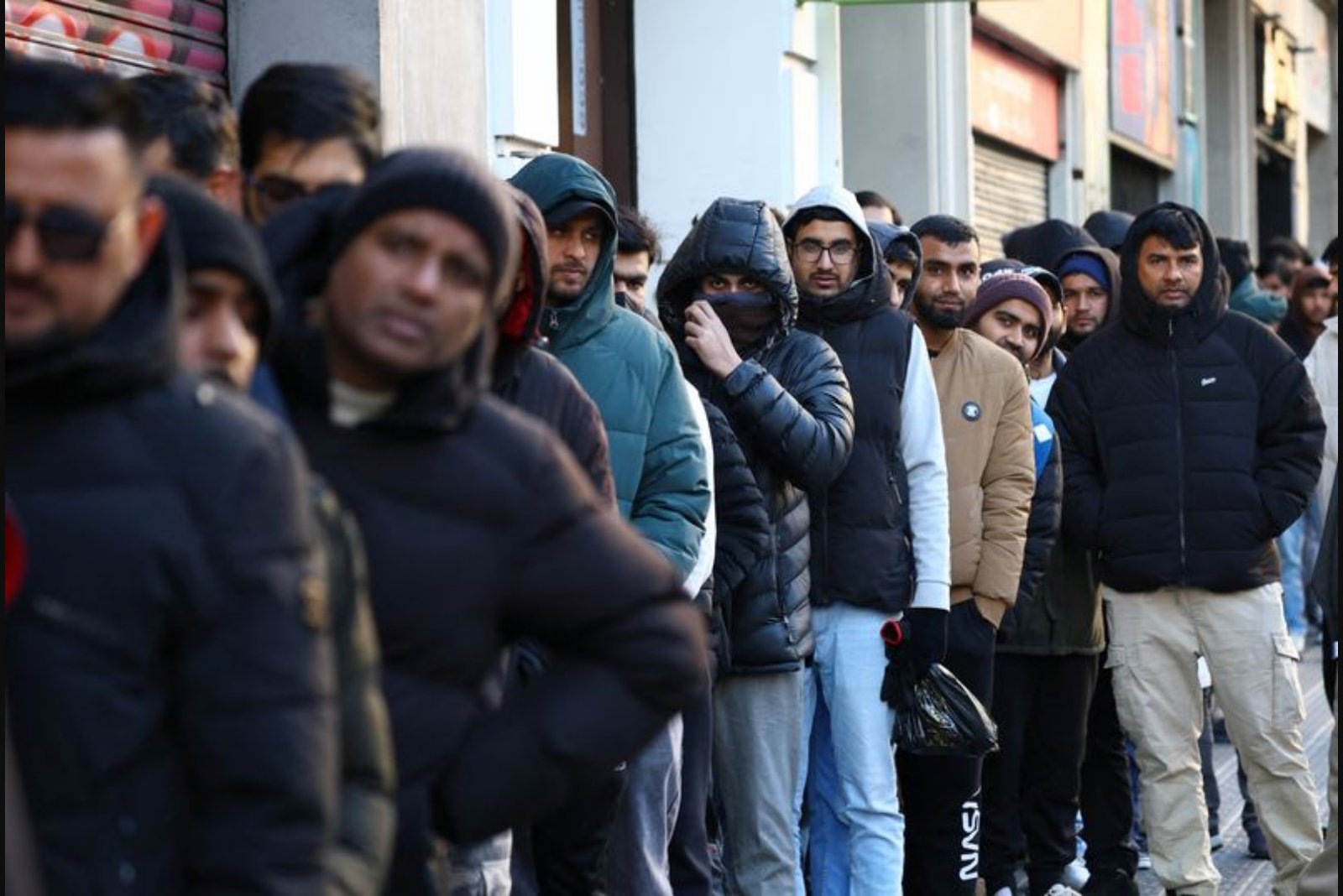
For many migrants the uncertainty is acute. People are lining up at immigration offices to seek information that staff are unable to provide. Police and civil servant unions reported that migrants are requesting details about eligibility and documentation even though immigration officers lack firm guidance.
The government has said migrants with a clean criminal record who have lived in Spain for five continuous months, or who applied for asylum before the end of 2025, could qualify for the regularization. Yet it has not specified what documents will be accepted as proof of residence or other requirements. That gap in technical detail is a central source of anxiety for potential applicants.
"It’s still not clear what requirements we’ll have to meet. I’m afraid they will ask for something I can’t provide," said Iris Rocha, a 37-year-old Peruvian mother of two. Rocha, who fled Peru in 2023 after suffering life-threatening abuse and lost her temporary work permit last year after being denied asylum, attended a local NGO briefing in Barcelona to try to get answers. She said legal papers are necessary for her to work again. "I would get my life back. Until then I have to survive," she said.
Spain's immigration minister, Elma Saiz, told reporters in January that applicants could begin working legally once they are notified their application is being processed, and that such notification would be issued within 15 days of submitting documentation. But lawyers and experts remain sceptical because of chronic delays in the immigration system. Spanish think tank Funcas reports that migrants now spend on average two to three years trying to obtain legal status, and roughly 840,000 undocumented migrants are working off the books while their cases proceed.
"People become undocumented not because they don’t want to register, but because they can’t," said Gabriela Domingo, a lawyer at migration consultancy Legalizados.
Market and policy context cited by government
The government has framed the regularization as part of a relatively open migration approach that economists credit for supporting Spain's rapid economic growth in recent years. Officials have argued that there is an incentive for regularizing undocumented workers: Spain is estimated to need about 2.4 million additional contributors to social security over the next decade to sustain its welfare system, according to official projections cited by the government.
However, political fragmentation in the lower house of parliament has eroded the government’s majority, limiting its ability to pass a new budget since 2023 and constraining fiscal options. The budgetary deadlock complicates efforts to secure new funding for the 2026 drive and represents a departure from previous mass regularizations, which included targeted resources to expand capacity. For instance, a study by researcher Claudia Finotelli showed that in 2005, when Spain carried out a large regularization, 1,700 staff were hired and 742 new information points were set up to help handle demand. There is no equivalent commitment in place for the current proposal.
Auxiliary developments and illicit practices
With appointment slots scarce and official information limited, some migrants are turning to intermediaries to secure what they hope will be April appointments. Three lawyers told Reuters that migrants were already paying intermediaries to obtain slots, a practice authorities have previously described as illegal. The government acknowledged in November 2025 that a shortage of appointment slots had fostered this market.
"People are selling appointments even though the start date is only a rumour, which shows the fear this process has instilled in migrants," said Pilar Rodriguez, a lawyer with migrant advocacy organisation Aculco.
Looking ahead
As April approaches, the central questions hinge on whether the migration ministry will finalize a detailed decree that clarifies documentation rules, allocate funding, or formally adopt stopgap measures such as outsourcing processing support to NGOs or extending office hours. Without such commitments, union officials, lawyers and migrants who stand to be affected expect a difficult start to the regularization window and worry that administrative constraints will blunt the initiative’s intended benefits.
For migrants seeking stability and lawful employment, the stakes are personal and immediate. For public administrators, the test is operational: whether a system already burdened by backlogs can scale up fast enough to administer a large and politically charged drive without further disenfranchising those it aims to regularize.