
Spain's foreign minister called on the European Union on Friday to revoke sanctions imposed on Venezuela's interim president, Delcy Rodriguez, after Venezuelan lawmakers approved a limited amnesty measure.
Rodriguez assumed office last month after the U.S. removed President Nicolas Maduro from office. Since taking charge, she has complied with requirements set by the Trump administration with respect to oil sales and has authorized the release of hundreds of people whom human rights organizations have classified as political prisoners. Spanish officials framed these moves as part of broader efforts to normalize relations between the two countries.
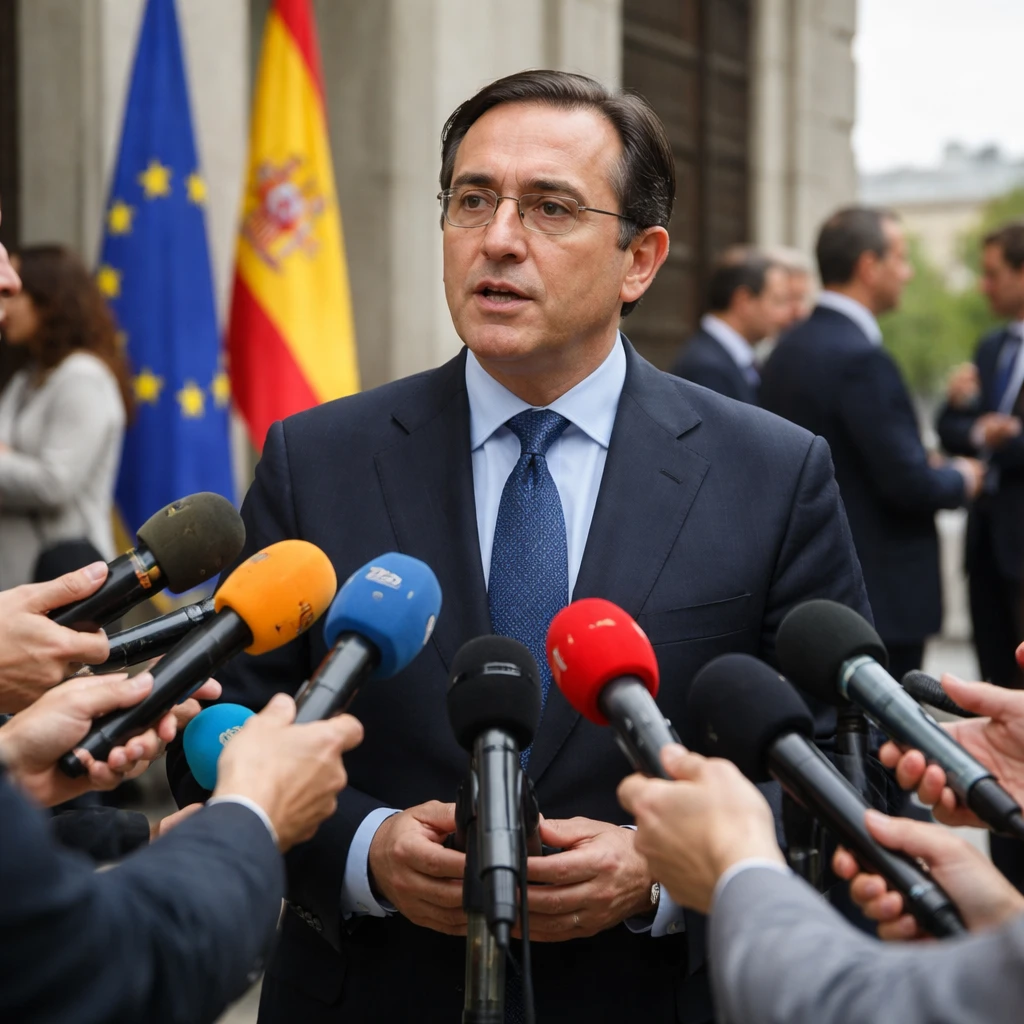
Speaking to reporters in Barcelona, Spanish Foreign Minister Jose Manuel Albares said the European Union should recognize those steps and send a signal that Venezuela is moving in the right direction in this new phase. He argued that sanctions should not be treated as a permanent state of affairs but rather as instruments to achieve political outcomes, saying: "Sanctions are never an end in themselves. They are a means to achieve ends so that this broad, peaceful and democratic dialogue can take place."
Later on the same day, Anouar El Anouni, a spokesperson for the European Commission, did not directly accept Madrid's proposal to lift the measures. El Anouni reiterated the commission's willingness to support a transition, stating: "We do stand ready to use every tool at our disposal in our toolbox to support a transition towards democracy in Venezuela." His remarks stopped short of announcing a change in policy.
Summary
Spain is urging the EU to remove sanctions on Delcy Rodriguez after Venezuela's legislature approved a limited amnesty. Rodriguez, who took power following the removal of Nicolas Maduro by the U.S., has taken steps including compliance with U.S. oil-sale requirements and releasing hundreds deemed political prisoners. The EU has not directly accepted Spain's request but has said it is prepared to use its tools to back a transition toward democracy.
Key points
- Spain has formally asked the EU to lift sanctions targeting interim president Delcy Rodriguez following a limited amnesty bill by Venezuelan lawmakers.
- Since assuming power last month after the U.S. removed Nicolas Maduro from office, Rodriguez has followed U.S. requirements on oil sales and approved releases of hundreds classified as political prisoners by human rights organizations.
- The EU Commission did not immediately accept Spain's call; it emphasized readiness to deploy instruments to support a democratic transition.
Risks and uncertainties
- It is uncertain whether the EU will act on Spain's request to lift sanctions, creating diplomatic ambiguity that could affect energy and diplomatic relations.
- There is no clear timetable or commitment from the EU Commission to change existing measures, leaving markets and stakeholders without a definitive signal.
- The scope and permanence of the actions in Caracas are not specified beyond the limited amnesty and compliance steps, leaving open questions about the durability of the political shift.
These developments could have implications for sectors such as energy, where compliance with U.S. oil-sale conditions matters, and for diplomatic engagement that can affect trade and investment flows. However, the immediate response from the EU Commission indicates that formal changes to sanction policy have not been confirmed.