
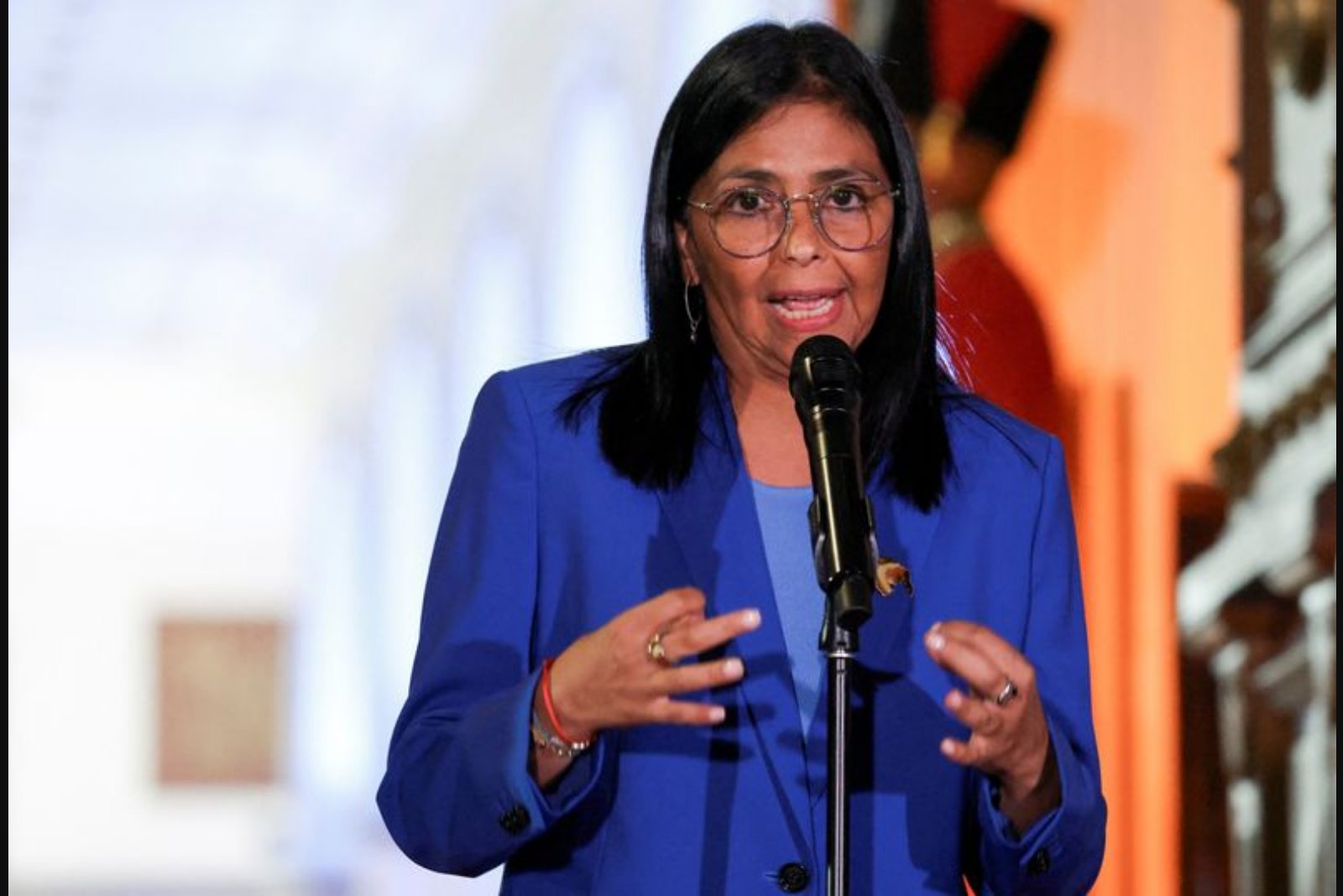
MADRID, Feb 20 - Spain's foreign minister on Friday urged the European Union to remove sanctions targeting Venezuela's interim president, Delcy Rodriguez, after the South American country's legislature approved a limited amnesty for certain detainees.
Jose Manuel Albares told reporters in Barcelona that the European Union should "send a signal that (Venezuela) is heading down the right path in this new phase" and stressed that "sanctions are never an end in themselves. They are a means to achieve ends so that this broad, peaceful and democratic dialogue can take place."
The minister's appeal follows a series of rapid political shifts in Venezuela. Rodriguez, who assumed the interim presidency last month after the U.S. ouster of President Nicolas Maduro, has complied with demands from the Trump administration on oil sales and has authorised the release of hundreds of people whom human rights organisations regard as political prisoners - steps officials describe as part of a normalisation of relations between the two countries.
When asked later on Friday about Madrid's request, EU Commission spokesperson Anouar El Anouni did not directly respond to the call to lift sanctions. He said: "We do stand ready to use every tool at our disposal in our toolbox to support a transition towards democracy in Venezuela." The statement stopped short of indicating immediate changes to existing measures.
European Union restrictions on Venezuela date back to 2017, when the EU put in place a suite of sanctions including an arms embargo and a ban on surveillance equipment, measures the bloc said were adopted after regional elections it characterised as tainted by irregularities.
In 2018 the EU expanded its response by imposing economic sanctions on 11 senior Venezuelan officials, among them Delcy Rodriguez, who had been vice president under Maduro. The EU said those officials were responsible for human rights violations and actions undermining democracy and the rule of law.
Human rights organisations have criticised the amnesty bill passed unanimously by Venezuela's ruling party-controlled legislature on Thursday, saying it does not adequately cover or provide relief for hundreds of political detainees. Venezuelan authorities have consistently denied that they hold political prisoners, asserting instead that those jailed have committed criminal offences.
The outcome of Spain's appeal to the EU is uncertain. Madrid frames the request as part of a broader diplomatic effort to encourage steps that might enable a peaceful political transition and renewed democratic dialogue, but EU officials have so far limited their comments to general support for measures that would back such a transition.