
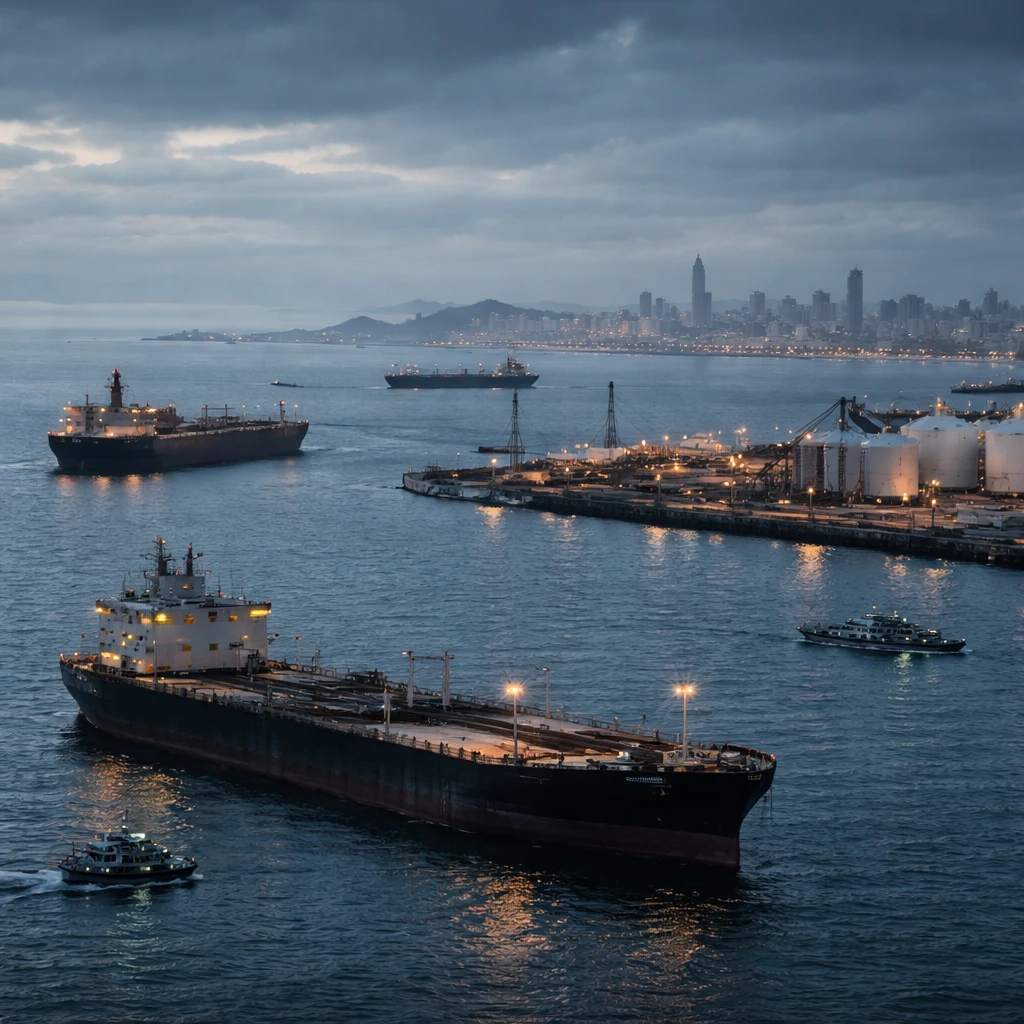
S&P Global Ratings has confirmed Kuwait’s sovereign credit scores at 'AA-/A-1+' and retained a stable outlook, issuing the decision earlier than its scheduled May 22, 2026 review because of the current Middle East conflict that has disrupted the country’s oil exports through the Strait of Hormuz.
The rating agency reported that Kuwait has cut oil production by more than half and has declared force majeure for affected buyers since the effective closure of the strait. As a result, S&P expects the current account surplus to narrow to roughly 16% of GDP in 2026, down from about 24% in 2025. At the same time, real GDP growth is forecast to slow to just below 1.0% in the current year, compared with around 2.0% in 2025.
S&P underscored that Kuwait’s unusually large fiscal and external buffers are central to its decision. The agency estimates Kuwait’s consolidated government net asset position at 490% of GDP for 2026 and projects average liquid assets of about 521% of GDP over the 2026-2029 period. Those holdings include assets managed by the Kuwait Investment Authority, the sovereign wealth fund that has accumulated substantial resources since 1953.
Despite the reserves, S&P flagged a sharp deterioration in the fiscal balance tied to the export shock. The fiscal deficit is projected to jump to 17% of GDP in 2026 and to average 12% of GDP across 2027-2029, compared with an estimated deficit near 8% of GDP in fiscal year 2025. The agency said the government plans to finance these shortfalls through annual debt issuance and by drawing down the General Reserve Fund, which is managed by the Kuwait Investment Authority.
S&P also described the security environment that prompted the early ratings action. It said Iran continues to conduct retaliatory missile and drone strikes on military and civilian infrastructure in Kuwait and elsewhere across the Gulf Cooperation Council in response to U.S. and Israeli military operations. Kuwaiti air defenses have intercepted and destroyed most of the incoming projectiles, according to the rating agency.
On energy sector recovery, S&P noted that Kuwait Petroleum Corp. has indicated it will fully restore output once the Strait of Hormuz is reopened and security risks subside. The rating agency framed that restoration as contingent on the reopening of the transit route and an easing of the security situation.
In sum, S&P maintained Kuwait’s rating on the basis that large sovereign financial buffers - both consolidated net assets and liquid holdings - should help absorb the temporary but significant shock to oil production and export revenues, even as near-term economic growth and fiscal balances are expected to deteriorate.
Summary
S&P kept Kuwait’s 'AA-/A-1+' ratings with a stable outlook after the country slashed oil output amid Strait of Hormuz disruptions. The agency highlighted very large government assets and liquid reserves as offsets to a weaker current account, lower GDP growth, and a spike in fiscal deficits.