
World February 5, 2026

South Korea Says It Is Not Deliberately Holding Up U.S. Investment Legislation

Foreign minister tells U.S. counterpart Seoul remains committed to $350 billion pledge amid U.S. concerns over implementation pace

By Priya Menon
South Korea Says It Is Not Deliberately Holding Up U.S. Investment Legislation

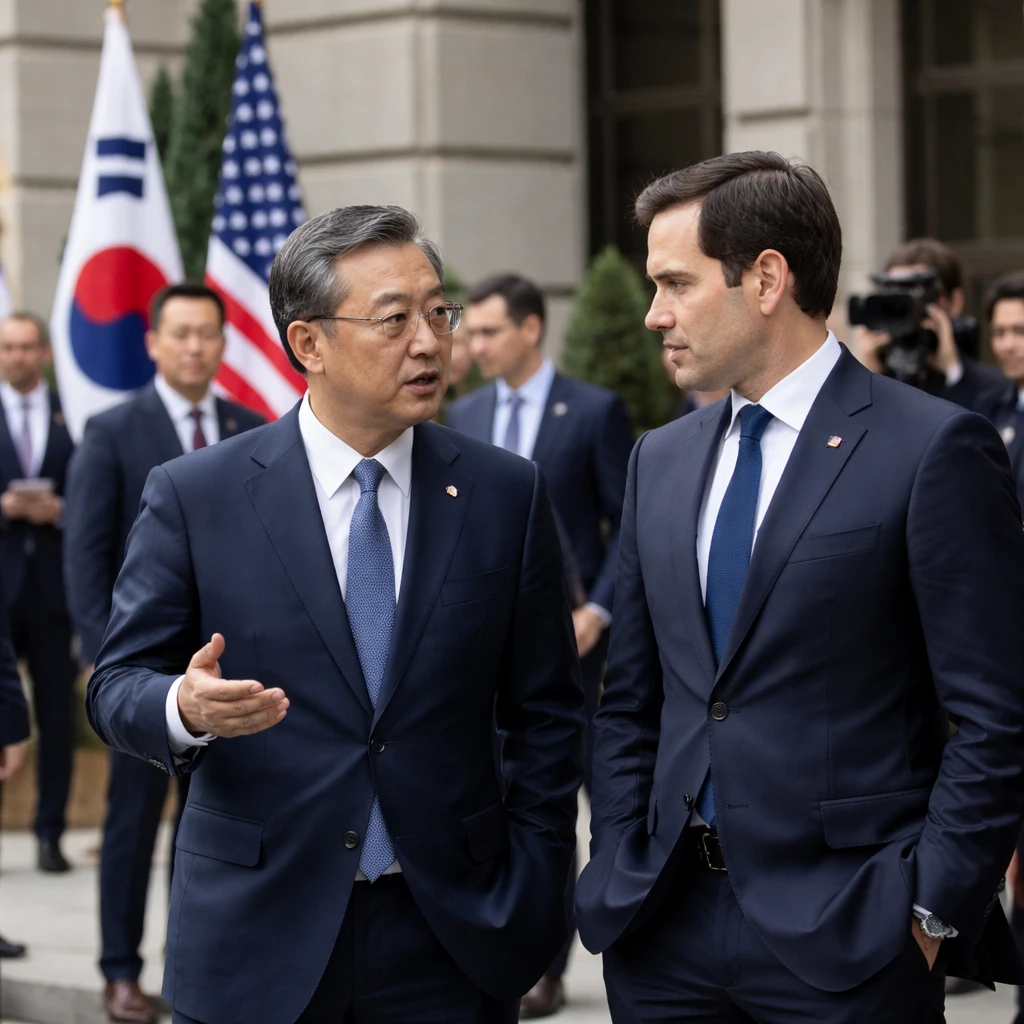
South Korea's foreign minister told U.S. Secretary of State Marco Rubio that Seoul is not intentionally delaying legislation tied to a special bill on U.S. investments under last year's trade agreement. The minister emphasized South Korea's intent to honour a $350 billion investment pledge, while Rubio signalled scepticism about Washington's perception of Seoul's progress. South Korean lawmakers have set a March 9 target to finalise the enabling legislation after U.S. tariff threats.

Key Points

  • South Korea's foreign minister said Seoul is not intentionally delaying a special bill to allow U.S. investments under last year’s trade deal - impacts diplomatic relations and investment flows between the two countries.
  • Cho Hyun told U.S. Secretary of State Marco Rubio that South Korea intends to honour a $350 billion investment pledge in key U.S. industries agreed in the deal - relevant to sectors tied to the pledged investments and cross-border capital deployment.
  • South Korean lawmakers announced they will finalise enabling legislation by March 9 after threats of tariffs from the U.S. president - this affects trade, tariffs, and market access considerations for exporters and multinational firms.

SEOUL, Feb 6 - South Korea's foreign minister, Cho Hyun, told U.S. Secretary of State Marco Rubio that Seoul is not deliberately slowing the passage of a special bill designed to enable U.S. investments under the trade agreement negotiated with Washington last year, according to a report.

Cho made the point during a press conference held in Washington on Thursday and reiterated the message in a meeting with Rubio earlier in the week, saying South Korea has a strong willingness to carry out a commitment to invest $350 billion in key U.S. industries that was included in the deal.

According to Cho's account, Rubio responded that the atmosphere in Washington regarding South Korea's follow-through on implementing the deal was "not favourable." The foreign minister's remarks underline a diplomatic effort to address concerns voiced by U.S. officials about the pace of South Korea's legislative action.

Domestically, South Korean lawmakers announced on Wednesday that they would finalise the necessary legislation by March 9 to permit the planned investments to proceed. That pledge from the legislature came after U.S. President Donald Trump warned of potential tariff increases on Korean goods, attributing his threat to delays in enacting the measures required by the agreement.

The exchanges between Cho and Rubio, and the legislature's stated timeline, reflect an ongoing effort to translate the investment commitments in the bilateral deal into enacted law. The foreign minister framed Seoul's position as one of intent to fulfil the $350 billion investment pledge, while U.S. officials have indicated concern about the speed of implementation.

Beyond the public statements, the available information is limited to the comments made by Cho about his conversations with Rubio and the legislative timetable announced by lawmakers. No further details on the content of the special bill or specific steps to be taken before the March 9 target were provided in the reporting.


Summary

South Korea's foreign minister told the U.S. secretary of state that Seoul is not purposely delaying passage of legislation to enable U.S. investments tied to last year's trade deal, and reaffirmed a commitment to invest $350 billion in key U.S. industries. Washington has expressed concern about the implementation pace, and South Korean lawmakers say they will finalise the legislation by March 9 after U.S. tariff threats.

Risks

  • Perception risk in Washington - U.S. concern over the pace of South Korea's implementation could lead to diplomatic friction or policy responses that affect bilateral economic relations; this risks impacts on trade and investment flows.
  • Legislative timing uncertainty - while lawmakers set a March 9 target, the possibility of delays or incomplete enactment remains a risk for investors and industries planning to rely on the legal framework to proceed with commitments.
  • Tariff threat as a policy risk - the U.S. president's warning to raise tariffs in response to perceived delays introduces a risk to Korean exporters and sectors reliant on U.S. market access.

More from World

Law Firms Prepare for Wave of Refund Suits After Supreme Court Restriction on Tariff Power Feb 20, 2026 Appeals Court Clears Way for Louisiana Ten Commandments Classroom Requirement Feb 20, 2026 Fitch Keeps UK at AA- Citing Flexible Economy but Flags High Debt and Policy Uncertainty Feb 20, 2026 Fitch Maintains Congo's CCC+ Rating, Flags Persistent Debt and Governance Weaknesses Feb 20, 2026 Moody's Upholds Sweden's Aaa Rating, Cites Strong Fiscal Fundamentals Feb 20, 2026