
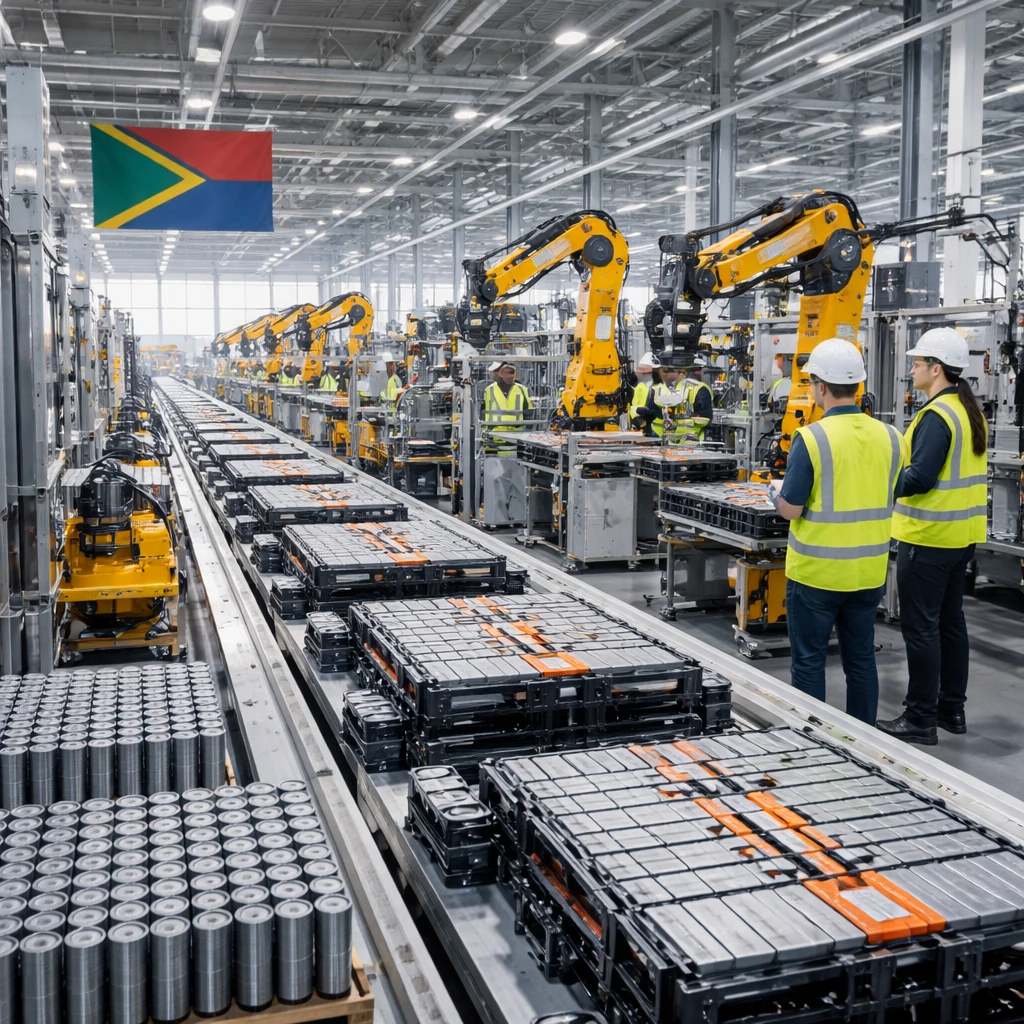
South Africa has released draft amendments to its Automotive Production and Development Program that, if adopted, would increase government support for manufacturers of electric-vehicle batteries. The proposed revisions, published on Friday, would raise production credits and expand customs rebate eligibility for battery makers.
Trade, Industry and Competition Minister Parks Tau has opened the changes to the program for public comment. The amendments are framed with an explicit objective - to assist South Africa in moving from a role as a vehicle exporter toward becoming a supplier of processed battery minerals for electric vehicles.
Under the draft rules, critical minerals used in battery manufacture would be added to the list of standard materials eligible for incentives. This eligibility would apply when those materials are processed within South Africa or in neighbouring countries. By broadening the scope of supported inputs, the proposed amendments would double the proportion of materials eligible for incentives to 50%.
That higher eligibility threshold is designed to unlock additional credits for manufacturers operating in South Africa. The country's automotive sector already receives assistance through the existing production and development program, and the draft changes would extend that support more directly to components and materials relevant to EV battery production.
Proponents of the changes say they could help position South Africa as a manufacturing hub for electric-vehicle battery technology as global demand for electric vehicles grows. The government has made the proposals available for stakeholder review and comment as part of the standard regulatory process for amending the Automotive Production and Development Program.
Context and mechanics
- The draft amendments increase production credits and customs rebates targeted at EV battery manufacturers.
- Critical minerals processed in South Africa or neighbouring countries would be added to the list of standard materials eligible for incentives.
- The share of materials qualifying for support would rise to 50%, potentially unlocking more credits for firms in the country.
The government has invited public comment on the proposals, which remain subject to consultation and any subsequent revision before being finalized.