
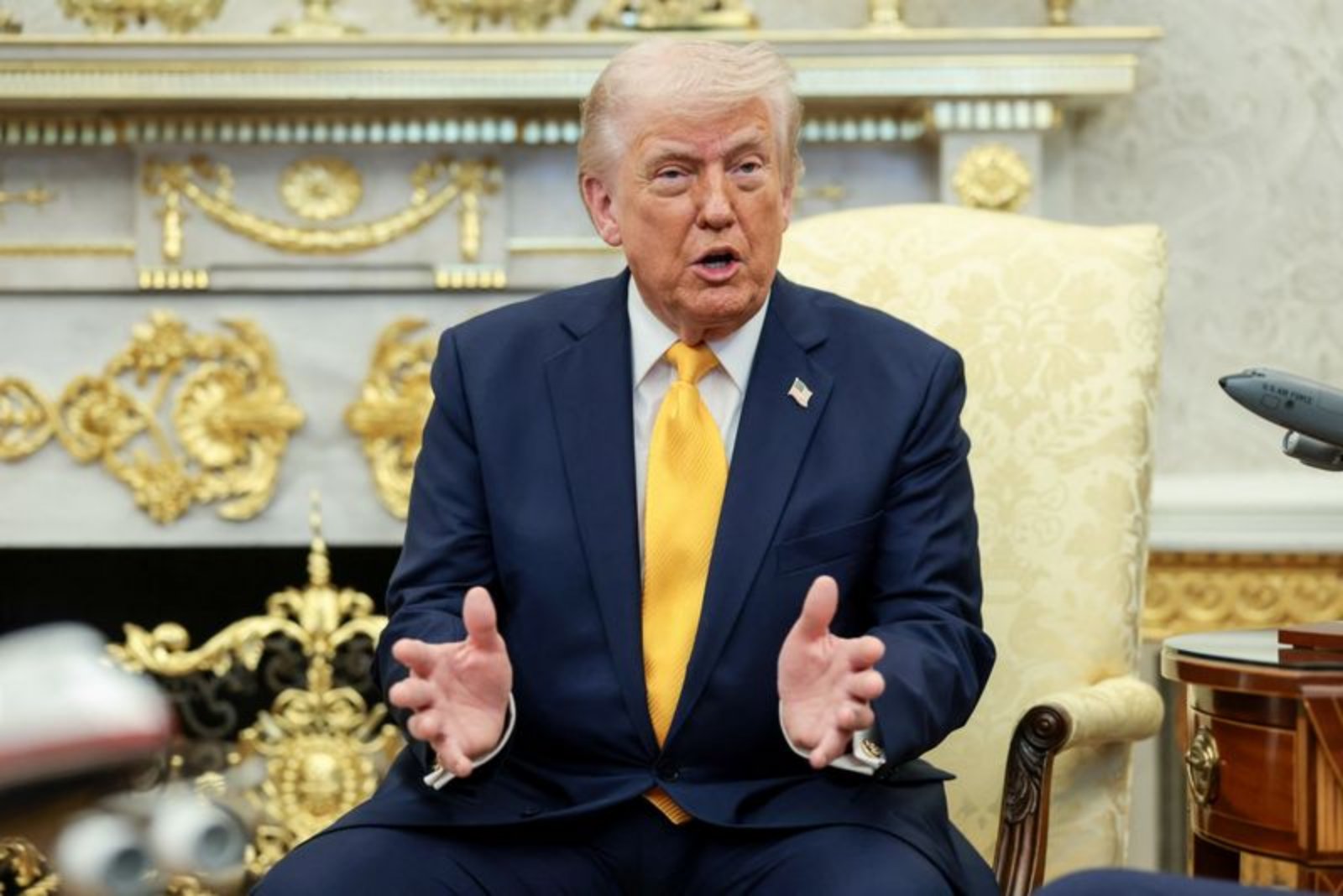
President Donald Trump and members of his administration have offered a sequence of public rationales and expected timelines for the military campaign against Iran that have changed over a matter of weeks, drawing criticism that planning for both the conflict and its aftermath remains unsettled.
Since the attacks launched on February 28, officials have described differing end states for U.S. objectives. At various points they have framed goals as removing Iran’s government from power, degrading Tehran’s military and nuclear-related capabilities, destroying its missile and naval capacity, and supporting Israel’s security interests. Public remarks and media posts by the president and senior officials present a mix of firm declarations and varying timelines for how long the campaign might last.
Chronology of public statements
February 28 - Call for Iranians to topple their government
On the day the U.S. and Israel launched their attacks, President Trump released a social media video urging the Iranian people to "take over" governance of their country. "It will be yours to take," he said, adding, "This will be probably your only chance for generations." He characterized the operations that day as "major combat operations."
February 28 - Pledges to weaken Iran’s military and regional influence
Also on February 28, the president said Washington would prevent Iran from obtaining a nuclear weapon, repeating a claim about denying Iran that capability while Tehran in public has said its program is peaceful. The statement noted that Iran does not have nuclear weapons, while the United States does. The president asserted he would eliminate what he described as Tehran’s ballistic missile threat, saying: "We’re going to destroy their missiles and raze their missile industry to the ground. We’re going to annihilate their navy." He added that Iran’s long-range missiles "can now threaten our very good friends and allies in Europe, our troops stationed overseas, and could soon reach the American homeland."
The president’s remarks echoed the rhetorical pattern of previously made public cases for military action against other countries. The article notes that neither independent experts nor U.S. intelligence assessments support his assertion that Iran’s ballistic missile program was at the point of posing a threat to the U.S. homeland and that Iran did not have nuclear weapons at the time of the statements.
March 2 - Timelines move and multiply
In early March the president offered multiple public projections for how long the campaign might last. At the White House he said the war was projected to run "four to five weeks" but acknowledged it could extend longer: "We’re already substantially ahead of our time projections. But whatever the time is, it’s okay. Whatever it takes." In a separate social media post the president said there was a "virtually unlimited supply" of U.S. munitions and suggested wars could be fought "forever," using those supplies. A formal notification to Congress provided no timeline.
On the same day the president had told the Daily Mail the campaign could take "four weeks, or less," then told The New York Times it might be four to five weeks, before later conceding it could take longer.
March 2 - Official narrative on motives shifts
Secretary of State Marco Rubio told reporters that an Israeli decision to attack Iran precipitated the need for U.S. action. "We knew that there was going to be an Israeli action, we knew that that would precipitate an attack against American forces, and we knew that if we didn’t preemptively go after them before they launched those attacks, we would suffer higher casualties," Rubio said.
March 3 - President signals a different cause
A day later the president contradicted Rubio’s account on motive, saying he ordered U.S. forces to join the attack because he believed Iran was about to strike first. "I might have forced their (Israel’s) hand," the president said. "If we didn’t do it, they (Iran) were going to attack first."
March 4 - Military objectives described
On March 4 Pentagon chief Pete Hegseth articulated the administration’s operational goals in similar terms to those the president had used: "destroy Iranian offensive missiles, destroy Iranian missile production, destroy their navy and other security infrastructure."
March 6 - Demand for unconditional surrender
The president used social media on March 6 to state: "There will be no deal with Iran except UNCONDITIONAL SURRENDER."
March 8-11 - Conflicting signals on the campaign’s stage
In an interview aired March 8, Hegseth told CBS News that the strikes were "only just the beginning." Yet on March 9 the president told the same network, "I think the war is very complete, pretty much." He later said to reporters, "We’ve already won in many ways, but we haven’t won enough." Asked whether the war was beginning or ending, the president said: "Well, I think you could say both." On March 11 he repeated that he thought the U.S. had won while adding: "We’ve got to finish the job."
March 13 - Toning down calls for Iranian uprising
In a March 13 interview with Fox News the president said the war would end "when I feel it in my bones." He also softened, to some degree, his earlier exhortation for Iranians to topple their government, observing: "So I really think that’s a big hurdle to climb for people that don’t have weapons."
March 19 - No fixed end date, Pentagon says
Hegseth told reporters the U.S. was not setting a time frame for the campaign and that the president would determine when to stop. "We wouldn’t want to set a definitive time frame," Hegseth said. "It will be at the president’s choosing, ultimately, where we say, ’Hey, we’ve achieved what we need to.’"
March 20 - Signals of winding down but rejection of ceasefire
The president posted on Truth Social that "we are getting very close to meeting our objectives as we consider winding down our great Military efforts" in the Iran campaign. Earlier the same day he told reporters, when asked about a ceasefire, "I don’t want to do a ceasefire."
Assessment
The public record across these remarks shows a sequence of shifting messages: the president and senior officials have alternately described goals that range from encouraging internal political change inside Iran to targeting specific military capabilities, while their projected timelines have varied from a few weeks to an undefined duration. These variations have been cited by critics as evidence of insufficient planning for the conflict’s next phases and post-conflict responsibilities.
Summary
- The administration’s public explanations for why the U.S. joined Israel in attacking Iran have changed repeatedly between February 28 and March 20.
- Stated objectives have included toppling Iran’s government, destroying missile and naval capabilities, denying nuclear weapons capability to Tehran, and supporting Israeli security interests.
- Timelines floated publicly have ranged from "four weeks, or less," to four to five weeks, to the acknowledgement that the campaign could continue beyond those estimates and ultimately conclude at the president’s discretion.
Key points
- Shifting objectives: Public statements moved between advocating regime change and targeting Iran’s military and security infrastructure. (Potentially relevant sectors: defense and government contracting.)
- Variable timelines: Initially short projected durations were later expanded with no fixed end date. (Potentially relevant sectors: defense suppliers and logistics providers responsible for sustained munitions and support.)
- Conflicting accounts of motive: Senior officials offered different explanations about whether Israeli action precipitated the U.S. response or whether the U.S. acted to preempt an imminent Iranian strike. (Potentially relevant sectors: diplomatic and strategic risk assessment functions across government and private sector.)
Risks and uncertainties
- Unclear end state and timeline: Multiple, inconsistent timelines and goals create uncertainty about how long military operations will continue and what objectives must be met before operations cease. (Impacts defense procurement planning and logistics.)
- Mixed public narratives from top officials: Contradictory explanations of motive and timing can complicate coordination with partners and allies and may increase unpredictability in strategic responses. (Impacts diplomatic and security planning.)
Tags: Iran, Trump, War, Timeline, Military