
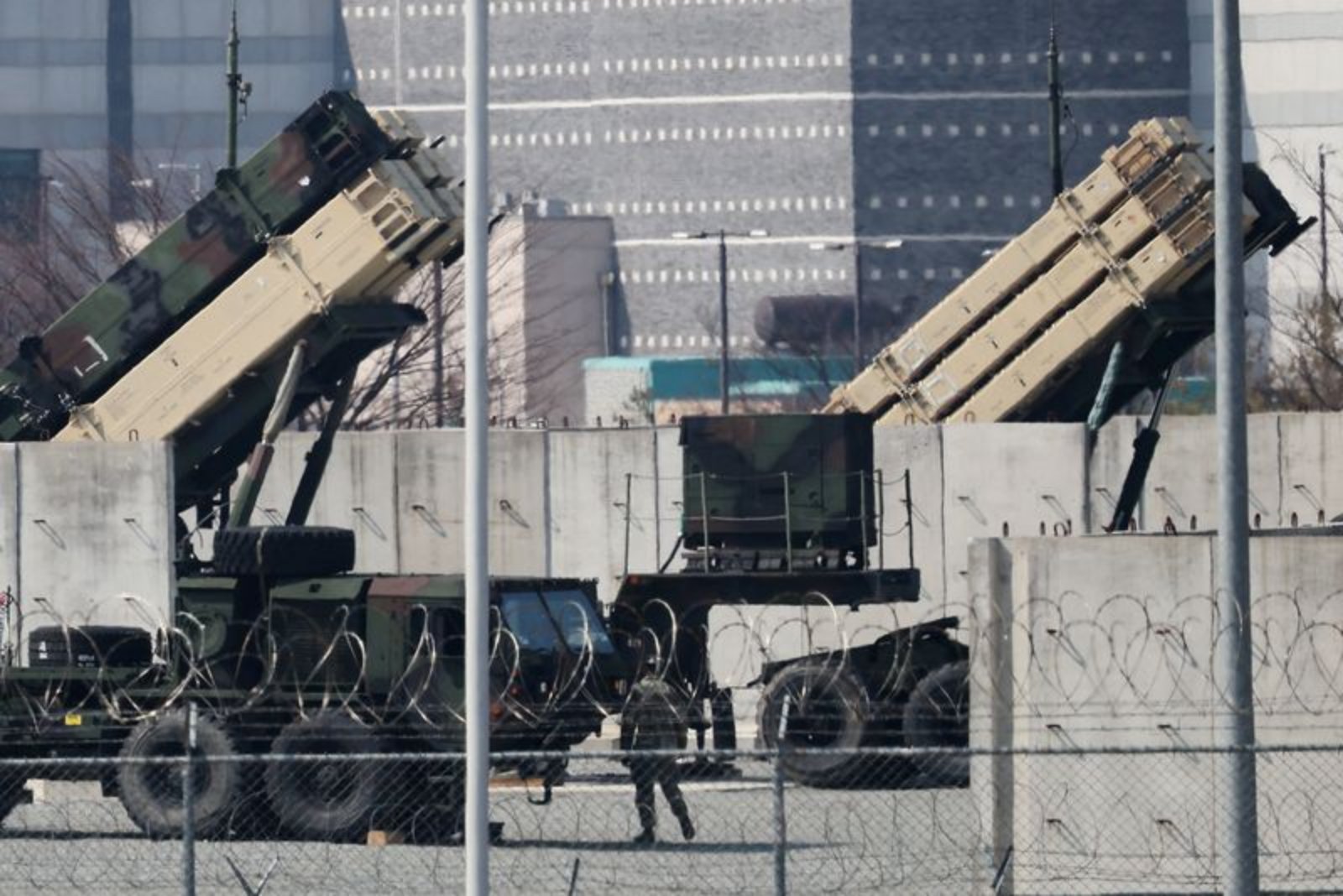
President Lee Jae Myung acknowledged on Tuesday that South Korea cannot compel Washington to keep all U.S. military equipment stationed on the peninsula, following media accounts that some Patriot missile defence systems were being redirected to the Middle East.
Speaking at a cabinet meeting, Lee described recent controversy over the possible shipment of U.S. materiel from the country, naming artillery batteries and air-defence weapons among those discussed. He said Seoul had registered its objection but that it was not in a position to issue demands to U.S. forces regarding the redeployment of those assets.
Lee sought to reassure the public that the movement of certain U.S. weapons does not undermine South Korea's ability to deter North Korea. He pointed to Seoul's defence spending and conventional military capabilities, which he said significantly outstrip those of the North.
South Korea hosts a substantial U.S. military contingent intended to form a combined defence against the nuclear-armed North. The U.S. presence includes about 28,500 troops and several surface-to-air defence systems, among them Patriot missile interceptors.
On Friday, South Korea's foreign minister, Cho Hyun, said that U.S. and South Korean military authorities were in talks about the possible temporary redeployment of some U.S. Patriot missile defence batteries to be used in the conflict in the Middle East.
South Korean media reports have indicated that missile batteries were moved out of Osan Air Base and could be destined for U.S. military facilities in Saudi Arabia and the United Arab Emirates. South Korean authorities have not publicly confirmed the reports, and U.S. Forces Korea declined to comment on the movement of specific military assets, citing operational security.
Photographs taken at Osan Air Base on Tuesday showed multiple mobile launchers on the tarmac that experts said appeared to be Patriot PAC-2 and PAC-3 interceptors. Those images have added to public and expert attention on what such relocations might mean for deterrence and regional signalling.
Military analysts contacted about the movements said President Lee was correct in noting South Korea's own deterrent capacities, but they stressed that the visible presence of U.S. weapons on the peninsula conveys Washington's ongoing commitment to regional security.
"There is a risk that North Korea could miscalculate the relocation of some of these weapons as a pretext for low-level provocations to test the allies' defence posture," said Choi Gi-il, a military studies professor at Sangji University.
In recent weeks, North Korean leader Kim Jong Un said he will focus on expanding his country's nuclear arsenal and described South Korea as its "most hostile enemy." North Korea also conducted the test-firing of a missile on a naval destroyer last week, underscoring continued tensions on the peninsula.
Meanwhile, the conflict in the Middle East has prompted U.S. and Israeli forces to strike targets inside Iran for more than a week. Analysts have cautioned that a prolonged confrontation could divert U.S. operational focus away from Asia and potentially affect regional security and stability.
Japan, which hosts significant U.S. military facilities, has also been affected by redeployments. Two U.S. guided-missile destroyers homeported in Yokosuka were reported to be deployed in the Arabian Sea in support of operations related to the conflict in Iran. The only U.S. aircraft carrier assigned to the Asia region is currently undergoing maintenance at Yokosuka.
Concern about the use of Japanese-based assets in the Middle East reached Japan's parliament, where the head of the main opposition party criticized the reported deployments. Lawmaker Junya Ogawa argued that Japan had not consented to allow U.S. forces stationed in the country to conduct missile strikes toward the Middle East and that the primary responsibility of those bases should be the defence of Japan and peace in East Asia.
Japan's government has not issued a public comment on the movements of the U.S. vessels reportedly based in the country.
This evolving situation has prompted questions about the balance between immediate operational needs in the Middle East and the long-standing deterrence posture in East Asia. Seoul's capacity to deter Pyongyang on its own was emphasized by South Korean leaders, but the visible reduction or temporary removal of U.S. assets raises concerns among analysts and political figures about signalling and the potential for miscalculation by adversaries.