
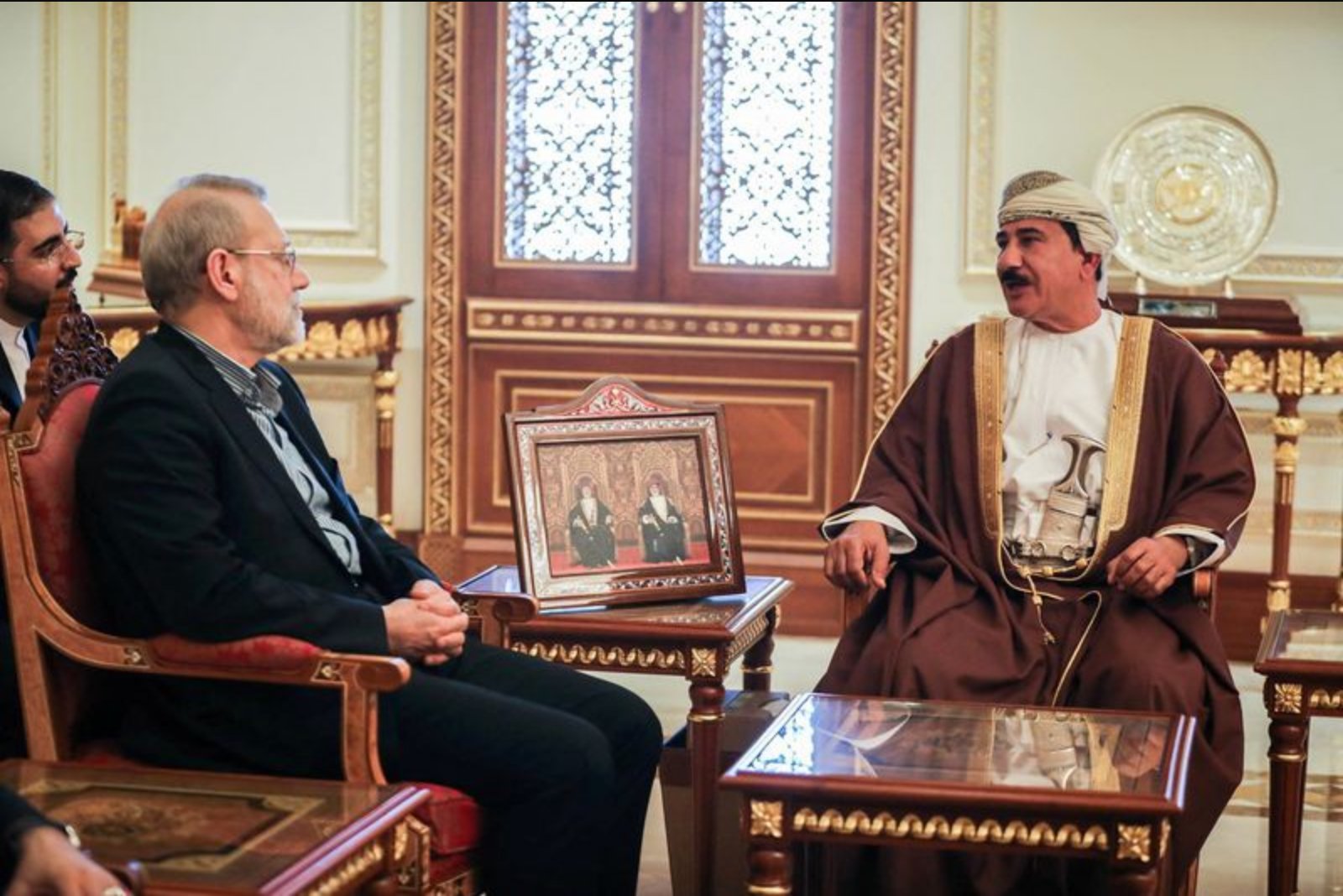
DUBAI, Feb 10 - A senior adviser to Iran’s Supreme Leader visited Oman on Tuesday for discussions aimed at finding a "balanced and just" path toward renewed diplomacy with the United States, Iranian and Omani statements said.
The visit by Ali Larijani followed a round of mediation facilitated by Oman last week. Iran’s foreign ministry said those earlier contacts permitted Tehran to assess whether Washington was serious about talks and produced enough agreement among parties to keep diplomacy alive.
“After the talks, we felt there was understanding and consensus to continue the diplomatic process," Iranian foreign ministry spokesman Esmaeil Baghaei said, reflecting Tehran’s view that initial contacts had been productive enough to warrant further engagement.
Baghaei added that Larijani’s trip to Muscat had been scheduled in advance and that the adviser would travel next to Qatar, another regional mediator that has often hosted discussions on Middle East crises. Oman’s state news agency said Larijani and Sultan Haitham bin Tariq discussed ways to reach a "balanced and just" agreement between Tehran and Washington, underscoring the importance of restoring dialogue to bridge differences and promote regional and global peace and security.
Iranian state media reported the meeting in Oman lasted nearly three hours. No date or venue has been announced for the next round of U.S.-Iran talks.
Negotiators face a major point of contention over whether the scope of the talks should extend beyond nuclear issues to include Iran’s ballistic missile programme. The United States has sought to broaden negotiations to curb what it regards as one of the region’s largest missile arsenals. Tehran, however, has said its missile capability was rebuilt following last year’s 12-day bombing campaign by Israel and the U.S., and has described its stockpile as non-negotiable.
Israeli Prime Minister Benjamin Netanyahu is expected to press President Trump during a Washington meeting on Wednesday to ensure any U.S.-Iran arrangement includes limits on Tehran’s missile forces. Baghaei cautioned that the United States "must act independently of foreign pressures, especially Israeli pressures that ignore the interests of the region and even the U.S."
On the nuclear front, Iran has said it will continue to demand an end to financial sanctions and to insist on its nuclear rights, including enrichment, Iranian President Masoud Pezeshkian has said. Washington, for its part, has demanded Iran relinquish its stockpile of uranium enriched up to 60% fissile purity - a level the U.S. describes as a step away from the roughly 90% enrichment often cited as weapons-grade.
Mohammad Eslami, head of Iran’s Atomic Energy Organisation, commented on Monday that "the possibility of diluting 60% enriched uranium ... depends on whether, in return, all sanctions are lifted or not." The statement linked any change in Iran’s enriched uranium holdings to the alleviation of financial penalties.
Asked whether the U.S. would accept limited enrichment by Iran, U.S. Vice President JD Vance, speaking during a visit to Armenia on Monday, said: "I think President Trump is going to make the ultimate determination about where we draw the red lines in the negotiations." Vance framed the delineation of negotiating limits as the president’s prerogative.
U.S. and Iranian delegations engaged in five rounds of talks last year that aimed to curb Tehran’s nuclear programme. According to the public record, that process faltered primarily over disagreements about uranium enrichment activities conducted on Iranian soil. Since the strikes on Iranian facilities, Tehran has indicated it has halted enrichment activity and has consistently maintained that its nuclear programme is intended solely for peaceful purposes.
Beyond the diplomatic trajectory, markets have been watching developments closely. Oil prices eased on Tuesday as traders balanced the prospect of resumed diplomacy against ongoing tensions between Tehran and Washington. The presence of a U.S. naval flotilla in the region - positioned after last week’s contacts and seen by some as a potential deterrent to military escalation - had earlier raised concerns about the risk of renewed military action.
Officials in Tehran point to a mixture of diplomatic engagement and firm public positions: pursuing talks while reiterating non-negotiable stances on missile holdings and nuclear rights. The next steps in the diplomatic process - when and where the next talks will convene, whether missile constraints will be part of the agenda, and whether sanctions relief will be sufficient to prompt technical concessions - remain unresolved.
For now, Omani facilitation appears to have offered a forum for both sides to test each other’s intentions, but significant policy differences persist and the sequence and substance of future negotiations have yet to be determined.