
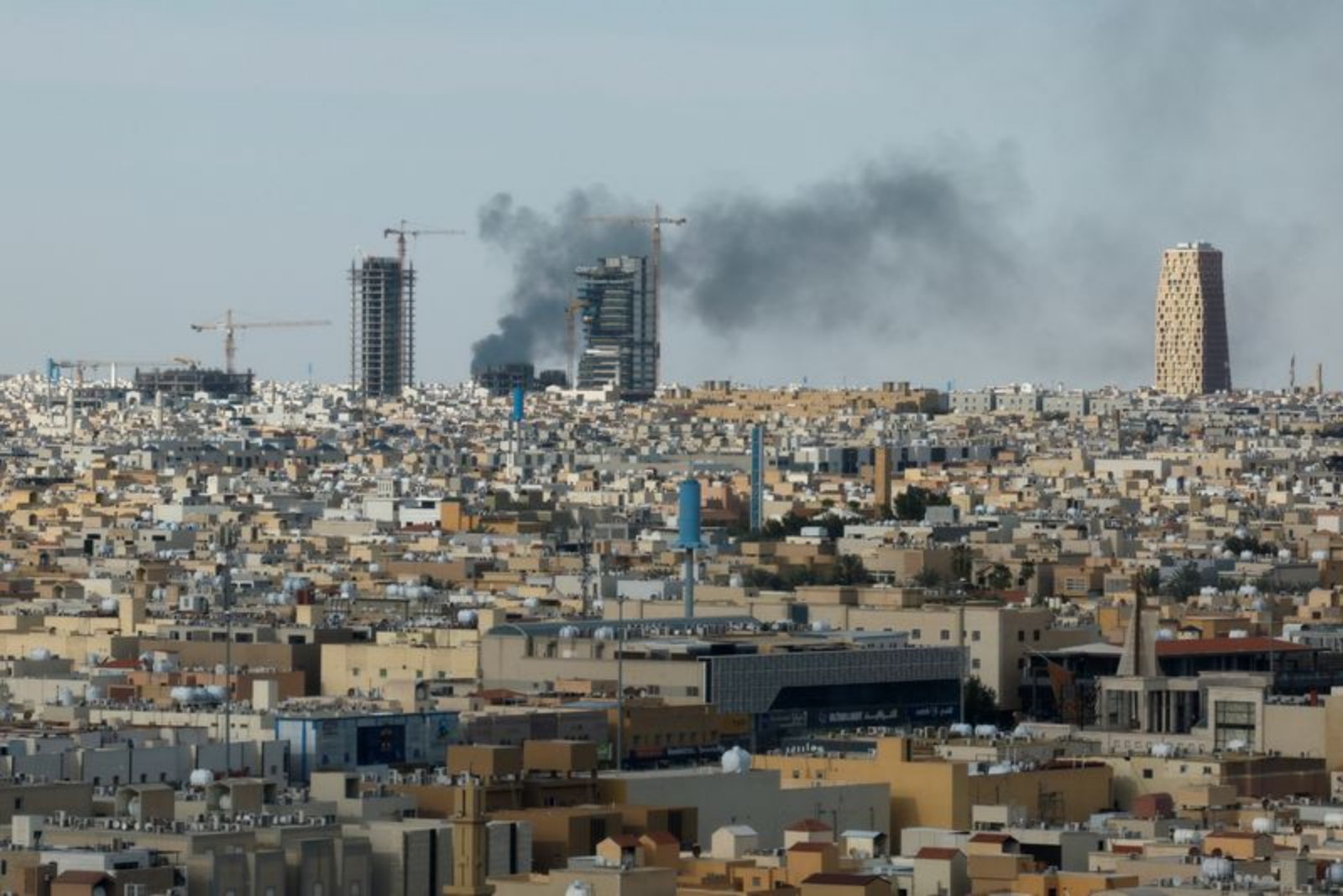
Saudi Arabia has informed Iran that while it is in favour of a diplomatic resolution to the current hostilities between Tehran and the United States, persistent attacks on Saudi territory and the kingdom’s energy sector could compel Riyadh to respond in kind, according to multiple sources familiar with the matter.
The warning was delivered in advance of a public address by Iran’s acting president, Masoud Pezeshkian, in which he offered an apology to neighbouring Gulf states for Iran’s actions - a remark that appeared intended to calm regional tensions after strikes that hit civilian targets. Sources said the Saudi position was conveyed in conversations between senior diplomats two days before that speech.
In the exchanges, Saudi Foreign Minister Prince Faisal bin Farhan spoke by phone with Iranian Foreign Minister Abbas Araqchi and set out Riyadh’s stance clearly, the sources told the journalists. Prince Faisal, as cited by the sources, made it plain that Saudi Arabia was open to any form of mediation designed to de-escalate the situation and to reach a negotiated settlement.
At the same time, the Saudi foreign minister underscored a hard boundary: if Iranian assaults on Saudi soil or on the kingdom’s energy infrastructure continued, Saudi Arabia would be forced to allow U.S. forces to use Saudi bases for military operations. The sources quoted Prince Faisal as saying that Riyadh would retaliate if strikes on critical energy facilities persisted.
The sources said Saudi Arabia has maintained regular diplomatic contact with Tehran through its ambassador since the U.S. and Israeli military campaign against Iran began on February 28, which followed the collapse of talks over Iran’s nuclear programme. Saudi and Iranian foreign ministries did not respond to requests for comment.
Context of the strikes
Over the past week, the United Arab Emirates, Kuwait, Qatar, Bahrain and Saudi Arabia have all come under heavy drone and missile fire from Iran, according to the sources. The violence escalated rapidly after Iran’s Supreme Leader, Ayatollah Ali Khamenei, was killed on the first day of the war.
Tehran’s response included strikes directed at Israel and Gulf Arab states that host U.S. military installations. Israel in turn has attacked Lebanon’s Iran-backed armed group Hezbollah. The sequence of attacks and counterattacks has drawn Gulf states into direct exposure to the fighting.
Araqchi, in comments reported by the sources, said he remained in constant contact with his Saudi counterpart and other Saudi officials. He added that Riyadh had given assurances to Tehran that it would not permit its territory, waters or airspace to be used to launch attacks against Iran.
Iran’s temporary leadership and internal signals
Pezeshkian said Iran’s temporary leadership council had approved suspending attacks on nearby countries, except in cases where an attack on Iran came from those states. He stated, "I personally apologise to neighbouring countries that were affected by Iran’s actions." The degree to which those remarks represent a durable policy shift remained unclear, as further reports of strikes on Gulf states occurred after the speech.
Separately, the Khatam al-Anbiya Central Headquarters - the unified combatant command of the Iranian armed forces - issued a statement after the presidential remarks indicating that U.S. and Israeli bases and interests across the region would remain targets. The command said Iran’s armed forces respected the sovereignty and interests of neighbouring states and had not taken action against them so far, while also warning that U.S. and Israeli military bases and assets on land, at sea and in the air across the region would be treated as primary targets and could face "powerful and heavy" strikes by Iran’s forces.
The differing tones between the presidential apology and the combatant command’s statement suggest potential divisions or differing emphases among Iran’s leadership and military structures about how to conduct the operations and target selection.
Diplomatic exchanges and Tehran’s position
Two Iranian sources confirmed that a call took place in which Riyadh warned Tehran to stop attacks on Saudi Arabia and neighbouring Gulf states. Iran, those sources said, reiterated its stated position that the strikes were not aimed at Gulf countries themselves but at U.S. interests and military bases hosted on their territory.
One Iranian source said Tehran had demanded that U.S. bases in the region be closed and that some Gulf countries stop sharing intelligence with Washington that Iran believes is being used to launch attacks against it. Another Iranian source said certain military commanders were urging continuation of the strikes, accusing the United States of using Gulf bases and airspace to conduct operations against Iran.
The exchanges occurred against a backdrop of recent efforts by Iran to repair relations with Gulf neighbours, including a diplomatic rapprochement with Saudi Arabia in past years. Those diplomatic channels were disrupted by the recent barrage of drones and missiles reportedly launched by Iran’s Islamic Revolutionary Guard Corps in the past week.
Implications and outstanding questions
Saudi Arabia’s position, as described by the sources, combines a stated openness to mediation with a clear warning: continued attacks on the kingdom or its vital energy infrastructure could change Riyadh’s calculation about allowing third-party military use of its territory. The Saudi message therefore links diplomatic engagement to a conditional deterrent strategy intended to protect national territory and critical assets.
At the same time, Iran’s public apology from its acting president, together with the combatant command’s continued targeting posture, leaves uncertainty about how uniformly Iran’s various institutions will adhere to any suspension of strikes on neighbouring states.
Both sides, according to the sources, have used diplomatic lines of communication in recent days, but significant uncertainty remains over the near-term trajectory of the conflict and whether strikes on Gulf states and energy targets will continue.