
World January 21, 2026

Saudi Arabia, Turkey, and Several Nations Join US President Trump's 'Board of Peace' Initiative

Eight countries, including UAE and Kuwait, commit to President Trump's newly launched peace council amid diplomatic debates

By Avery Klein
Saudi Arabia, Turkey, and Several Nations Join US President Trump's 'Board of Peace' Initiative

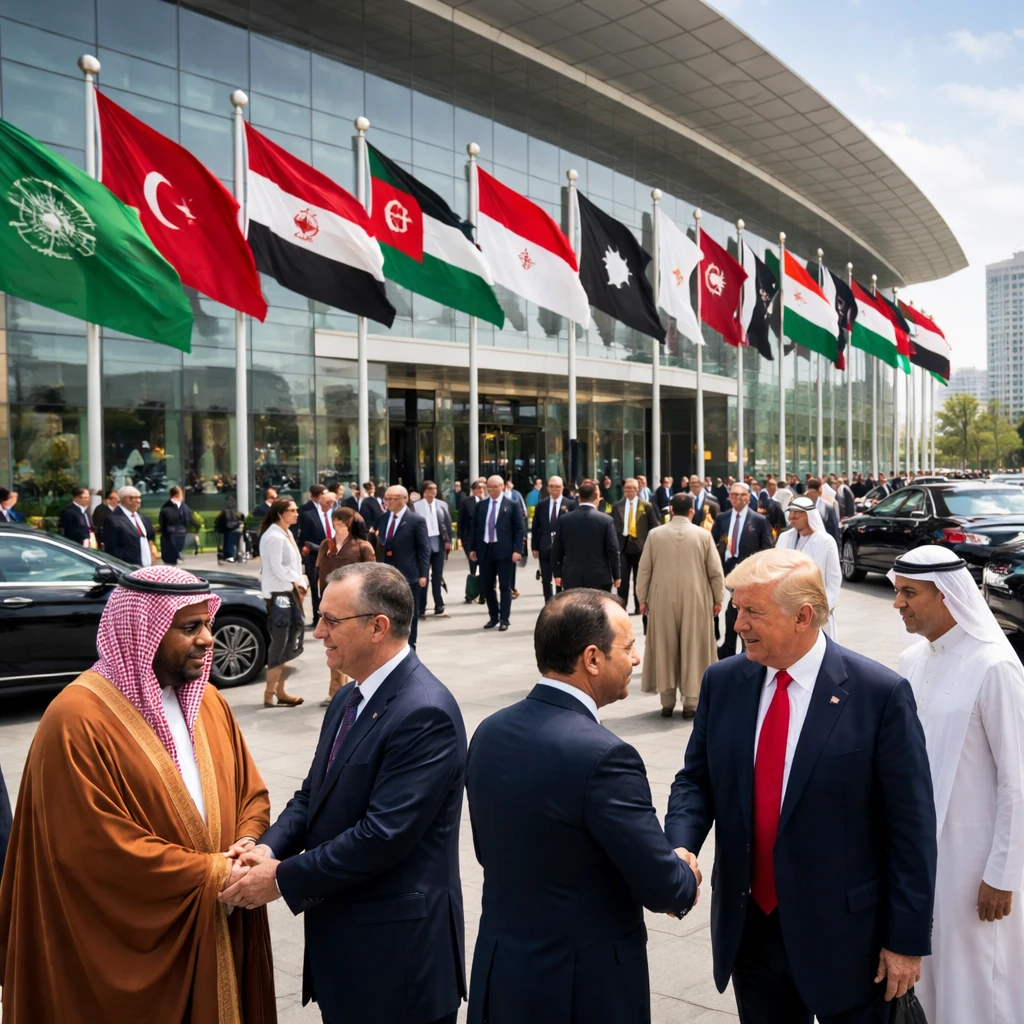
Saudi Arabia, Turkey, Egypt, Jordan, Indonesia, Pakistan, Qatar, the United Arab Emirates, and Kuwait have accepted U.S. President Donald Trump's invitation to join the newly formed 'Board of Peace'. This initiative seeks to address global conflicts with the cooperation of invited nations, although its impact on traditional international organizations remains a point of discussion among diplomats.

Key Points

  • Eight nations, including prominent Middle Eastern and Asian countries, have agreed to join the U.S.-led 'Board of Peace'.
  • Each participating country plans to formalize its membership through its domestic legal processes, indicating official governmental backing.
  • While aiming to resolve global conflicts, the initiative has drawn diplomatic scrutiny over possible impacts on traditional international organizations such as the United Nations.

In a significant diplomatic development, Saudi Arabia, Turkey, Egypt, Jordan, Indonesia, Pakistan, Qatar, alongside the United Arab Emirates, have agreed to become members of U.S. President Donald Trump's "Board of Peace". According to a joint statement issued by the Saudi foreign ministry, these countries have committed to the peace-focused initiative by signing accession documents in line with their respective legal protocols.

Additionally, Kuwait's foreign ministry officially stated its acceptance to participate in the Board of Peace. This collective move comprises eight nations, each preparing to formalize their membership through internal governmental procedures.

The "Board of Peace" represents an initiative spearheaded by President Trump with a goal of fostering resolutions for global conflicts by assembling a coalition of international leaders. The effort has seen invitations extended to numerous world leaders, signaling an ambitious outreach.

Despite the initiative's aspirations, some diplomats have raised concerns, cautioning that this new framework may potentially undermine ongoing efforts and the authority of established entities such as the United Nations. The exact ramifications for the international diplomatic environment remain to be observed as the process advances.

Risks

  • The initiative could create friction or undermine the established role of the United Nations in conflict resolution, potentially affecting international diplomatic dynamics.
  • Uncertainties exist regarding how effective this coalition will be in resolving global conflicts, given its relatively recent establishment and the diverse political interests of its members.
  • Participation and commitment levels of member countries may vary depending on their respective legal and political frameworks, which could influence the Board's cohesion and operational capacity.

More from World

Catholic clergy regain access to Broadview immigration center, distribute ashes and communion after court order Feb 20, 2026 Congress Poised to Vote on Curtailing President’s Authority to Strike Iran as Military Prepares Feb 20, 2026 Tentative Agreement Reached to End Six-Week Nurses Strike in New York City Feb 20, 2026 Trump Says He Is Weighing a Limited Military Strike on Iran Feb 20, 2026 Explainer: Possible Charge Facing King Charles’ Brother After Arrest Feb 20, 2026