
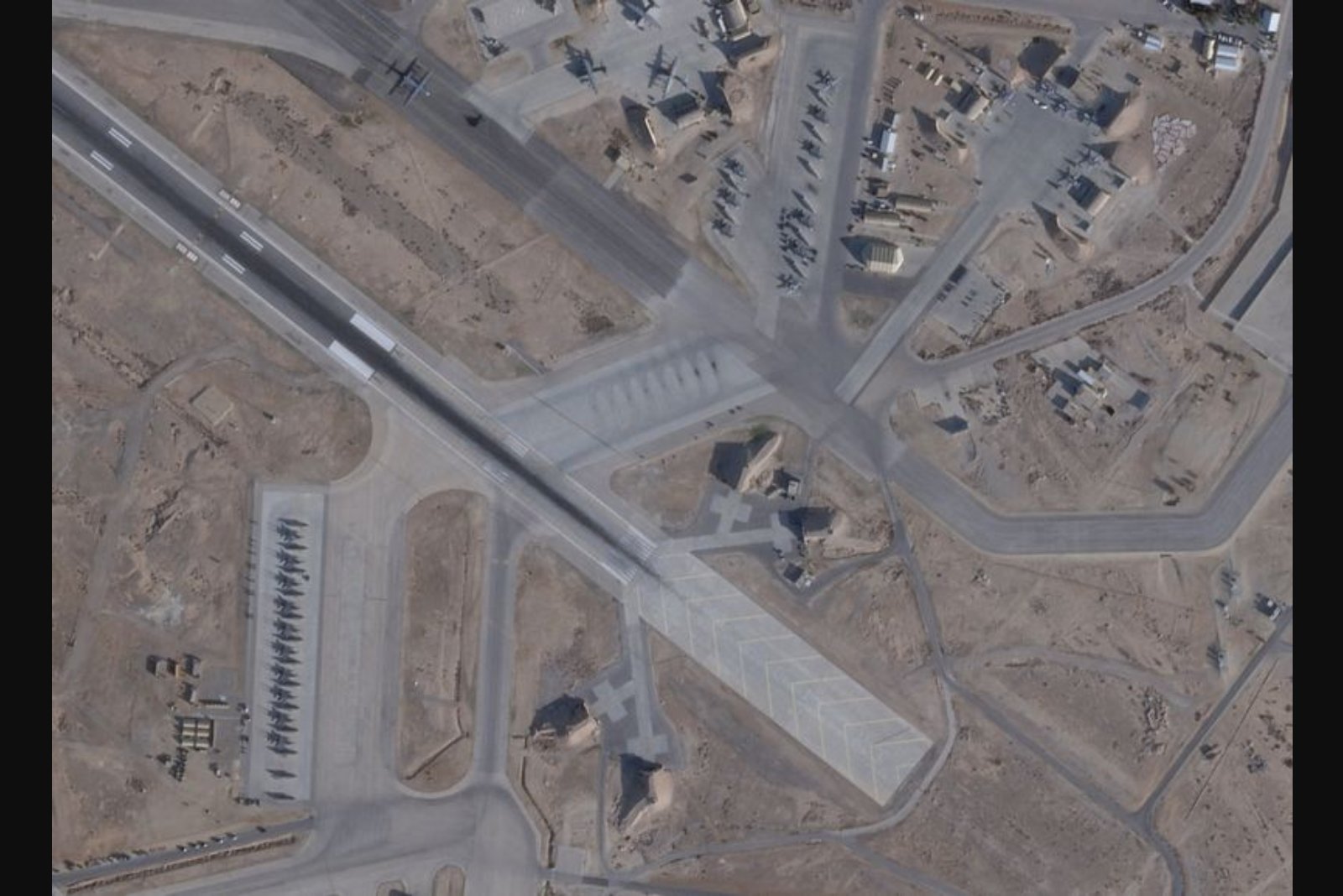
Satellite image analysis indicates U.S. forces stationed at al-Udeid, the largest American base in the Middle East located in Qatar, placed Patriot surface-to-air missile systems into truck-mounted launchers as regional tensions with Iran rose during January and early February. The change, visible in the imagery, allows the systems to be moved more rapidly than if they remained in semi-static launcher sites.
Forensic imagery analyst William Goodhind of Contested Ground compared photographs taken in January with those taken in early February and identified a broader build-up of aircraft and other military equipment across U.S. positions in the region. At al-Udeid, he noted Patriot missiles parked mounted into M983 Heavy Expanded Mobility Tactical Trucks (HEMTT) at the start of February.
"The decision to do so gives the Patriots much greater mobility, meaning they can be moved to an alternative site or repositioned with greater speed," Goodhind said.
It was not clear on Tuesday whether the missiles were still in the HEMTTs. A spokesperson for the Pentagon was not immediately available for comment.
The deployment choice underscores heightened risk perceptions as frictions escalated between the United States and Iran. U.S. President Donald Trump has publicly threatened to bomb Iran over its nuclear and ballistic missile programmes, its support for allied groups in the Middle East and its suppression of internal dissent. Officials have continued talks aimed at averting open conflict.
Iran's Revolutionary Guards have warned that strikes on Iranian territory could prompt retaliation against any U.S. base. Iranian authorities have said their missile inventories were replenished after two weeks of hostilities last summer when Israel struck some of Iran's nuclear facilities and other military targets, a campaign that the United States joined late on.
Satellite imagery also captured Iranian military activity. The Iranian naval drone carrier IRIS Shahid Bagheri was visible on January 27 at sea about 5 km from Bandar Abbas, and photographs show it again near Bandar Abbas on February 10. The images further reflect Iran's known missile infrastructure, with underground missile complexes identified near Tehran and at Kermanshah, Semnan and locations close to the Gulf coast.
Observed changes at U.S. facilities in the region
- Al-Udeid, Qatar: Images dated February 1 showed an RC-135 reconnaissance aircraft, three C-130 Hercules transports, 18 KC-135 Stratotankers and seven C-17 transports. By comparison, images from January 17 had shown 14 Stratotankers and two C-17s. Up to 10 MIM-104 Patriot air defence systems were parked in HEMTTs.
- Muwaffaq, Jordan: One Muwaffaq location imaged on February 2 displayed 17 F-15E strike aircraft, eight A-10 Thunderbolt II aircraft, four C-130s and four unidentified helicopters. January 16 imagery of that location was low resolution and did not allow full identification. A second Muwaffaq location on February 2 showed a C-17 and a C-130 as well as four EA-18G Growler electronic warfare aircraft; imagery from January 25 had not shown any aircraft at that second site.
- Prince Sultan, Saudi Arabia: Photos from February 2 showed a C-5 Galaxy and a C-17. Earlier images from December 6 had displayed five aircraft that appeared to be C-130s.
- Diego Garcia, Indian Ocean: Satellite images from February 6 indicated seven more aircraft than had been observed on January 31.
- Dukhan, Oman: Images taken on January 25 and February 10 showed an increase in aircraft at the base.
Beyond Qatar, the United States maintains bases in Iraq, Jordan, Kuwait, Saudi Arabia, Qatar, Bahrain, the United Arab Emirates, Oman, Turkey and on Diego Garcia in the Indian Ocean. The sequence of imagery changes documented by analysts points to a regional repositioning of air and support assets over the period studied.
Implications and context
The photographic record and analyst commentary together suggest a deliberate move to give air-defence systems and transport and refuelling aircraft greater flexibility in where and how they can operate. The mounting of Patriot systems onto HEMTTs is a tactical configuration that emphasizes mobility - enabling quicker redeployment for defensive protection or to reposition forces in response to evolving threats.
At the same time, some details remain unresolved in the public imagery. Analysts can identify concentrations of platforms and equipment but may not be able to confirm current status or subsequent movement beyond the dates captured in the photos.