
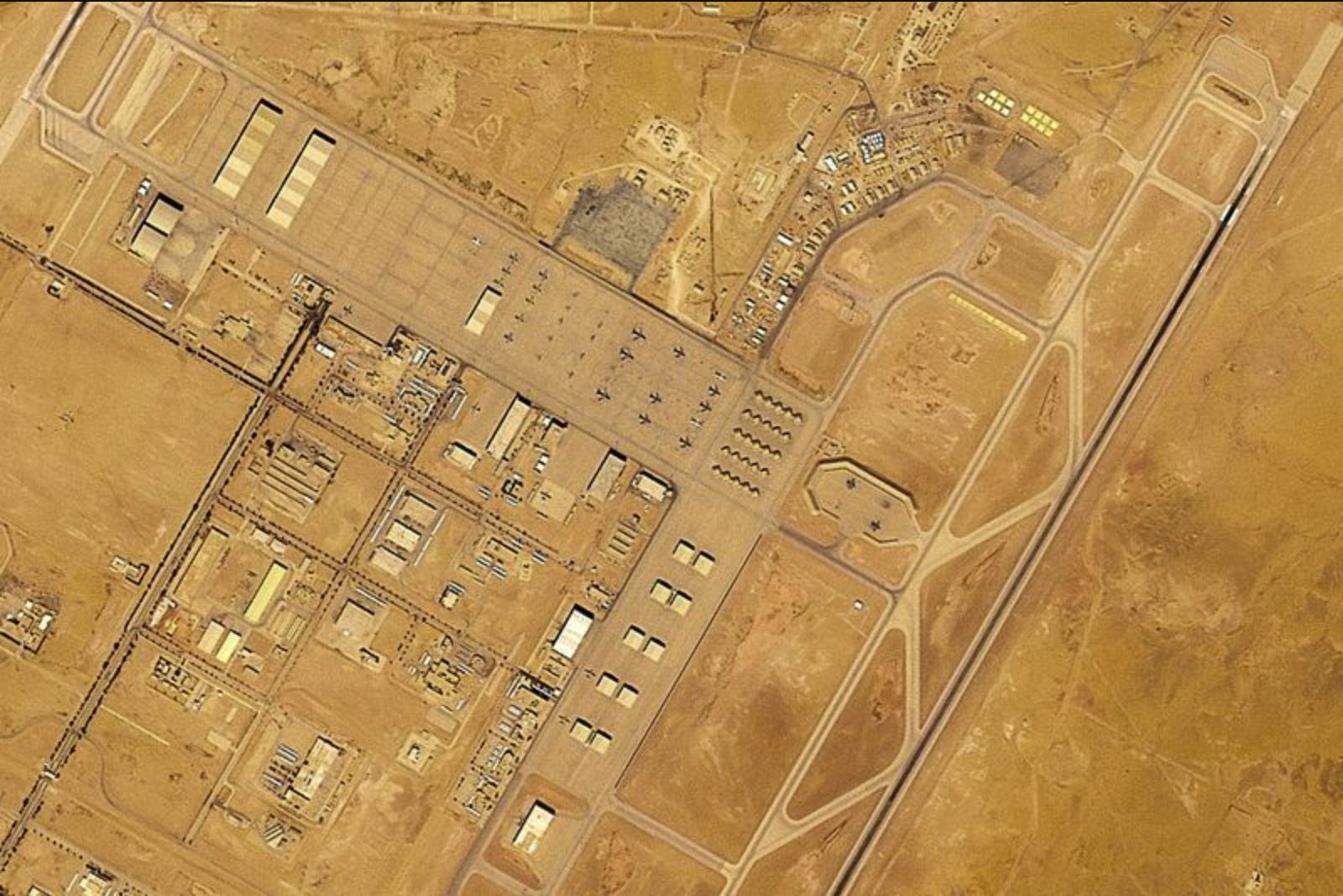
Satellite photographs captured in February indicate a noticeable increase in military support aircraft at Prince Sultan Airbase in Saudi Arabia, a facility that has hosted U.S. forces for decades. Analysts who examined the imagery reported a rise in the number of large support platforms - including aerial refuelling tankers and AWACS surveillance planes - during a four-day span in the month.
In a high-resolution image dated February 21, at least 43 aircraft were visible on the airbase ramp, compared with 27 aircraft that could be counted in a February 17 image. By February 25 a subsequent image showed the total had fallen to 38. The February 21 photograph included a concentration of large, swept-wing aircraft: 13 Boeing KC-135 Stratotankers and six Boeing E-3 Sentry AWACS were among the parked jets, accounting for 29 of the larger swept-wing aircraft observed, according to William Goodhind, a forensic imagery analyst with Contested Ground.
In contrast, the medium-resolution image from February 17 showed 11 large, swept-wing aircraft visible in Reuters’ tally. The analyst’s breakdown underscores the change in force posture on the airfield over the short period.
The Pentagon was asked for comment and said it had "nothing to provide." The U.S. military customarily refrains from discussing force movements. Saudi Arabia’s government media office did not immediately respond to a request for comment.
The increase in aircraft at Prince Sultan comes as Washington has been building forces in the region amid tensions with Iran. Saudi Arabia, a long-standing U.S. ally, informed Iran last month that it would not allow its airspace or territory to be used for military actions against Tehran. Meanwhile, indirect negotiations between the United States and Iran over Tehran’s nuclear programme took place on a Thursday, according to reporting, with Oman acting as a mediator.
Oman said the parties had made progress in the talks on that Thursday, while cautioning there had been no breakthrough to avoid potential U.S. strikes. Omani Foreign Minister Sayyid Badr Albusaidi said the sides planned to resume negotiations soon after consultations in their capitals. He added that technical-level discussions were scheduled to take place the following week in Vienna.
U.S. President Donald Trump warned on February 19 that Iran needed to reach a deal within 10 to 15 days, saying that otherwise "really bad things" would happen. The recent satellite imagery showing increased aircraft presence is part of a larger pattern: a comparison of images from early February with those taken in January also revealed a buildup of aircraft and other military equipment across the region. Separate recent images have shown Iran undertaking repairs and fortifications at multiple sites, including a sensitive military site that was reportedly bombed by Israel in 2024.
The imagery and diplomatic activity together portray a period of heightened military positioning and diplomatic engagement. Analysts and officials will likely continue to watch both the on-the-ground movements captured by satellite and the progress of negotiations mediated by Oman and others, as both the physical deployments and diplomatic timelines evolve.