
Overview
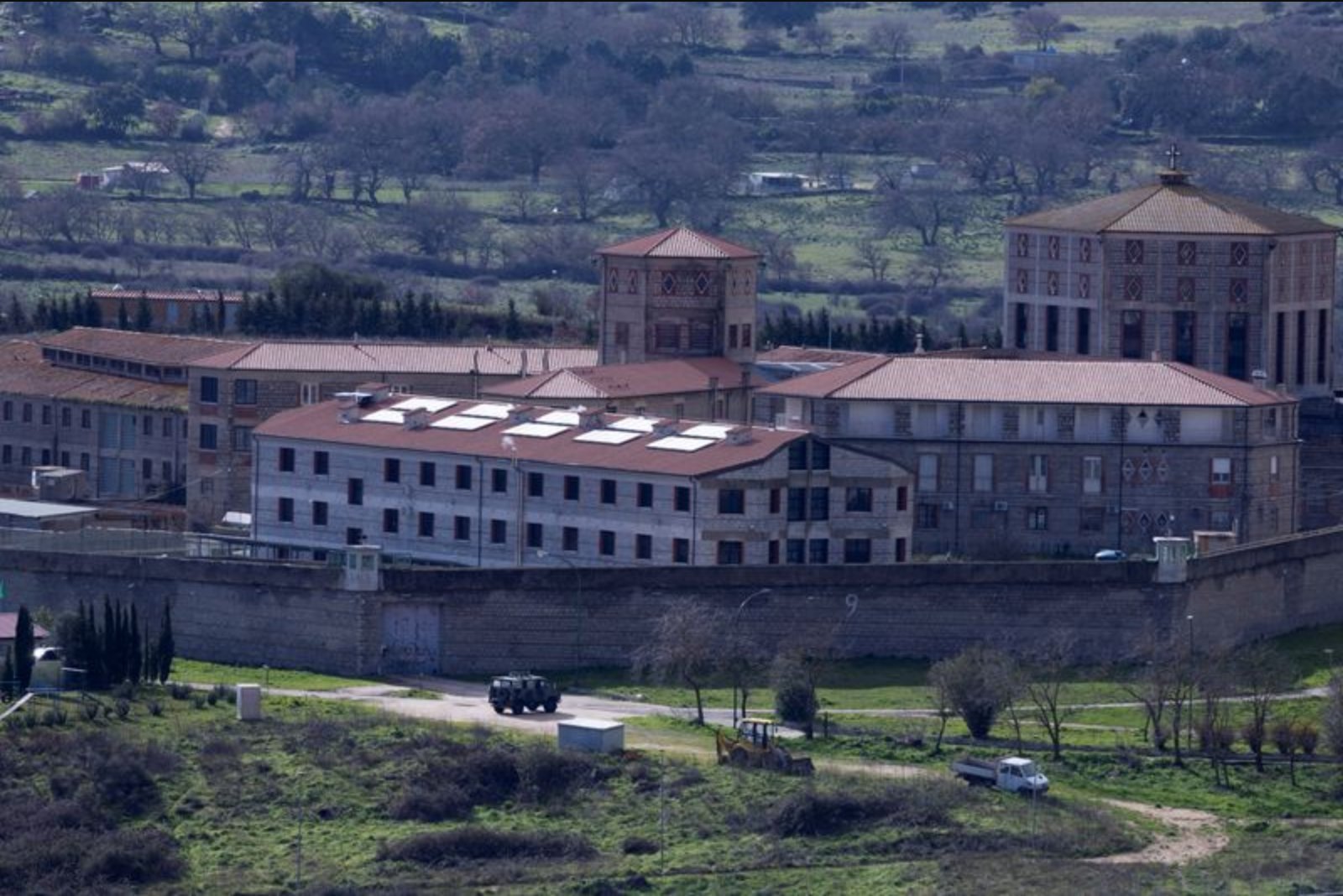
In Nuoro, a provincial city set inland on the Italian island of Sardinia, a stone perimeter surrounds a prison long regarded as a remote, fortress-like facility built to keep high-profile organized crime figures and convicted terrorists isolated from the mainland. While only a small number of top mob figures remain behind bars there today and the island has cultivated an image focused on tourism, a central government plan to concentrate a large cohort of 41bis inmates on Sardinia has stirred alarm among residents, regional officials and legal authorities.
The government proposal
Under the plan outlined by a justice undersecretary in December, roughly 750 prisoners currently held under Italy’s most restrictive incarceration regime - known as 41bis - would be consolidated in a limited number of specialized facilities across the country, with specially trained guard units assigned to oversee them. The 41bis regime imposes stringent isolation measures intended to block imprisoned bosses from running criminal networks from behind bars. The law, created in 1992 after the murder of anti-mafia judge Giovanni Falcone, states that it should "preferably" be applied on Italy’s islands.
Officials briefed on the plan say Sardinia could receive nearly a third of those inmates, distributed among three locations: Sassari in the north, which already houses about 90; Cagliari, where roughly 90 inmates are due to arrive this month; and Nuoro, reigniting concerns about renewed stigma and social impact.
Local opposition and comparisons
Sardinian leaders and residents have reacted strongly. The island’s governor, Alessandra Todde, argued Sardinia should not be treated as a penal outpost and invoked the notorious French penal colony on Devil’s Island by declaring that "Sardinia does not deserve to be seen as Italy’s Cayenne." Regional critics say the proposal risks undoing years of effort to rebrand the island away from any association with high-security imprisonment and toward an economy increasingly tied to tourism.
Concerns over mafia infiltration and economic effects
Local politicians and magistrates worry the relocation of 41bis inmates could encourage mafia clans to establish a presence on the island to remain near jailed relatives, thereby creating new channels for money laundering and business infiltration. Nuoro, a city of about 30,000 people, is viewed as particularly vulnerable because its economy is small, dominated by agriculture and micro-enterprises, and tourism accounts for only 7% of regional output according to Chamber of Commerce data for 2025.
Silvio Lai, a Sardinian lawmaker from the opposition Democratic Party who inspected the Nuoro prison last month, reported that renovation work was already under way that could free up accommodation for at least 30 additional maximum-security inmates. Lai warned that "weak economies can be infiltrated easily, and Nuoro is about an hour’s drive from the Costa Smeralda," suggesting that criminal influence could reach more affluent tourist areas.
Cagliari’s chief prosecutor, Luigi Patronaggio, said prosecutors are closely monitoring alleged investment activity by the Camorra, particularly in tourism, hospitality and restaurant sectors. He said investigations have been opened into possible clan penetration in the island’s north, a development magistrates link to the presence of detained mobsters.
A local lawyer and politician, Sebastian Cocco, described the evolving tactics of organized crime: "The mafia doesn’t shoot anymore, it bids for public tenders. And with significant European Union funds flowing, the danger of organised crime infiltration grows." His comments underline a shift in concern from overt violence to white-collar forms of corruption and economic capture, particularly in sectors that rely on public contracting and investment.
Security and judicial resource questions
Justice Undersecretary Andrea Delmastro Delle Vedove, according to minutes of a December meeting with regional officials, sought to minimize fears of a mass transfer to Sardinia and argued the plan would enhance national security. He said concentrating 41bis inmates in a few facilities would allow deployment of specialised prison guard units and make individual prisons safer, asserting the measure would increase overall security.
By contrast, magistrates and prison officials in Sardinia say a larger inmate population under 41bis would necessitate increased security resources for police and the judiciary. Maria Cristina Ornano, who heads the sentence enforcement tribunal in Cagliari, warned that if organised crime were to take root locally it could be very difficult to eradicate, noting examples in parts of southern Italy where deprivation and underinvestment have coincided with long-term criminal entrenchment.
Local groups that work with inmates also express concerns about the social and economic environment. Pietro Borrotzu, a Catholic priest who runs a prisoners’ rehabilitation cooperative in Nuoro, said precarious local employment and low wages create the conditions in which organised crime can recruit "foot soldiers" to carry out illegal activities.
Business representatives voiced frustration at what they see as neglected development needs. Pierpaolo Milia, head of the local Confindustria chapter, said successive governments have failed to build infrastructure or create jobs in Nuoro, leaving the area isolated and poorly connected to ports and airports. "Business incentives would be needed, and instead we are being punished with 41bis inmates," Milia said.
Health system strain
Sardinia, like much of southern Italy, faces demographic and healthcare challenges, including an ageing population and a fragile public health system. A court filing in Cagliari notes the island, with about 1.5 million residents, already has one of the country’s highest prisoner-to-inhabitant ratios and that inmate healthcare costs on Sardinia exceed those in other regions.
Medical care for high-security detainees can demand extensive security measures. Giacomo Porcu, mayor of Uta - which hosts the Cagliari jail - described the practical strain: transferring a prisoner for hospital treatment often requires an escort of dozens of prison guards, and a rise in such hospitalisations could force authorities to suspend other services. "If you have to treat one of them you have to stop everything else, blocking the public health service," Porcu said.
Irene Testa, the regional guarantor for detainees, said the government so far has not committed to strengthening prison healthcare or to easing the potential burden on the general health service. She warned that the island’s penitentiary system is already overwhelmed, and added: "We cannot accept becoming Italy’s penal colony again." The Justice Ministry did not respond to requests for comment on renovation work or the proposed transfers.
Note: This report compiles statements from regional officials, magistrates, local politicians, legal practitioners and civil-society figures describing current plans and local reactions to the proposed redistribution of 41bis inmates, as presented by government officials in December.