
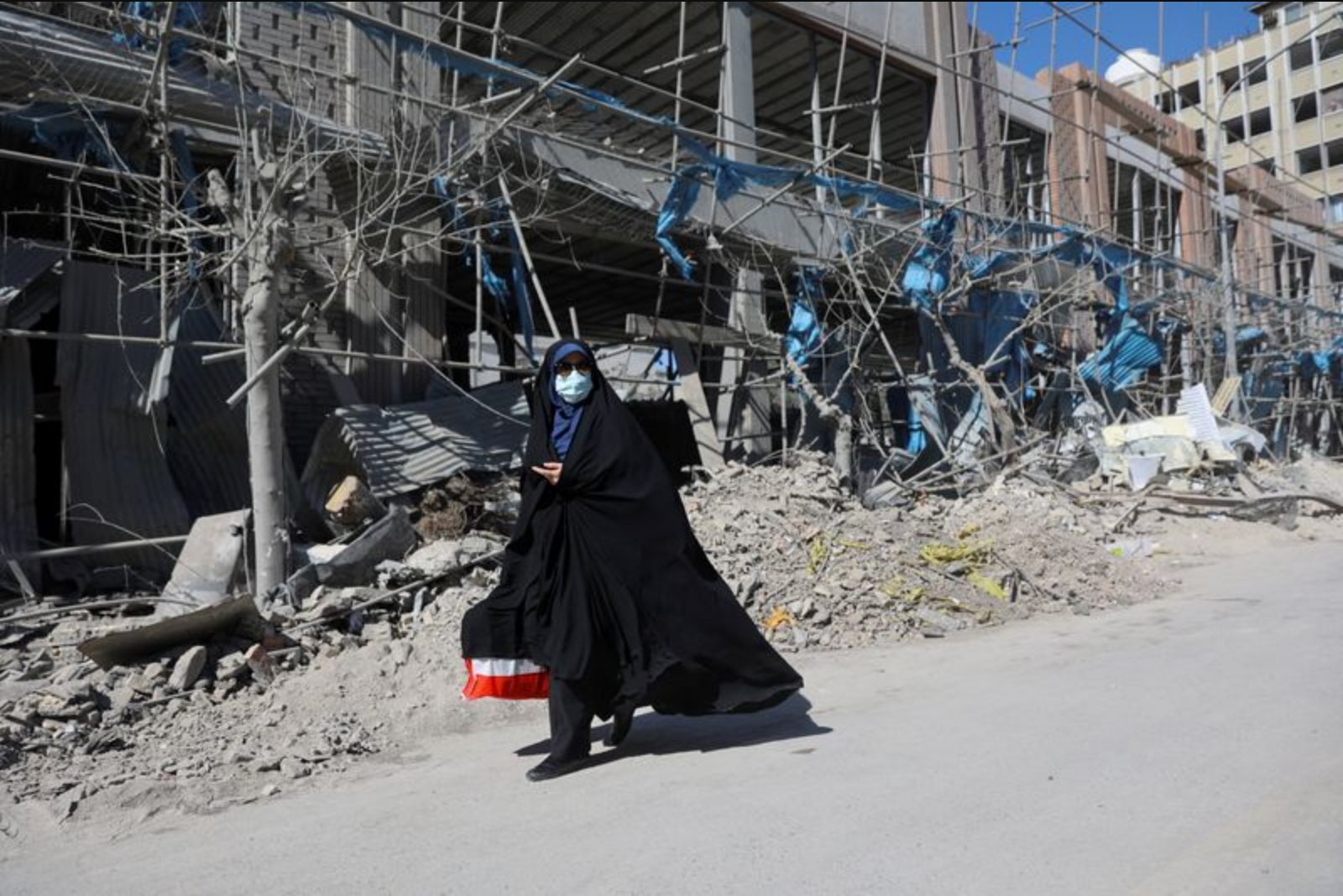
MOSCOW, March 3 - When Donald Trump returned to the White House last year, some of Russia's most vocal hawks greeted his comeback with cautious optimism, reasoning that his unpredictability and transactional instincts might open tactical doors for Moscow on the Ukraine conflict. The U.S. assault on Iran since then has shifted that calculation for many. Rather than seeing him as a pragmatic, potentially pro-Moscow strongman, an increasing number of hardliners now view Trump as a mounting danger to Russia itself.
Those voices - drawn from nationalist business figures, influential war bloggers and academics who have aligned with hawkish positions - are pressing publicly for a change in Moscow's approach to Ukraine. They argue Russia should step away from the U.S.-brokered peace process and instead intensify its fighting in Ukraine, on the grounds that Washington demonstrated bad faith by engaging in nuclear talks with Iran that preceded the U.S.-Israeli air operation.
"The unprincipled United States is a threat to the entire world," said nationalist tycoon Konstantin Malofeyev, who is married to a top Kremlin official. "This is the United States we are trying to negotiate with regarding Ukraine. Yes, it wants a weak Europe. But it also wants a weak Russia."
War commentator Boris Rozhin, who writes under the pen name "Colonel Cassad" and has close to 800,000 followers on the Telegram app, expressed an equally stark assessment. "To seriously count on any agreements or deals with it (the monster) is either foolishness or treason," he wrote, portraying the U.S. leader as unpredictable and dangerous.
Andrei Sidorov, a prominent academic, took the alarm further on state television, describing Trump as "a dangerous man" and saying he regretted the U.S. president's survival of an assassination attempt in July 2024 before that figure was re-elected later that year. "Now we understand who is in charge of the world," Sidorov said. "If you look at what Trump is doing now, step-by-step, practically nobody is able to stop him. Let’s be honest - Russia is bogged down in Ukraine. Practically all we do now is deal with the Ukrainian question. (And) our main adversary (the U.S.) is acting as an intermediary in those negotiations."
The Kremlin has condemned the U.S. action as "unprovoked aggression," but it has so far refrained from criticizing Trump personally and has not provided Iran with material support beyond diplomatic backing. Kremlin officials have also argued that continuing U.S.-mediated peace talks on Ukraine remains in Russia's interest, even as the attack on Iran creates uncertainty over when and where the next round of negotiations might take place.
That stance signals a cautious balancing act: Moscow appears intent on preserving a working relationship with the United States that might keep Trump engaged on Ukraine while simultaneously criticizing U.S. policies it opposes. For now, the Kremlin's public posture emphasizes diplomacy on Ukraine despite pressure from hawks to change course.
Analysts in Russia and the West generally see limited options for Moscow to materially assist Tehran at this point. Russia has imported, refined and begun manufacturing Iranian-designed drones, but observers do not expect substantial further help to be feasible in the near term.
Some in Moscow are hunting for possible advantages amid the upheaval. Kirill Dmitriev, described as a special envoy, has flagged the potential for rising oil prices to relieve strains on Russia's state budget - noting that prices have not yet climbed as much as Moscow needs to balance its finances - and suggested that the discounts Russia currently extends to buyers such as China and India could narrow. A number of Russian analysts also say that U.S. arms and munitions destined for Ukraine might be diverted to Gulf states and that prolonged U.S. focus on the Middle East could reduce American attention and support for Kyiv.
Yet the intense rhetoric from hardliners reflects genuine anxiety within Russia's security and political circles. These figures see an escalatory U.S. president as diminishing Moscow's global sway at a time when Russia remains heavily engaged in Ukraine and lacks the ability to protect its interests in the manner of prior geopolitical eras.
Hawks point to what they view as a pattern of Washington undermining Russia's partners. They cite the overthrow of Syria's Bashar al-Assad in December 2024 by opposition forces whose leader was later hosted by Trump at the White House; the capture of Venezuela's Nicolas Maduro by U.S. forces in January; and, most recently, the assassination of Iran's Ayatollah Ali Khamenei in joint U.S.-Israeli strikes at the weekend. The fate of long-time ally Cuba, they warn, is also a concern for Moscow.
Notwithstanding earlier praise or hopes held by some on Russia's far right, critics of Trump within Moscow say he has grown less aligned with their priorities. Ultra-nationalist philosopher Alexander Dugin, who once regarded Trump as a potential boon for Russia, now urges distance. "If Iran holds out, everything could go the other way. If it collapses, we’re next," he told followers. "With Trump, when he was faithful to the original MAGA ideology, we had common ground. As Trump rapidly distanced himself from MAGA and moved closer to the neocons, those points of contact rapidly disappeared. It is better to have nothing to do with Trump as he is today," Dugin added.
Within Moscow's policy community there is no single consensus on how to respond. The hawks' demand to abandon U.S.-brokered talks and escalate militarily in Ukraine runs up against the Kremlin's stated preference to keep diplomatic channels open for now. The debate underscores broader unease about Russia's strategic position and the risks of confronting an increasingly assertive U.S. administration while simultaneously prosecuting a costly war in Ukraine.
Market and sector considerations
Participants in Russia's energy and defence sectors are watching developments closely. Rising oil prices could provide fiscal relief for the state budget and alter export discount dynamics, while potential U.S. munitions reallocations could affect supply flows to Ukraine and demand for defence manufacturers and allied suppliers. Financial markets and sovereign revenue forecasts remain sensitive to further escalation or extended conflict in the Middle East.
Promotional note included in the reporting material
Which stock should you buy in your very next trade? AI computing powers are changing the stock market. Investing.com's ProPicks AI includes dozens of winning stock portfolios chosen by our advanced AI. Year to date, 2 out of 3 global portfolios are beating their benchmark indexes, with 88% in the green. Our flagship Tech Titans strategy doubled the S&P 500 within 18 months, including notable winners like Super Micro Computer (+185%) and AppLovin (+157%). Which stock will be the next to soar? Pick Stocks with AI.