
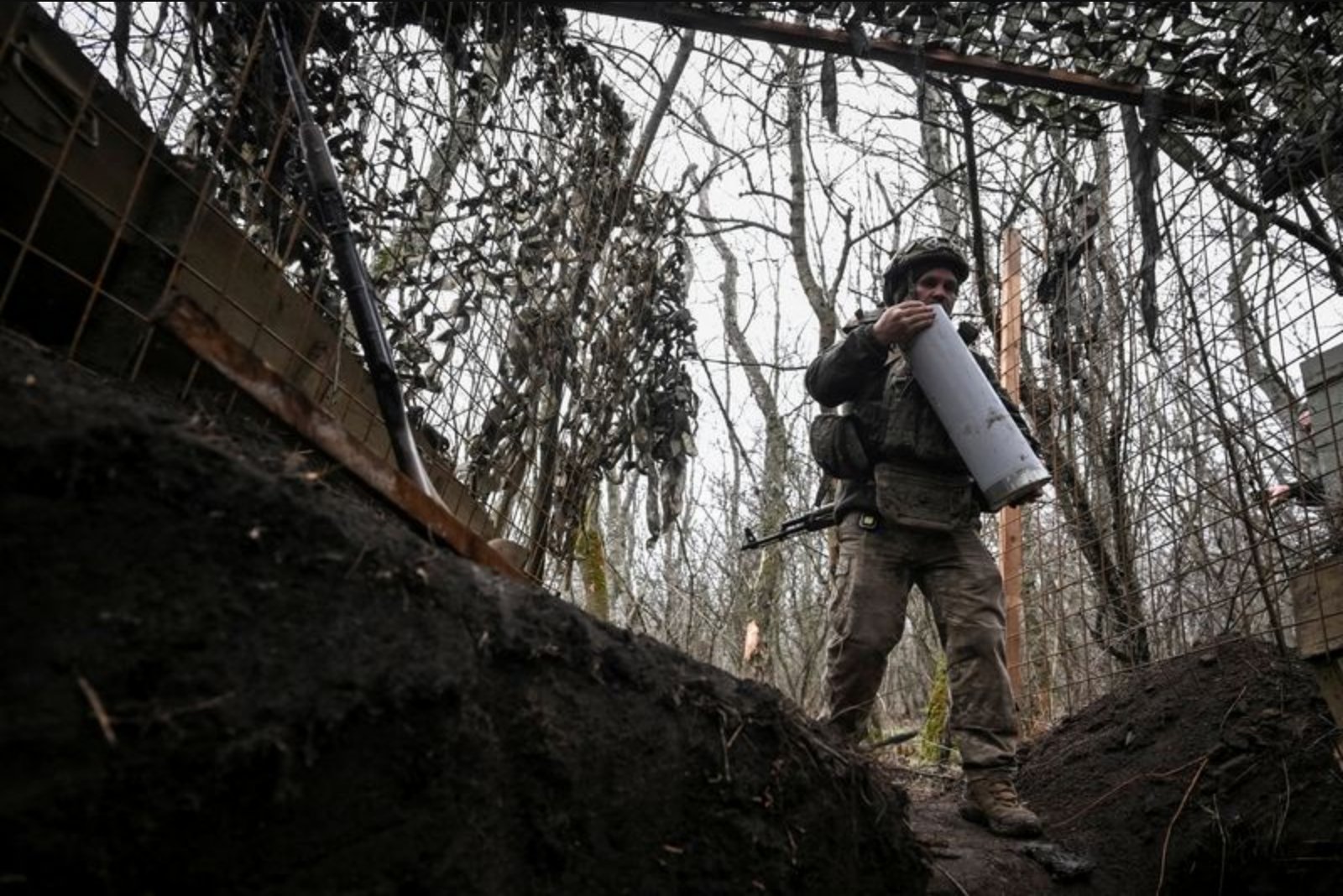
Russian forces continue to press their offensive around the eastern city of Pokrovsk, Kyiv's military reported on Monday, seeking to bring to a close a months-long attempt to seize a strategic centre in the Donetsk region. Ukrainian commanders say their troops still retain the northern sector of Pokrovsk and are also defending the nearby, smaller city of Myrnohrad.
Pokrovsk, a rail junction that had about 60,000 residents before the war, has been the scene of intense fighting since last year. The city's loss would represent what Kyiv has said would be Moscow's largest battlefield gain since the capture of Avdiivka in early 2024. Moscow asserted late last year that it had taken Pokrovsk, a claim Kyiv denied.
On the broader front, Ukraine has found it difficult to stop incremental Russian advances around Pokrovsk and at other points along the roughly 1,200-km front line, even as Kyiv faces pressure from the United States to secure a peace agreement aimed at ending the four-year conflict. Analysts quoted by Ukrainian authorities note that, despite localized gains, Russia has taken only about 1.3% of Ukrainian territory since early 2023. Still, sustained aerial strikes have severely damaged the national power grid in recent months.
Ukraine's 7th Rapid Response Corps, tasked with coordinating defences in the area, said Russian forces were "pressing in the Pokrovsk and Myrnohrad area" by taking advantage of what it described as "insufficient" Ukrainian air defences. The corps added that Russian units have employed guided bombs and used greater manpower to seize control of key heights and flanks.
Open-source researchers at DeepState reported that Russian infantry were moving into the northern portion of Pokrovsk and attempting to push toward the nearby village of Hryshyne. The group's map indicated that nearly all of Pokrovsk and much of Myrnohrad were under Russian control, and it described the fighting as "the last battles" for the two towns.
Territorial stakes and political context
Nearly four years after the full-scale invasion that began on February 24, 2022, Russia controls almost one-fifth of Ukraine's territory, including the Crimean Peninsula and areas in eastern Ukraine that were occupied before the current war. Moscow is demanding that Kyiv cede the remaining 20% of the industrialised Donetsk region that it has yet to take by force; Kyiv has refused that demand.
Moscow has said it will continue military operations until it secures its stated objectives and has described territorial issues as of "fundamental importance" to the ongoing peace talks mediated by the United States. Opinion polls cited by Ukrainian officials indicate a majority of Ukrainians oppose ceding the remaining parts of Donetsk in exchange for peace. Those territories include heavily defended, so-called "fortress cities" such as Sloviansk and Kramatorsk.
Commenting on the wider campaign, the 7th Rapid Response Corps posted on X that "(E)ven under these conditions, the capture of the entire Donetsk region remains a matter of years for Russia." The corps warned that fighting around the Sloviansk - Kramatorsk agglomeration could last up to three years and would likely inflict massive losses on the invading forces.
Outlook
The situation around Pokrovsk and Myrnohrad remains fluid, with Kyiv asserting defensive control over parts of the city while reports from military units and open-source researchers indicate Russian advances in adjacent sectors. The contested status of these locations, coupled with the political impasse over Donetsk's remaining territory, underscores the uncertain trajectory of the conflict and the potential for protracted combat in eastern Ukraine.