
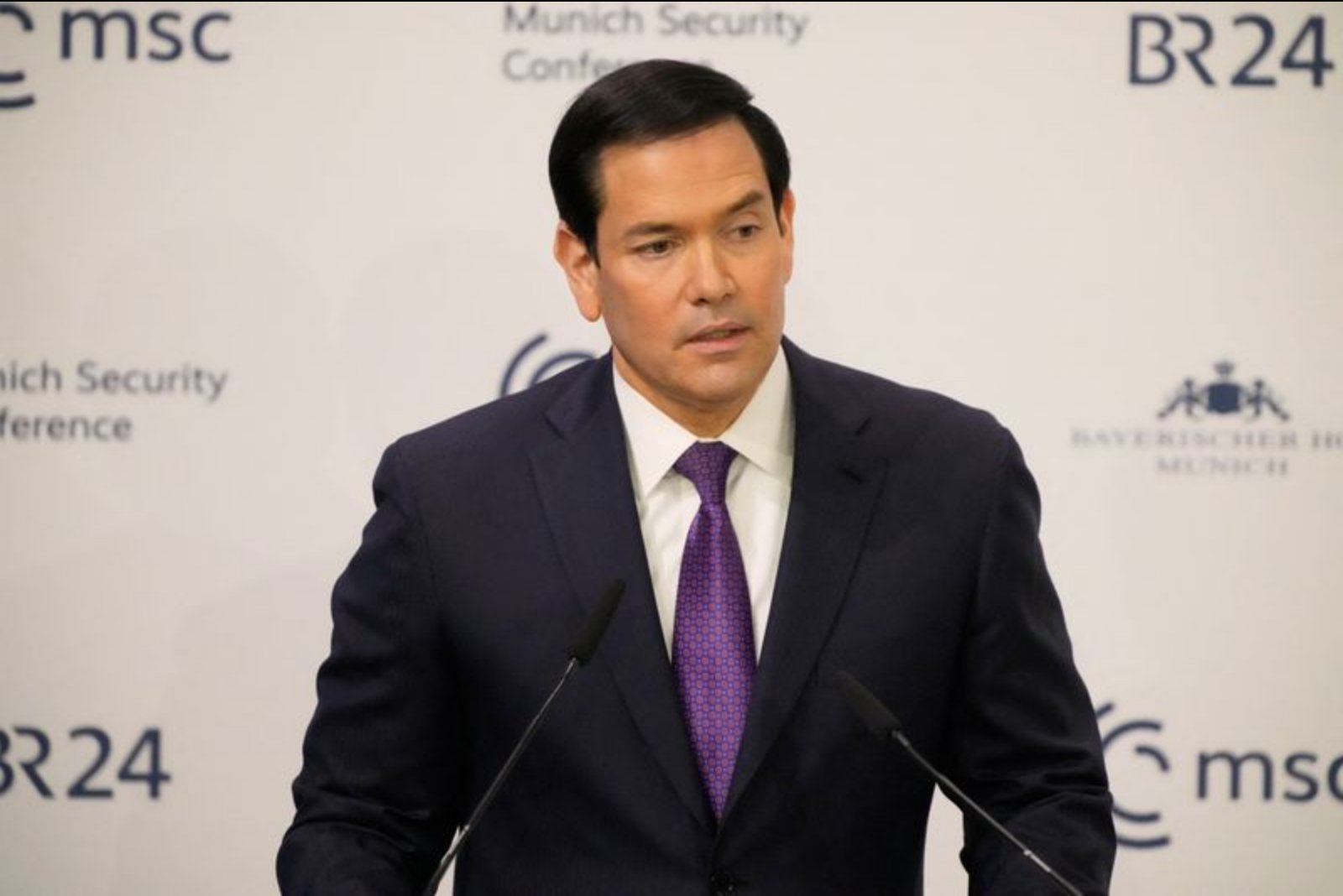
MUNICH, Feb 14 - U.S. Secretary of State Marco Rubio delivered a unifying message to European leaders and officials on Saturday at the annual Munich Security Conference, asserting that the United States will not walk away from the transatlantic relationship even as he pressed Europe to change course on a number of policy decisions.
Rubio's remarks emphasized solidarity between the United States and Europe, a point that appeared to resonate with the assembly of European diplomats and security officials gathered at the conference. Despite occasionally chastising European policymakers for what he called policy mistakes, his tone and overall refrain of togetherness were relatively well-received by those in attendance.
"In a time of headlines heralding the end of the transatlantic era, let it be known and clear to all that this is neither our goal nor our wish, because for us Americans, our home may be in the western hemisphere, but we will always be a child of Europe," Rubio said to the crowd.
The roughly half-hour address stood out for its generality. Rubio did not name Russia during the speech, a notable omission given that country’s role as a principal geopolitical adversary on the continent. He also refrained from mentioning NATO by name, despite that alliance being central to European security architecture. The address therefore delivered a broad affirmation of partnership while offering few specific policy proposals or operational details.
Observers at the conference contrasted Rubio’s speech with remarks delivered by Vice President JD Vance at the same forum a year earlier. Vance’s address had highlighted internal pressures such as censorship and democratic backsliding as the primary dangers to the continent, rather than external threats such as Russia. Rubio’s speech, by contrast, focused on reaffirming ties and urging course correction by European leaders.
Overall, Rubio’s intervention at the Munich conference sought to reassure Europe of continued U.S. commitment to the transatlantic relationship while simultaneously urging European policymakers to reassess certain policy choices. The speech combined a conciliatory posture with critiques of European decision-making, and it did so without advancing detailed new initiatives during the address.
Summary
At the Munich Security Conference, Rubio reaffirmed that the United States intends to remain aligned with Europe, criticized several European policy choices, and delivered a broadly welcomed but non-specific speech that did not mention Russia or NATO by name.