
WASHINGTON - Tensions between the Central Intelligence Agency and the Office of the Director of National Intelligence (ODNI) have escalated to the point where the CIA has scaled back its input to a number of intelligence assessments compiled by ODNI, including analyses tied to the ongoing conflict in Iran, according to people with direct knowledge of the matter.
Sources who spoke on the condition of anonymity described a feud over intelligence-sharing boundaries and responsibilities that has intensified for more than a year, degrading collaborative analytical work that past presidents have relied on to manage complex international crises.
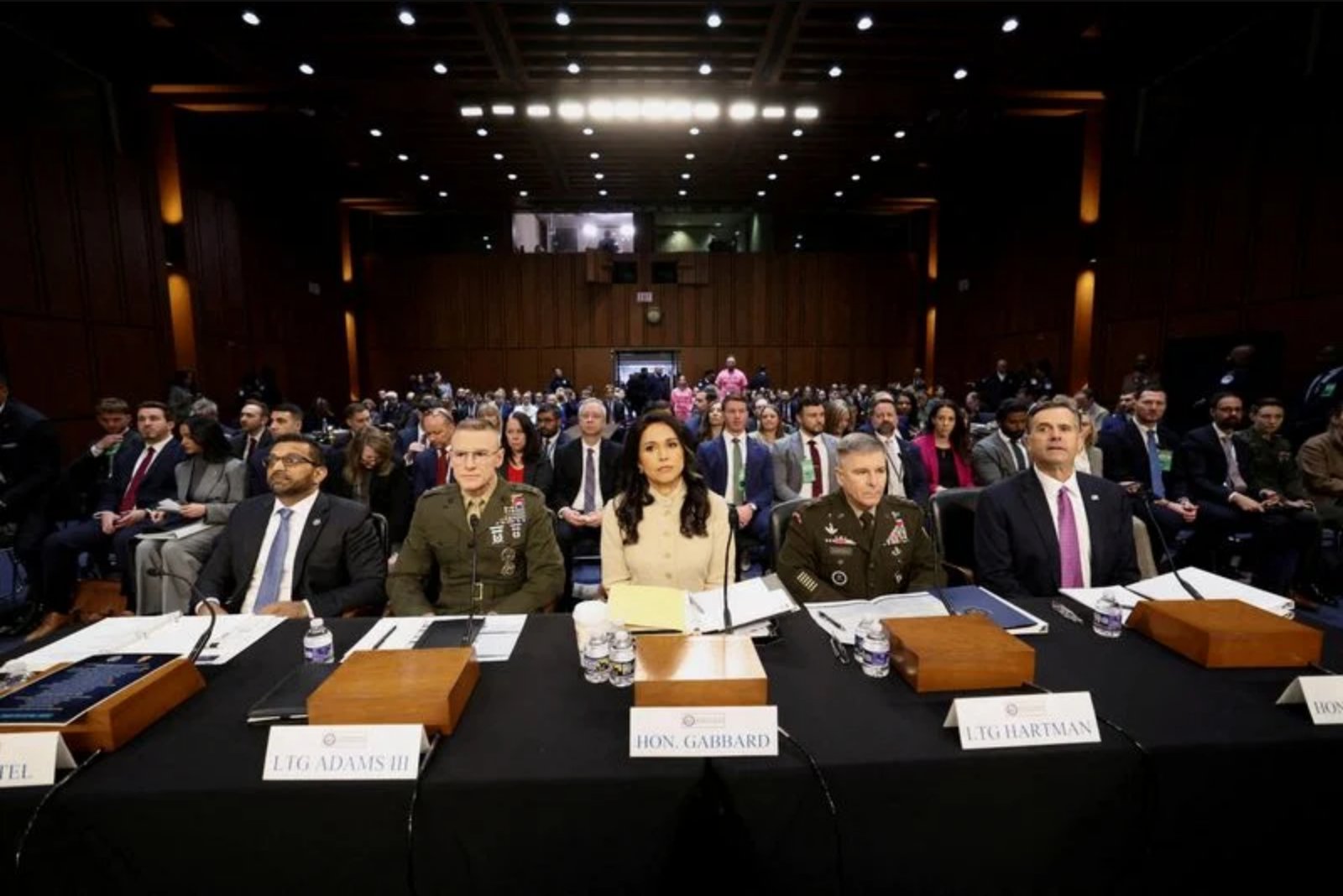
At the center of the dispute is a task force established in April 2025 by Director of National Intelligence Tulsi Gabbard. The CIA, under Director John Ratcliffe, argues that the Director’s Initiatives Group has bypassed long-standing intelligence-sharing and declassification processes, a charge two sources directly familiar with the situation made. ODNI officials counter that the CIA has repeatedly prevented the task force from obtaining the intelligence material it has sought.
The breakdown in coordination has come at a fraught time for the U.S. government. Officials point to the administration's involvement in the war in Iran, as well as strategic challenges posed by Chinese military expansion and Russia’s invasion of Ukraine, as part of the broader context in which the rift has unfolded. Observers inside and outside government say the situation calls into question whether reforms instituted after September 11, 2001 - which created the director of national intelligence to coordinate 18 U.S. intelligence agencies - have fully addressed institutional friction.
"ODNI is supposed to be the oil in the system that keeps the arteries of the intelligence community flowing, that removes blockages," said Beth Sanner, who served as deputy director of national intelligence during President Donald Trump’s first term. "When you’re not doing that, then you set up the potential that agencies are just going to kind of pull back into their stove pipes and you set yourself up for intelligence failures."
Gabbard announced last week that she will step down as the nation's top intelligence official on June 30, citing her husband’s illness. President Trump said he is appointing Federal Housing Finance Agency chief Bill Pulte as acting director of national intelligence.
Olivia Coleman, an ODNI spokeswoman, defended the office’s work, saying that "the president and policymakers continue to receive the best intelligence and analysis" from the intelligence community and that ODNI and the agencies it supervises "communicate and collaborate daily with CIA counterparts across the full spectrum of intelligence products and operations." Coleman added that the Director’s Initiatives Group "operated within ODNI’s oversight authorities and in support of the president’s executive orders."
CIA public affairs officials framed the agency’s posture differently. Liz Lyons, director of public affairs for the CIA, said the agency under Director Ratcliffe "quickly moved out on President Trump’s priorities with a more aggressive agency taking smart risks to outmaneuver our adversaries and give the United States a decisive advantage."
The worsening relations have had a concrete operational effect: the CIA has significantly curtailed its contributions to some of the analytical products coming from Gabbard’s office. The CIA traditionally has been a principal contributor to reports produced by the National Intelligence Council (NIC), the community's premier analytic body. Those reports carry weight, particularly in times of conflict, and two sources with knowledge of the matter said that assessments concerning Iran - where U.S. forces have been engaged since February - are among those from which the CIA no longer regularly participates.
Officials described a situation in which the CIA and ODNI increasingly operate as largely separate analytical entities. At one point last year, amid the friction, the CIA stopped publishing NIC reports on an internal intelligence community distribution service it controls, temporarily limiting the reach of certain analytical products. One U.S. official characterized that action as lasting only "a few hours" and said the interruption was the result of a "processing issue."
Sources trace the present interagency friction to the period soon after Gabbard took office in February 2025. Among her early moves was asserting tighter control over the production of the Presidential Daily Brief, a highly classified daily compendium of intelligence prepared for the president that the CIA had long led.
The relationship deteriorated further after the establishment of the Director’s Initiatives Group, which ODNI presented as a mechanism to "root out" alleged politicization within the intelligence community and as a means to pursue certain high-profile declassification tasks. The task force worked on declassifying documents related to the assassination of former President John F. Kennedy, examined the security of election voting machines, and pursued investigations into the origins of COVID-19. Critics, including some former intelligence officials, contended that the group was created in part as an instrument to seek retribution against individuals perceived to be political opponents of President Trump.
Members of the Director’s Initiatives Group at multiple points pressed the CIA to provide intelligence and materials necessary to complete ODNI-directed inquiries, but those members judged the agency’s sharing to be insufficient, according to two people with knowledge of the interactions.
In May 2025, Gabbard removed two senior CIA officers who had led the National Intelligence Council. An intelligence official, speaking on background because of the sensitivity of the personnel matter, said the ODNI dismissed the two officers after a workforce survey documented a toxic work environment and on the basis that the individuals had a history of politicizing intelligence. The official did not provide evidence to support those claims.
Several months earlier, in August, ODNI rescinded the security clearances of 37 current and former officials, an action that, according to sources, led to the exposure of the identity of an undercover CIA officer serving overseas. Gabbard accused the 37 of politicizing and leaking intelligence, but she did not make public proof to back that assertion. Former officials and others argued that the revocation of clearances was at least in part retaliation for a 2017 intelligence assessment concluding that Russia had deployed a broad influence operation to affect the 2016 U.S. presidential vote.
The tensions between the CIA and the Director’s Initiatives Group spilled into public view when an officer from the CIA, detailed to the task force, told a Senate panel that the agency had blocked the group's access to intelligence on the origins of COVID-19. That accusation prompted a probe by the intelligence community inspector general’s office, the independent watchdog housed at ODNI. The scope of that review could not be determined.
Officials and former senior intelligence officers expressed concern that the breakdown in cooperation could erode the ability of policymakers to obtain fully integrated, community-wide analysis at a time when the United States faces multiple geopolitical challenges. They warned that absent an effective coordinating role from ODNI, agencies might default to operating within narrower channels, limiting cross-agency perspective.
White House spokesman Davis Ingle defended the administration's approach to global security, emphasizing what he described as a "peace through strength foreign policy" that keeps the country safe and deters threats. Ingle also said media reports attempting to highlight divisions would not succeed and added that the president has "full confidence in his entire exceptional national security team."
As the leadership transition at ODNI approaches, the controversy over the Director’s Initiatives Group and the broader trust deficit between ODNI and the CIA remains unresolved. The competing claims - that the task force has overstepped oversight norms and that the CIA has obstructed access to intelligence - underscore the challenge of maintaining cohesive intelligence outputs across a large and often siloed community.
Whether the departure of the current director and the appointment of an acting successor will restore smoother information flows and revive joint analysis remains to be seen; sources emphasize that the dispute has roots in organizational behavior, policy orientation, and differing interpretations of oversight authority.